How does animal fur keep warmth in?
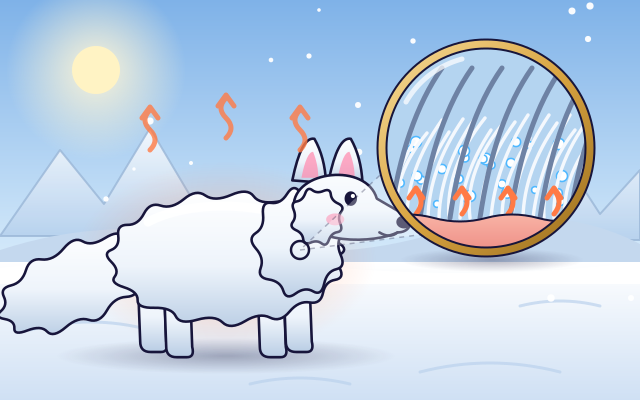
Thick fur traps a layer of still air next to the skin. That air slows down the heat trying to escape from a warm body.
The big idea: Fur does not make heat. It traps air between the hairs, and still air lets heat through only slowly. The thicker and drier the fur, the less heat gets out.
It's like a puffy winter jacket: the filling is mostly air, and the trapped air is what stops your body heat from leaking out.
The interactive parts didn't load. The explanations below still work; try reloading the page.
Why fur keeps heat in
- It is thirty degrees below zero, yet this arctic fox is warm inside, about as warm as you are. It has no heater and no house. What keeps its heat in?
- Heat always moves from warm things to cold things. A fox in a thin summer coat would lose its heat to the icy air very fast, and it would have to eat far more to stay warm.
- Zoom in on the winter coat. It has two layers. Long guard hairs form the outside. Under them is the underfur: short, fine, crinkly hairs packed very close together.
- The secret is the air. The crinkly hairs hold thousands of tiny pockets of air and stop it from moving. Still air is very bad at carrying heat, so the warmth stays near the skin.
- When it gets colder, tiny muscles pull the hairs upright. The coat gets thicker and holds more air. Then the fox curls into a ball and wraps its bushy tail over its nose.
- Wind and water are the enemies of fur. Wind blows the warm air out, and water takes its place. So the long, oily guard hairs act like a raincoat and a windbreaker for the underfur.
Look inside a winter coat
This is a tiny piece of the fox's coat, seen from the side. Tap each part.
- Guard hairs. Guard hairs are the long, stiff hairs you see on the outside. They block wind, shed rain and snow, and protect the soft fur underneath.
- Underfur. The underfur is made of short, thin, crinkly hairs growing very close together. Its job is to trap air.
- Trapped air. Between the hairs are countless little pockets of air. Air that cannot move is a very poor carrier of heat, so it works like a blanket.
- Warm skin. Warm blood flows through the skin. This is where the body's heat arrives, and where the fur has to hold it back.
- Hair muscle. A tiny muscle is attached to each hair. When the animal is cold, the muscles pull the hairs upright, and the coat gets thicker.
- Oil gland. Next to each hair is a small gland that makes oil. The oil coats the hair, so water runs off instead of soaking in.
- Fat layer. Under the skin is a layer of fat. It is a second blanket and also a store of food for hungry times.
Compare coats in the cold
Switch between the thin summer coat and the thick winter coat. Then add wind or soak the fur, and watch how much heat escapes.
Experiment: The fox is wearing its thick winter coat. What happens to its heat loss if the fur gets soaked?
- Choose the thick winter coat and look at the heat arrows.
- Switch on "Soak the fur" and look again.
- Dry it, then try the wind slider.
What we found: In a thick, dry coat the fox loses very little heat. When the fur is soaked, water takes the place of the trapped air, and heat pours out almost as fast as with a thin coat. Wind does something similar by blowing the warm air away. It is the still, dry air that keeps the fox warm.
Turn on JavaScript to try it yourself.
A coat for a storm
Choose the fox's coat, then send it through a cold calm night, an icy wind and wet sleet. It must stay warm in all three.
How fur holds heat in
Mammals make their own body heat by burning food, and they keep their bodies at about the same warm temperature all the time. In cold weather, that heat keeps leaking away into the cold air. The faster it leaks, the more food the animal has to find.
Fur slows the leak. It does not make any heat itself. Fur works because it traps air. The fine, crinkly hairs of the underfur hold thousands of tiny pockets of air and keep the air from moving. Still air is very bad at carrying heat, so the warmth stays close to the skin. A thicker coat holds a thicker layer of air.
Animals have clever ways to help their fur. They grow a thicker coat for winter and shed it in spring. They fluff up their hair to trap more air. They curl up so that less of the body faces the cold. Long, oily guard hairs on the outside keep out the wind and the wet.
That last job matters a lot. If fur gets soaked, water pushes out the air, and water carries heat away much faster than air does. A wet animal can get cold very quickly. That is why you see animals shake themselves dry.
Key words
- Insulation
- Anything that slows down heat moving from a warm place to a cold place.
- Underfur
- The layer of short, fine, dense hairs next to the skin that traps air.
- Guard hairs
- The long, stiff outer hairs that keep wind and water away from the underfur.
- Conduction
- Heat passing through something that is not moving, like warmth through a spoon.
- Convection
- Heat being carried along by moving air or water.
- Molt
- To shed an old coat and grow a new one, as many animals do in spring and autumn.
Check your thinking
-
What is it in fur that does most of the work of keeping heat in?
Show the answer
The still air trapped between the hairs. Fur makes no heat. It holds air still, and still air lets heat pass only slowly.
-
Why does an animal fluff up its fur when it is cold?
Show the answer
A thicker coat traps a thicker layer of air. Standing hairs make the coat deeper, so more still air sits between the skin and the cold.
-
Why does wet fur keep an animal much less warm than dry fur?
Show the answer
Water pushes out the air, and water carries heat away much faster. The warmth of fur comes from trapped air. Soaked fur holds water instead, and heat passes through water easily.
-
What are the long guard hairs for?
Show the answer
Keeping wind and water away from the soft underfur. Guard hairs are a raincoat and a windbreaker. They keep the air in the underfur still and dry.
-
In the model, the fox loses about 16 watts in 48 mm of dry fur. Roughly what does it lose in 24 mm?
Show the answer
Nearly twice as much. The coat's resistance is nearly proportional to its thickness, so half the thickness lets almost twice the heat through.
You're a Animals expert!
You watched, looked inside, tried it, solved the challenge and went deeper. Pick another question below, or switch the age at the top to see this topic another way.
More about animals
 #220
Animals
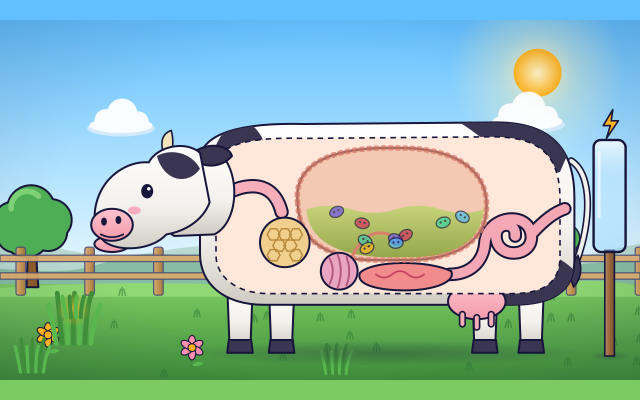
How do cows digest grass?
Follow grass through a ruminant digestive system, including cud-chewing and microbial fermentation.
#220
Animals
How do cows digest grass?
Follow grass through a ruminant digestive system, including cud-chewing and microbial fermentation.
 #221
Animals
How do cows produce milk?
Trace nutrients into milk-producing tissue and follow milk through a simplified udder.
#221
Animals
How do cows produce milk?
Trace nutrients into milk-producing tissue and follow milk through a simplified udder.
 #222
Animals
How do sheep grow wool?
Explore follicles, fiber growth, and changes in fleece before and after shearing.
#222
Animals
How do sheep grow wool?
Explore follicles, fiber growth, and changes in fleece before and after shearing.
 #223
Animals
How do chickens grind food without teeth?
Follow feed through the crop and gizzard, observing storage and grinding.
#223
Animals
How do chickens grind food without teeth?
Follow feed through the crop and gizzard, observing storage and grinding.
Keep exploring
Games to play next
- Habitat Builder 3DFind the right home for frogs, camels, polar bears and more.
- Classification ExplorerSort living things by what you can see, then follow and build yes-or-no keys.
- Forest Trails PhotosCreep up on the animals of a big forest valley and take the closest, best wildlife photos you can, without startling them.
Guide for grown-ups
- How to start homeschooling: a step-by-step guide for familiesA guide for parents · 7 min read
Science games by grade
Science worksheets by grade
- Preschool Science Worksheets
- Pre-K Science Worksheets
- Kindergarten Science Worksheets
- 1st Grade Science Worksheets
- 2nd Grade Science Worksheets
- 3rd Grade Science Worksheets
- 4th Grade Science Worksheets
- 5th Grade Science Worksheets
- 6th Grade Science Worksheets
- 7th Grade Science Worksheets
- 8th Grade Science Worksheets