How do cows digest grass?
Grass is too tough for most animals. A cow soaks it in a huge stomach room, lets microbes break it down, and chews it a second time.
The big idea: A cow cannot digest grass by itself. Microbes living in its biggest stomach room, the rumen, do it. Chewing the cud grinds the grass small so the microbes can reach more of it.
It's like a compost bin you carry inside you: tiny living things break tough plants down, and you get to use what they make.
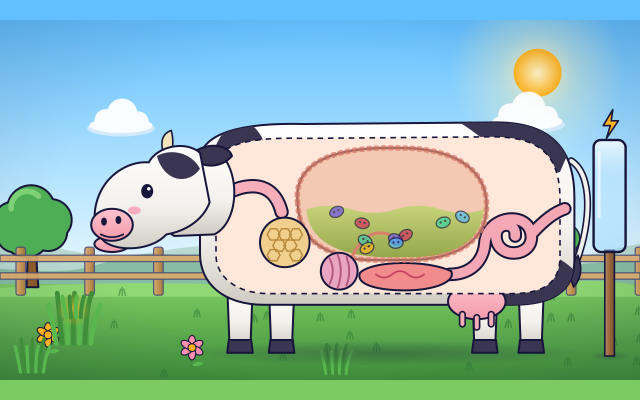
The interactive parts didn't load. The explanations below still work; try reloading the page.
Where does the grass go?
- A cow wraps her tongue around the grass, tears it off and swallows it almost whole. Grass is tough and stringy. If you ate it, you would get almost nothing from it.
- The grass drops into the rumen, the first and biggest of four stomach rooms. It can hold more than a bathtub full. Strong muscles churn the grass with warm liquid.
- The rumen is full of microbes, living things too small to see. They can do what the cow cannot: break the tough fibers apart. They make food for the cow, and gas that she burps out.
- Big pieces are hard for microbes to work on. So the cow brings a wad of grass back up to her mouth and chews it again, slowly and thoroughly. This is called chewing the cud.
- When the pieces are small enough, they move on. The omasum squeezes out water. Then the abomasum, the cow's true stomach, adds acid and digests the mush, microbes and all.
- In the long intestine, the last nutrients pass into the blood. They power the cow's muscles and let her make milk. What is left over comes out as dung, which feeds the soil and next year's grass.
Follow a mouthful of grass
Step through the journey of one mouthful of grass, from the meadow to the far end of the cow.
- 1. Tear and swallow. A cow has no top front teeth. She grips grass between her tongue and a tough pad, tears it off and swallows it after a few quick chews.
- 2. Rumen: soak and ferment. The rumen is a huge, warm tank. Billions of microbes live there. They break down the grass fibers and make food the cow soaks up through the rumen wall.
- 3. Reticulum: sort. The reticulum has a lining like a honeycomb. It sorts the grass: tiny bits may move on, and big bits are packed into a ball to be chewed again.
- 4. Chew the cud. The ball of grass, the cud, travels back up to the mouth. The cow chews it slowly with a sideways grinding motion, then swallows it again.
- 5. Omasum: squeeze. The omasum is packed with thin folds like the pages of a book. They press on the mush and soak up water from it.
- 6. Abomasum: true stomach. The abomasum works like your stomach. It adds acid and digestive juices. It even digests the microbes that came along, and they are full of protein.
- 7. Intestines: soak it up. The intestines are a very long, coiled tube. The food passes through their walls into the blood. What is left over leaves the cow as dung.
Guide the grass through the cow
Tap each glowing organ to move the grass along. Change how long the cow chews her cud, and see how much energy she gets from one mouthful.
Experiment: What happens if the cow swallows her cud after only a few chews?
- Leave "Cud chews" high and guide the grass all the way through. Look at the energy jar.
- Press "New mouthful", set "Cud chews" very low and do it again.
- Compare the two jars.
What we found: Big pieces of grass give the microbes very little to work on, so the cow gets little energy. Chewing the cud grinds the pieces small, and the microbes can then reach much more of the grass. The cow cannot digest grass alone, and the microbes cannot chew. They need each other.
Turn on JavaScript to try it yourself.
Guide the grass from memory
Send one mouthful through all the stops in the right order, with no glowing hints. Do not forget the cud!
How a cow digests grass
Grass is made mostly of tough fiber called cellulose. People cannot digest it, and neither can a cow on her own. The cow's trick is to carry helpers inside her. Her first and biggest stomach room, the rumen, is home to billions of microbes that can break cellulose apart.
The rumen is like a warm, wet tank that is always being stirred. The microbes feed on the grass and make substances that the cow soaks up through the rumen wall. Those give her most of her energy. The microbes also make gas, which she burps out.
Microbes can only work on the outside of each piece of grass. So the cow helps them. She brings wads of grass back up to her mouth and chews them again, slowly, for hours every day. This is called chewing the cud. The smaller the pieces, the more the microbes can reach.
When the pieces are small enough, they move through three more rooms. The omasum squeezes out water. The abomasum digests the mush, and the microbes with it, using acid like your own stomach. The intestines take the food into the blood. Sheep, goats, deer and giraffes digest their food the same way. They are all called ruminants.
Key words
- Ruminant
- An animal, such as a cow, sheep, goat or deer, with a stomach of four chambers that chews its cud.
- Rumen
- The biggest stomach room, where microbes break down the grass.
- Cud
- A wad of partly digested food brought back up from the stomach to be chewed again.
- Microbes
- Living things too small to see without a microscope, such as bacteria.
- Cellulose
- The tough fiber that plant stems and leaves are made of.
- Fermentation
- Microbes breaking food down without air and turning it into other things.
Check your thinking
-
What actually breaks down the tough fiber in grass?
Show the answer
Microbes living in the rumen. The cow cannot digest fiber herself. The microbes in her rumen do it and share what they make.
-
Why does a cow chew her cud?
Show the answer
To grind the grass smaller, so the microbes can reach more of it. Microbes work on the surface of each piece. Smaller pieces mean much more surface.
-
Which room is most like your own stomach?
Show the answer
The abomasum, the fourth room. The abomasum makes acid and digestive juices, just as a human stomach does.
-
Put these in order for one mouthful of grass: chew the cud, rumen, swallow.
Show the answer
Swallow, rumen, chew the cud. The grass is swallowed quickly, soaks in the rumen, and only then comes back up to be chewed as cud.
-
Which of these animals digests its food the same way as a cow?
Show the answer
A sheep. Sheep, goats, deer and giraffes are ruminants too. They all have four stomach rooms and chew the cud.
You're a Animals expert!
You watched, looked inside, tried it, solved the challenge and went deeper. Pick another question below, or switch the age at the top to see this topic another way.
More about animals
 #221
Animals
How do cows produce milk?
Trace nutrients into milk-producing tissue and follow milk through a simplified udder.
#221
Animals
How do cows produce milk?
Trace nutrients into milk-producing tissue and follow milk through a simplified udder.
 #222
Animals
How do sheep grow wool?
Explore follicles, fiber growth, and changes in fleece before and after shearing.
#222
Animals
How do sheep grow wool?
Explore follicles, fiber growth, and changes in fleece before and after shearing.
 #223
Animals
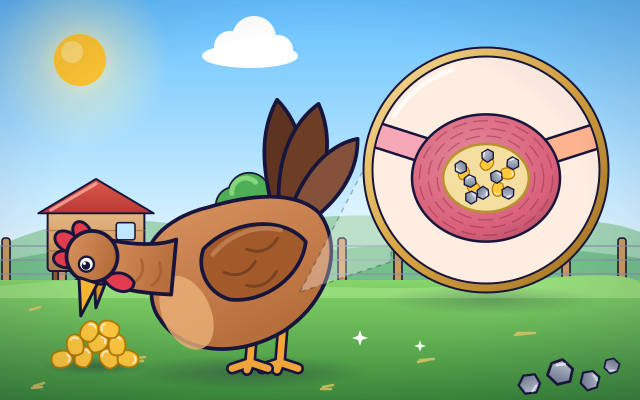
How do chickens grind food without teeth?
Follow feed through the crop and gizzard, observing storage and grinding.
#223
Animals
How do chickens grind food without teeth?
Follow feed through the crop and gizzard, observing storage and grinding.
 #224
Animals
How do homing pigeons find their way back?
Compare navigation cues such as landmarks and sunlight in a simplified journey.
#224
Animals
How do homing pigeons find their way back?
Compare navigation cues such as landmarks and sunlight in a simplified journey.
Keep exploring
Games to play next
- Habitat Builder 3DFind the right home for frogs, camels, polar bears and more.
- Classification ExplorerSort living things by what you can see, then follow and build yes-or-no keys.
- Forest Trails PhotosCreep up on the animals of a big forest valley and take the closest, best wildlife photos you can, without startling them.
Guide for grown-ups
- How to start homeschooling: a step-by-step guide for familiesA guide for parents · 7 min read
Science games by grade
Science worksheets by grade
- Preschool Science Worksheets
- Pre-K Science Worksheets
- Kindergarten Science Worksheets
- 1st Grade Science Worksheets
- 2nd Grade Science Worksheets
- 3rd Grade Science Worksheets
- 4th Grade Science Worksheets
- 5th Grade Science Worksheets
- 6th Grade Science Worksheets
- 7th Grade Science Worksheets
- 8th Grade Science Worksheets