How do chickens grind food without teeth?
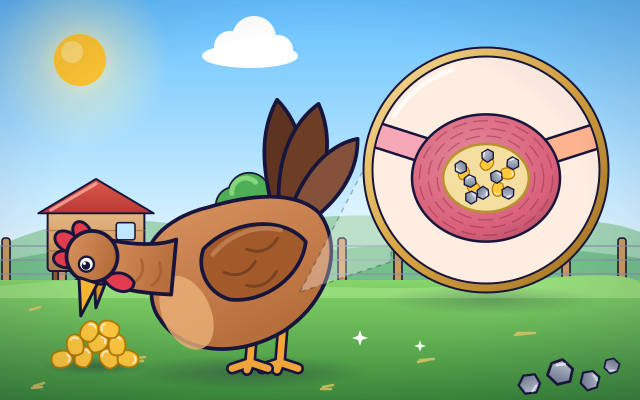
A chicken swallows food whole. A pouch stores it, and a muscular gizzard grinds it up with little stones.
The big idea: Food waits in a stretchy pouch called the crop. Then the gizzard, a tummy with very thick muscles, squeezes it against swallowed stones. The stones do the job of teeth.
It's like putting crackers and a few clean pebbles in a strong bag and squeezing it: your hands are the muscles, and the pebbles crush the crackers into crumbs.
The interactive parts didn't load. The explanations below still work; try reloading the page.
How a chicken chews without teeth
- Henny pecks up hard, dry corn. But her beak has no teeth at all, so she cannot chew. She swallows every piece whole. How does her body break it up?
- She tips her head back and the corn slides down a tube in her neck called the gullet. Each piece is still whole and hard.
- First stop: the crop, a stretchy pouch at the bottom of her neck. She can fill it quickly, like a shopping bag. Inside, the corn soaks and softens for a few hours.
- Bit by bit, the soft corn moves into a small first stomach. Its walls squirt out strong juices that start to break the food down.
- Now the gizzard, a stomach with very thick, strong muscles. It holds little stones, called grit, that Henny swallowed. The muscles squeeze, the stones rub, and the corn is ground to mush.
- The mush flows on into the intestine, where the good parts pass into her blood. The stones slowly wear down, so Henny pecks up new ones from the ground.
Look inside a chicken
Here is Henny with her insides showing. Tap each part the food passes through, then look in the round window at the gizzard cut open.
- Beak. A hard, pointed beak for picking up seeds, bugs and grass. It can pinch and tear, but it has no teeth, so it cannot chew.
- Gullet. The tube that carries swallowed food down the neck. Its walls squeeze behind each mouthful to push it along.
- Crop. A stretchy storage pouch at the bottom of the neck. Henny can eat a lot quickly and digest it slowly later. The food soaks and softens here.
- First stomach. A small stomach whose walls make strong digestive juices. The juices soak into the food and begin to break it down.
- Gizzard. A stomach with very thick, strong muscle walls. It squeezes hard again and again and grinds the food. This is where the chewing happens.
- Grit. Small, hard stones the hen swallows on purpose. They stay in the gizzard and crush the food when the muscles squeeze. They work like teeth.
- Intestine. A long, coiled tube. The ground-up food passes through it, and the useful parts soak through its wall into the blood.
Do the stones really help?
Pip's gizzard has no grit. Henny's gizzard has plenty. Feed them both the same corn and watch the two gizzards squeeze. Which one grinds faster?
Experiment: Two gizzards squeeze the same corn. One has grit and one has none. What happens?
- Tap the corn pile to feed both hens.
- Watch both gizzards squeeze. Tap a gizzard to squeeze faster.
- See which one turns the corn to mush first.
What we found: The gizzard with grit grinds the corn much faster. Soft muscle walls can only press on the hard grain. The stones are hard too, so when the muscles squeeze, the stones crack and crush it.
Turn on JavaScript to try it yourself.
Dinner before sunset
Henny's crop is full of corn. Tap pebbles to give her grit and get all the corn ground before the sun sets. Careful: not everything on the ground is good grit, and stones wear away!
How a chicken really chews
Chickens, like all birds, have no teeth. A beak is good for picking food up, but it cannot chew. So a chicken swallows its food whole, and the chewing happens later, inside its body.
The food first slides down the gullet into the crop, a stretchy pouch at the bottom of the neck. The crop is a storage bag. A hen can peck up a lot of food quickly and then go somewhere safe to digest it. In the crop the food soaks and gets softer.
A little at a time, the food moves into a small stomach that adds strong juices, and then into the gizzard. The gizzard has very thick, strong muscles and a tough lining. It also holds small stones, called grit, that the hen has swallowed on purpose. When the muscles squeeze, the stones rub and crush the food.
The stones are needed because muscle is soft and grain is hard. The stones are even harder than the grain, so they can crack it. They slowly wear down, so hens keep pecking up new ones. Finally the mush moves into the intestine, where the hen's body takes in the useful parts.
Key words
- Crop
- A stretchy pouch at the bottom of a bird's neck that stores and softens food.
- Gizzard
- A stomach with very thick muscles that grinds food.
- Grit
- Small, hard stones a bird swallows to help its gizzard grind food.
- Gullet
- The tube that carries swallowed food down the neck.
- Surface area
- How much outside a thing has. Many small pieces have much more outside than one big piece, so juices can reach more of the food.
Check your thinking
-
Where does a chicken's food get ground up?
Show the answer
In the gizzard. The beak cannot chew and the crop only stores. The gizzard's strong muscles do the grinding.
-
Why does a hen swallow little stones?
Show the answer
They crush food in the gizzard, like teeth. The gizzard's muscles squeeze the hard stones against the food and crush it.
-
What is the crop for?
Show the answer
Storing food so it can be digested later. The crop is like a shopping bag. Henny fills it quickly, and the food moves on a little at a time.
-
A hen eats soft, finely ground mash instead of whole corn. How much grit does she need?
Show the answer
Much less, because the food is already in tiny pieces. Grit is for breaking big, hard pieces. If the food is already tiny, there is little left to grind.
-
In the challenge model, why can adding more and more stones slow the gizzard down?
Show the answer
Stones take up room, so less grain fits in at a time. The gizzard has limited space. Grinding power rises with grit, but the room left for grain falls, so there is a best amount in between.
You're a Animals expert!
You watched, looked inside, tried it, solved the challenge and went deeper. Pick another question below, or switch the age at the top to see this topic another way.
More about animals
 #224
Animals
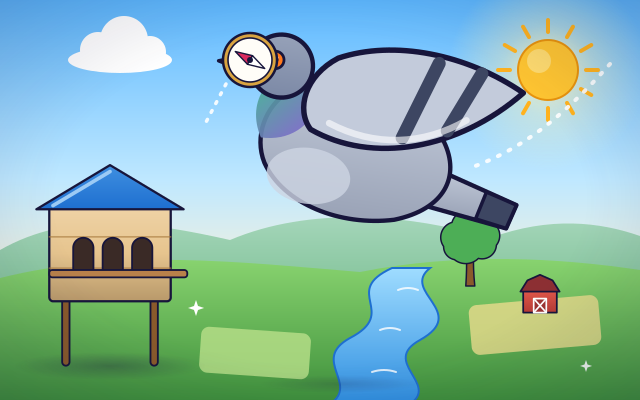
How do homing pigeons find their way back?
Compare navigation cues such as landmarks and sunlight in a simplified journey.
#224
Animals
How do homing pigeons find their way back?
Compare navigation cues such as landmarks and sunlight in a simplified journey.
 #225
Animals
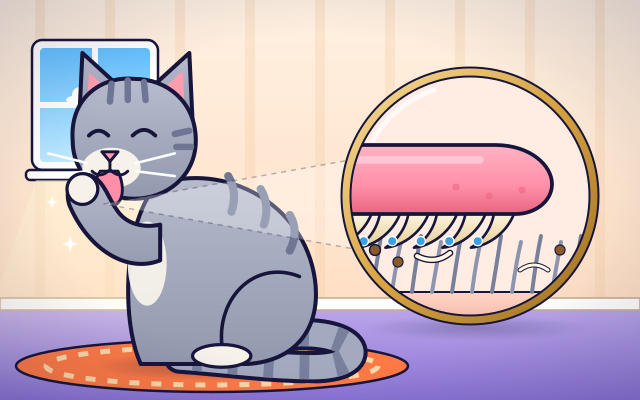
How do cats clean themselves with their tongues?
Zoom into tongue structures and follow their role in grooming fur.
#225
Animals
How do cats clean themselves with their tongues?
Zoom into tongue structures and follow their role in grooming fur.
 #94
Animals
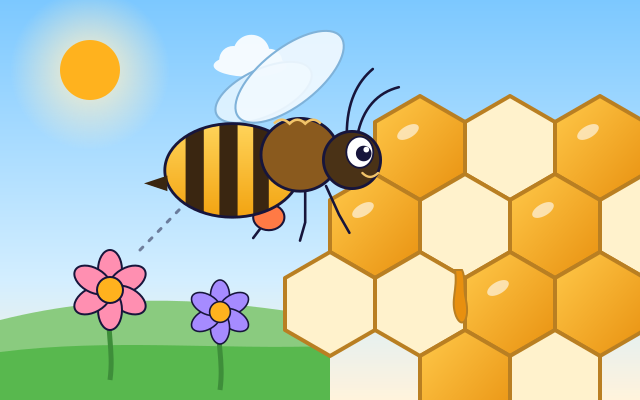
How do bees make honey?
Follow nectar from flowers to the hive. Explore how bees process it, remove water, and store the resulting honey in honeycomb cells.
#94
Animals
How do bees make honey?
Follow nectar from flowers to the hive. Explore how bees process it, remove water, and store the resulting honey in honeycomb cells.
 #95
Animals
How does a caterpillar become a butterfly?
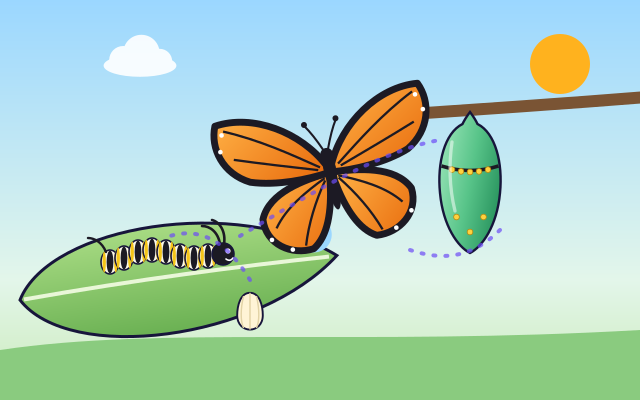
Arrange the egg, caterpillar, chrysalis, and butterfly stages. Use a time slider and close-up animations to explore the changes during metamorphosis.
#95
Animals
How does a caterpillar become a butterfly?
Arrange the egg, caterpillar, chrysalis, and butterfly stages. Use a time slider and close-up animations to explore the changes during metamorphosis.
Keep exploring
Games to play next
- Habitat Builder 3DFind the right home for frogs, camels, polar bears and more.
- Classification ExplorerSort living things by what you can see, then follow and build yes-or-no keys.
- Forest Trails PhotosCreep up on the animals of a big forest valley and take the closest, best wildlife photos you can, without startling them.
Guide for grown-ups
- How to start homeschooling: a step-by-step guide for familiesA guide for parents · 7 min read
Science games by grade
Science worksheets by grade
- Preschool Science Worksheets
- Pre-K Science Worksheets
- Kindergarten Science Worksheets
- 1st Grade Science Worksheets
- 2nd Grade Science Worksheets
- 3rd Grade Science Worksheets
- 4th Grade Science Worksheets
- 5th Grade Science Worksheets
- 6th Grade Science Worksheets
- 7th Grade Science Worksheets
- 8th Grade Science Worksheets