How do sheep grow wool?
Each wool fiber grows from a tiny pocket in the skin called a follicle. After shearing, it simply grows again.
The big idea: A wool fiber is made at the bottom of a follicle. New cells are added there and push the older part up and out, so the fiber gets longer every day.
It's like your hair growing from your scalp: each hair is pushed out of a tiny pocket in the skin, and after a haircut it just keeps on growing.
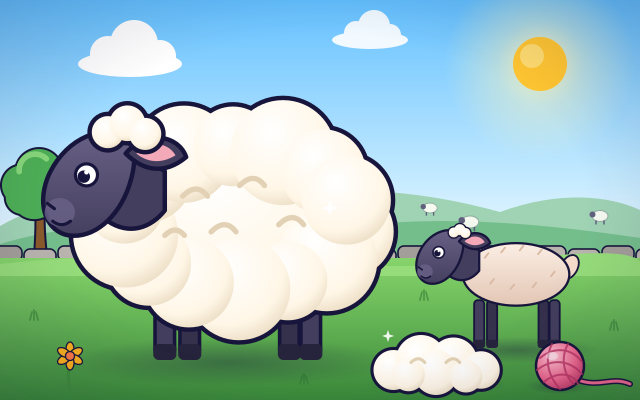
The interactive parts didn't load. The explanations below still work; try reloading the page.
How a sheep grows its wool
- Dotty the sheep is covered in a thick coat of wool, called a fleece. She was not born with all of it. So where does it come from?
- Up close, her skin is full of tiny pockets called follicles, packed tightly together. One wool fiber grows out of each pocket.
- At the bottom of each follicle, blood brings food, and new cells are made all the time. They push the older cells up. Those harden into a strong fiber that slides out of the skin.
- Beside each follicle, a gland coats the fiber with grease called lanolin, so rain rolls off. The fibers are wavy, and the waves trap air that keeps the sheep warm.
- Her wool never stops growing, so every spring the shearer gives her a haircut. It does not hurt, because the fiber is not alive. The follicles stay in the skin.
- Right away the follicles push out new wool, about a centimeter each month. Through summer, autumn and winter the fleece thickens, and by next spring Dotty is ready for another haircut.
Look inside a sheep's skin
This is a slice through a sheep's skin, magnified many times. Tap each part to see what it does.
- Wool fiber. The part of the wool you can see and touch. It is not alive, which is why cutting it does not hurt. Its waves make the fleece springy.
- Skin. The skin protects the sheep's body. The wool grows out through it from the follicles underneath.
- Follicle. A narrow pocket in the skin that holds and shapes one fiber. A sheep has millions of follicles, and each one makes one fiber, over and over.
- Growing root. The rounded bottom of the follicle. Here new cells are made all the time. They push the older cells upward, and that makes the fiber longer.
- Blood supply. Tiny blood vessels reach into the bottom of the follicle. They bring the food and oxygen the busy cells need to build wool.
- Grease gland. A small gland that oozes grease, called lanolin, onto the fiber. Lanolin keeps the wool soft and makes rain run off the fleece.
- Fiber scales. Seen very close up, a wool fiber is covered in tiny overlapping scales, like roof tiles. The scales help fibers grip each other when wool is spun into yarn.
Does food change how wool grows?
Dotty has rich green pasture. Pip has poor, dry pasture. Shear them both, then move time forward. Whose wool grows faster?
Experiment: Two sheep are sheared on the same day. One has rich pasture, the other has poor pasture. A year later, whose wool is longer?
- Tap a sheep to shear them both. Look at the rulers.
- Slide the months to 12, or press the button to let a year go by.
- Compare the two rulers. Which fiber is longer?
What we found: The well-fed sheep grows longer wool. Wool is built by cells at the bottom of each follicle, and they need food from the blood to do it. Less food means slower growth.
Turn on JavaScript to try it yourself.
The spinner's order
A spinner wants wool fibers between 8 and 10 centimeters long. Choose the pasture and how many months to wait, then shear and measure.
How wool really grows
Wool is hair. Like your hair, it is made of a tough material called keratin, and it grows out of tiny pockets in the skin called follicles. A sheep has millions of them, packed closely together.
A fiber is made at the very bottom of its follicle. Blood brings food there, and new cells are made all the time. As they are pushed up, the cells fill with keratin, harden and die. So the part of the wool you can see is not alive, and cutting it does not hurt at all.
Wool is special in two ways. It is wavy, and the waves trap tiny pockets of air that keep the sheep warm in winter. It is also coated in a grease called lanolin, which makes rain run off.
Wild sheep shed their coats every year. Farm sheep were bred over thousands of years to keep growing wool without stopping, so they need a shearer to cut it, usually once a year in spring. Then the follicles simply carry on, and the wool grows back, about a centimeter every month. A sheep that eats well grows more wool.
Key words
- Fleece
- All the wool on one sheep, or the whole coat after it has been shorn off in one piece.
- Follicle
- A tiny pocket in the skin that makes one hair or wool fiber.
- Keratin
- The tough protein that wool, hair, fingernails, hooves and horns are made of.
- Lanolin
- The natural grease on wool. It keeps water out.
- Crimp
- The natural waviness of a wool fiber.
- Shearing
- Cutting off a sheep's fleece. It is a haircut and does not hurt.
Check your thinking
-
Where exactly does a wool fiber get longer?
Show the answer
At the bottom, inside the follicle. New cells are added at the bottom of the follicle and push the rest of the fiber up and out.
-
Why does shearing not hurt the sheep?
Show the answer
The wool above the skin is not alive. The fiber is made of hardened, dead cells with no nerves. Only the follicle in the skin is alive, and it is not cut.
-
Why can a sheep grow a whole new fleece after shearing?
Show the answer
The follicles are still in the skin, making new fiber. Shearing only cuts the fiber. Every follicle stays in the skin and keeps working.
-
Two sheep are sheared together. One then eats much better. A year later, its wool is…
Show the answer
Longer, because the follicle cells had more food. Cells need food to build fiber. With more food from the blood, they make wool faster.
-
Why does wavy (crimped) wool keep a sheep warm?
Show the answer
The waves trap still air, and air is a poor conductor of heat. Crimp holds the fibers apart and traps air. Heat passes slowly through still air, so the sheep's body heat stays in.
You're a Animals expert!
You watched, looked inside, tried it, solved the challenge and went deeper. Pick another question below, or switch the age at the top to see this topic another way.
More about animals
 #223
Animals
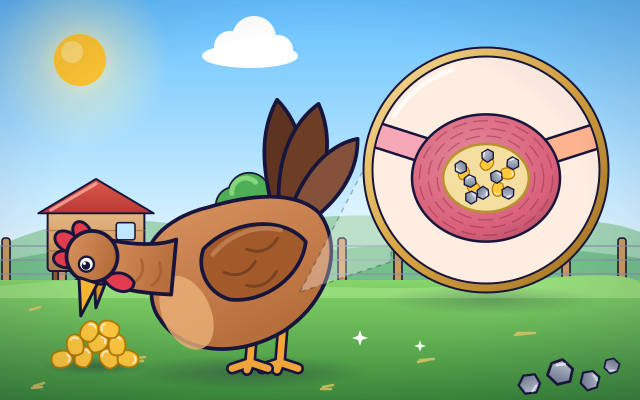
How do chickens grind food without teeth?
Follow feed through the crop and gizzard, observing storage and grinding.
#223
Animals
How do chickens grind food without teeth?
Follow feed through the crop and gizzard, observing storage and grinding.
 #224
Animals
How do homing pigeons find their way back?
Compare navigation cues such as landmarks and sunlight in a simplified journey.
#224
Animals
How do homing pigeons find their way back?
Compare navigation cues such as landmarks and sunlight in a simplified journey.
 #225
Animals
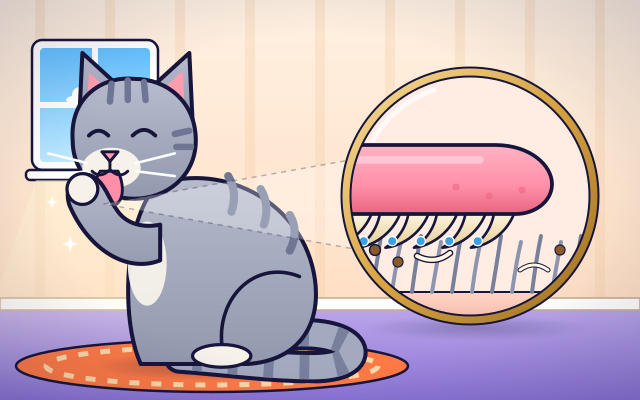
How do cats clean themselves with their tongues?
Zoom into tongue structures and follow their role in grooming fur.
#225
Animals
How do cats clean themselves with their tongues?
Zoom into tongue structures and follow their role in grooming fur.
 #94
Animals
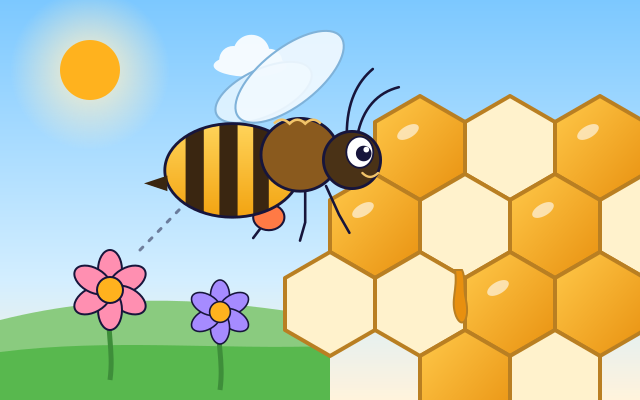
How do bees make honey?
Follow nectar from flowers to the hive. Explore how bees process it, remove water, and store the resulting honey in honeycomb cells.
#94
Animals
How do bees make honey?
Follow nectar from flowers to the hive. Explore how bees process it, remove water, and store the resulting honey in honeycomb cells.
Keep exploring
Games to play next
- SheepdogGuide the flock together and close the gate on a perfect day.
- Habitat Builder 3DFind the right home for frogs, camels, polar bears and more.
- Classification ExplorerSort living things by what you can see, then follow and build yes-or-no keys.
Guide for grown-ups
- How to start homeschooling: a step-by-step guide for familiesA guide for parents · 7 min read
Science games by grade
Science worksheets by grade
- Preschool Science Worksheets
- Pre-K Science Worksheets
- Kindergarten Science Worksheets
- 1st Grade Science Worksheets
- 2nd Grade Science Worksheets
- 3rd Grade Science Worksheets
- 4th Grade Science Worksheets
- 5th Grade Science Worksheets
- 6th Grade Science Worksheets
- 7th Grade Science Worksheets
- 8th Grade Science Worksheets