How does an aquarium stay clean and healthy?
No river washes an aquarium clean. A filter, moving water and helpful bacteria turn fish waste into something safer.
The big idea: Fish waste and leftover food make a poison called ammonia. Helpful bacteria in the filter change it into something much safer, while moving water brings in oxygen. Feed too much and the helpers cannot keep up.
It's like a small town with one recycling team: if people make more trash than the team can handle, the trash piles up.
The interactive parts didn't load. The explanations below still work; try reloading the page.
How a fish tank stays clean
- An aquarium is a little world in a glass box. In a river, fresh water keeps flowing past. Here, the same water stays in the tank day after day. So how does it stay clean enough to live in?
- Fish eat and make waste. Any food they do not eat sinks and rots. Both give off ammonia, an invisible poison that harms fish even in tiny amounts.
- A pump pulls water through a sponge inside the filter. The sponge traps floating bits, and the water flows back into the tank. But the ammonia is dissolved, so it slips straight through.
- Look very closely at the sponge. Millions of helpful bacteria live on it. They feed on ammonia and turn it into nitrite, and then into nitrate, which is much safer for fish.
- Fish breathe oxygen that is dissolved in the water. It gets in at the surface. Bubbles and the filter's flow keep the surface moving, so more oxygen mixes in. The helpful bacteria need it too.
- The safer nitrate still builds up, so each week some old water is swapped for fresh. With small meals, a working filter, moving water and a little fresh water, the tiny world stays in balance.
Look inside an aquarium
Every part of the tank has a job in keeping the fish alive. Tap each one.
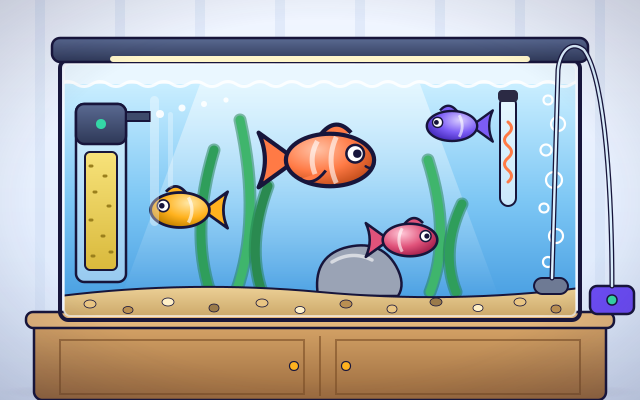
- Filter. A small pump pulls water through a sponge and pushes it back out. The sponge traps bits of dirt, and the flow stirs the whole tank.
- Helpful bacteria. Millions of helpful bacteria live on the sponge and the gravel. They turn poisonous ammonia into nitrite and then into much safer nitrate. A new tank needs a few weeks to grow them.
- Air pump and bubbles. An air pump pushes air down a tube to a bubbly stone. The rising bubbles lift water to the top and ripple the surface, and that is where oxygen gets in.
- Plants. Water plants use up some of the nitrate as food, give off oxygen in the light and give fish places to hide and rest.
- Gravel. The gravel holds plant roots and gives helpful bacteria more places to live. Leftover food collects in it, so it needs a gentle clean now and then.
- Heater and thermometer. Many pet fish come from warm rivers. A heater with a thermostat keeps the water at a steady, comfortable temperature, and a thermometer lets you check it.
- Light. The light gives the tank a day and a night, and lets plants grow. Left on too long, it makes green algae grow all over the glass.
- Fish. Fish breathe by passing water over their gills, which take in the dissolved oxygen. They are also the source of the waste, so the more fish and food, the harder everything else must work.
What happens if you overfeed?
Change how much food the fish get. Tap the filter and the air pump to switch them. Watch the water, the waste and how the fish behave.
Experiment: What happens if you give the fish far more food than they can eat?
- Start with a small meal: about one pinch for each fish.
- Now slide the food up to far too much.
- Watch the gravel, the water and the fish. Then slide it back.
What we found: Too much food is the quickest way to spoil a tank. The fish cannot eat it all, so it sinks and rots. That makes more ammonia than the helpful bacteria can handle, the water turns cloudy and the fish suffer. Small meals keep everything in balance.
Turn on JavaScript to try it yourself.
Fix the cloudy tank
This tank is in trouble. Change the feeding, the filter and the bubbles, then press Wait a week to see if the fish are healthy.
The tank's hidden cleaning team
In a pond or a river there is a huge amount of water, and plants, mud and tiny creatures all help to clean it. A fish tank holds only a little water, and nothing new flows in. Whatever you put in, mostly fish food, stays there.
Fish turn food into waste, and uneaten food rots. Both make ammonia. You cannot see it, but it burns a fish's gills, so it must not be allowed to build up. Luckily, some bacteria use ammonia as their food. They live on the filter sponge and the gravel. They turn ammonia into nitrite, which is still harmful, and other bacteria turn nitrite into nitrate, which is much safer.
These helpers need oxygen, and so do the fish. Oxygen gets into the water at the surface, so bubbles and the filter's flow are important: they keep the surface rippling and move the water around. The nitrate that is left is removed by swapping some of the water for fresh water every week or two.
The secret of a healthy tank is balance. Do not keep too many fish, feed only what they eat in a couple of minutes, and never switch the filter off. A new tank has very few helpful bacteria, so it needs a few weeks, and only a few fish, while they grow. Keeping fish is a real responsibility, so always set up a tank with a grown-up.
Key words
- Ammonia
- An invisible poison that comes from fish waste and rotting food.
- Helpful bacteria
- Tiny living things on the filter that turn ammonia into safer nitrate.
- Nitrate
- What is left after the bacteria have done their work. It is much safer and is removed with fresh water.
- Dissolved oxygen
- Oxygen gas mixed into the water, which fish take in through their gills.
- Cycling
- The weeks a new tank needs to grow enough helpful bacteria.
Check your thinking
-
What do the helpful bacteria in the filter do?
Show the answer
They turn poisonous ammonia into much safer nitrate. The bacteria use ammonia as food and leave nitrate behind, which fish can cope with.
-
Why is overfeeding bad for a fish tank?
Show the answer
Leftover food rots and makes more poison than the bacteria can handle. Uneaten food decays into ammonia and uses up oxygen. Small meals keep the waste low.
-
The fish are gulping at the top of the water. What should you check first?
Show the answer
Whether the bubbles and filter are moving the water. Gulping at the surface means too little oxygen. Moving water lets more oxygen mix in.
-
A new tank is filled today and ten fish are added at once. What is the most likely result?
Show the answer
Ammonia rises, because the bacteria colony is still far too small. Nitrifying bacteria take weeks to multiply. Until then nothing converts the fishes' ammonia.
-
Why is some of the water changed every week or two?
Show the answer
To take away the nitrate that slowly builds up. Nitrate is the safer end of the line, but only fresh water or plants take it out.
You're a Animals expert!
You watched, looked inside, tried it, solved the challenge and went deeper. Pick another question below, or switch the age at the top to see this topic another way.
More about animals
 #206
Animals
How do dogs communicate without words?
Compare posture, expressions, sounds, and context to explore different signals.
#206
Animals
How do dogs communicate without words?
Compare posture, expressions, sounds, and context to explore different signals.
 #207
Animals
How do mosquitoes develop and find food?
Follow their life cycle and compare how adult females and males obtain food.
#207
Animals
How do mosquitoes develop and find food?
Follow their life cycle and compare how adult females and males obtain food.
 #208
Animals
How can flies transfer germs between surfaces?
Track harmless markers on virtual fly feet as they contact different surfaces.
#208
Animals
How can flies transfer germs between surfaces?
Track harmless markers on virtual fly feet as they contact different surfaces.
 #209
Animals
How do fleas live on pets and around homes?
Follow eggs, larvae, pupae, and adults through a model home.
#209
Animals
How do fleas live on pets and around homes?
Follow eggs, larvae, pupae, and adults through a model home.
Keep exploring
Games to play next
- Deep Sea ExplorationLight the blue, meet ocean wildlife and discover hidden treasures.
- Habitat Builder 3DFind the right home for frogs, camels, polar bears and more.
- Classification ExplorerSort living things by what you can see, then follow and build yes-or-no keys.
Draw it or make it
- How to draw a fishDrawing lesson
- Pull-Tab Swimming Fish CardPaper craft
Guide for grown-ups
- How to start homeschooling: a step-by-step guide for familiesA guide for parents · 7 min read
Science games by grade
Science worksheets by grade
- Preschool Science Worksheets
- Pre-K Science Worksheets
- Kindergarten Science Worksheets
- 1st Grade Science Worksheets
- 2nd Grade Science Worksheets
- 3rd Grade Science Worksheets
- 4th Grade Science Worksheets
- 5th Grade Science Worksheets
- 6th Grade Science Worksheets
- 7th Grade Science Worksheets
- 8th Grade Science Worksheets