How do mosquitoes develop and find food?
Egg, wriggler, pupa, adult: follow a mosquito from the pond to the air, and find out who drinks what.
The big idea: A mosquito changes shape four times: egg, larva, pupa and adult. The young live in still water. Adults sip nectar, and only mother mosquitoes take a tiny meal of blood, to make eggs.
It's like a caterpillar turning into a butterfly, except the baby lives under water: egg, wriggler, resting pupa, then a flying adult.
The interactive parts didn't load. The explanations below still work; try reloading the page.
A mosquito grows up
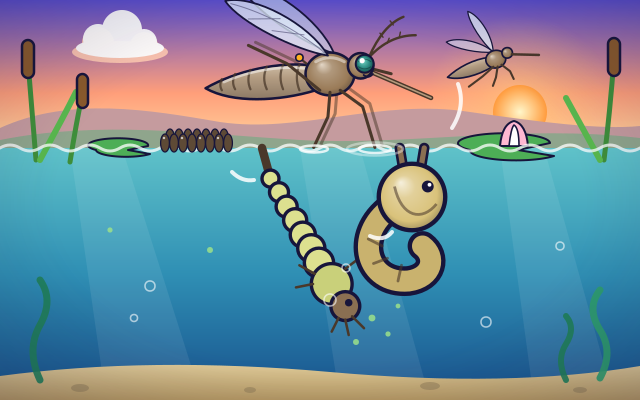
- Evening at a still pond. A mosquito hums over the water. It began its life right here, under the surface. Let's follow one from the very start.
- A mother mosquito stands on the water and lays about a hundred eggs. In many kinds of mosquito the eggs stick together and float like a tiny raft.
- Each egg hatches into a larva, called a wriggler. It hangs from the surface and breathes air through a tube, like a snorkel. It eats tiny specks floating in the water.
- After about a week the wriggler becomes a pupa, shaped like a comma. It does not eat. Inside, its body is being rebuilt with wings, long legs and a new mouth.
- The pupa's skin splits at the surface. The adult climbs out, stands on the water and waits for its wings to dry and harden. Then it flies away.
- Both males and females drink sweet nectar from flowers for energy. Only females take a tiny meal of blood from an animal. They need it to make eggs. Males never bite.
The parts of a mosquito
Tap each part of the mosquito. Watch the antennae: they change between a female's and a male's.
- Antennae. Antennae smell the air and pick up sound. A male's antennae are bushy, like tiny feathers. He uses them to hear the hum of a female's wings.
- Eyes. Each big eye is made of hundreds of tiny lenses. They are good at spotting movement and dark shapes.
- Proboscis. The proboscis is a mouth shaped like a drinking straw. Both males and females use it to sip nectar. Only a female's can pierce skin.
- Wings. A mosquito's two wings beat hundreds of times every second. That fast beating makes the high humming sound you hear.
- Balancers. Behind the wings are two tiny knobs called halteres. They swing as the mosquito flies and help it keep its balance.
- Legs. Six long, thin legs let a mosquito land very gently. They are so light and water-repellent that it can stand on water.
- Abdomen. The long abdomen holds the stomach. It stretches when the mosquito drinks. In a female, eggs grow inside it.
Who drinks what?
Choose a female or a male. Send it to the flowers, then to the cow. Watch the energy bar and the eggs. What is different?
Experiment: Do both male and female mosquitoes bite animals?
- Pick the female. Tap the flowers, then tap the cow.
- Pick the male. Tap the flowers, then tap the cow.
- Compare the energy bar and the eggs each time.
What we found: Both drink nectar, and nectar is their energy food. Only the female takes a tiny meal of blood, and she uses it to make eggs. The male cannot bite at all.
Turn on JavaScript to try it yourself.
Empty it in time
This week is warm, so wrigglers need about 10 days to become adults. Choose how often to empty the bucket so none grows up. For 3 stars, empty it as rarely as you safely can.
Growing up in water
A mosquito's life has four stages, and it looks completely different in each one. That kind of change is called metamorphosis. It begins when a mother mosquito lays her eggs on still water. Still water matters: a pond, a puddle or an old bucket will do, but a rushing stream would wash the eggs away.
The eggs hatch into larvae, which people call wrigglers. A wriggler lives under water, yet it breathes air. It hangs from the surface and pokes up a breathing tube, like a snorkel. It sweeps tiny bits of food into its mouth. After about a week it turns into a pupa, a comma-shaped resting stage. Inside the pupa, the body is rebuilt with wings.
The adult climbs out, dries its wings and flies off. Adult mosquitoes drink sweet nectar from flowers, which gives them energy to fly. Only females take a tiny meal of blood, because they need its protein to make eggs. The itchy bump is your skin reacting to a little of her saliva.
Mosquitoes are food for fish, frogs, dragonflies, birds and bats, and some even carry pollen between flowers. If you would like fewer of them near your home, the kindest trick is simple: tip out still water once a week, so the wrigglers never get the time to grow up.
Key words
- Metamorphosis
- A big change of body shape as an animal grows up, like a wriggler becoming a flying mosquito.
- Larva
- The young, feeding stage that hatches from the egg. A mosquito larva is called a wriggler.
- Pupa
- The resting stage in which the larva's body is rebuilt into an adult.
- Nectar
- The sweet liquid flowers make. It is energy food for many insects.
- Degree-day
- A way to measure warmth over time. More warm days means faster growth for an insect.
Check your thinking
-
Where do mosquito larvae, the wrigglers, live?
Show the answer
In still water, hanging from the surface. Wrigglers live in still water and breathe through a tube at the surface.
-
What do both male and female mosquitoes drink for energy?
Show the answer
Nectar from flowers. Nectar is sugary, and sugar is the fuel for flying.
-
Why does a female mosquito take a meal of blood?
Show the answer
She needs it to make her eggs. Blood has protein, and a mother mosquito uses protein to build eggs.
-
You find wrigglers in a bucket of rainwater. What would stop them from becoming adults?
Show the answer
Tipping the water out. Wrigglers need water to finish growing. No still water, no new mosquitoes.
-
How can you tell a male mosquito from a female?
Show the answer
The male has bushy, feathery antennae. Male antennae are bushy. He uses them to hear a female's wing hum.
You're a Animals expert!
You watched, looked inside, tried it, solved the challenge and went deeper. Pick another question below, or switch the age at the top to see this topic another way.
More about animals
 #208
Animals
How can flies transfer germs between surfaces?
Track harmless markers on virtual fly feet as they contact different surfaces.
#208
Animals
How can flies transfer germs between surfaces?
Track harmless markers on virtual fly feet as they contact different surfaces.
 #209
Animals
How do fleas live on pets and around homes?
Follow eggs, larvae, pupae, and adults through a model home.
#209
Animals
How do fleas live on pets and around homes?
Follow eggs, larvae, pupae, and adults through a model home.
 #210
Animals
How do ants follow scent trails?
Lay scent trails, introduce obstacles, and watch ants find routes to food.
#210
Animals
How do ants follow scent trails?
Lay scent trails, introduce obstacles, and watch ants find routes to food.
 #211
Animals
How do honeybees share the location of food?
Decode a simplified waggle dance and guide bees toward the matching flower patch.
#211
Animals
How do honeybees share the location of food?
Decode a simplified waggle dance and guide bees toward the matching flower patch.
Keep exploring
Games to play next
- Classification ExplorerSort living things by what you can see, then follow and build yes-or-no keys.
- Habitat Builder 3DFind the right home for frogs, camels, polar bears and more.
- Forest Trails PhotosCreep up on the animals of a big forest valley and take the closest, best wildlife photos you can, without startling them.
Guide for grown-ups
- How to start homeschooling: a step-by-step guide for familiesA guide for parents · 7 min read
Science games by grade
Science worksheets by grade
- Preschool Science Worksheets
- Pre-K Science Worksheets
- Kindergarten Science Worksheets
- 1st Grade Science Worksheets
- 2nd Grade Science Worksheets
- 3rd Grade Science Worksheets
- 4th Grade Science Worksheets
- 5th Grade Science Worksheets
- 6th Grade Science Worksheets
- 7th Grade Science Worksheets
- 8th Grade Science Worksheets