How do fleas live on pets and around homes?
Only a few fleas ride on the pet. Follow the eggs, larvae and cocoons hidden around a model home.
The big idea: A flea has four life stages. Only the adults live on the pet. Their eggs fall off wherever the pet rests, and the larvae and cocoons hide in carpets and bedding. So caring for the pet and cleaning the home go together.
It's like a dandelion and its seeds: you see the one flower, but most of the next plants are already scattered around, waiting to grow.
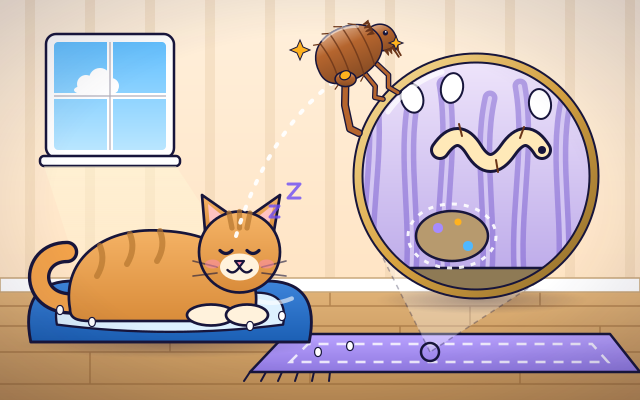
The interactive parts didn't load. The explanations below still work; try reloading the page.
A flea's hidden life
- Mango the cat keeps scratching. Something very small is living in the fur. Let's look closer, and then follow where its family lives.
- Here is a flea, magnified. Its body is flat from side to side, so it slips between the hairs. It has no wings. Instead, it has huge back legs for jumping.
- A mother flea lays dozens of eggs a day. The eggs are smooth and not sticky, so they roll out of the fur. They land wherever the pet rests: its bed, the rug, the sofa.
- In a few days each egg hatches into a larva, like a tiny worm. Larvae avoid light, so they wriggle deep into the carpet, where they eat crumbs and specks.
- After a week or two the larva spins a silk cocoon. Dust sticks to it, so it is hard to see. Inside, a new adult waits until it feels warmth and footsteps. Then it pops out and jumps.
- Out of every hundred fleas, only about five are adults on the pet. The rest are eggs, larvae and cocoons in the home. So families wash pet bedding, vacuum, and ask a vet for the right flea treatment.
How a flea is built
Tap each part of the flea. Find the spring that powers its jump.
- Flat body. A flea's body is squeezed flat from side to side, like a coin on its edge. That shape lets it slide quickly between the hairs of a pet.
- Tough shell. A flea wears a hard, smooth shell made of overlapping plates. It is very hard to squash, even when the pet scratches.
- Jumping legs. The back legs are long and strong. A flea can jump about 20 centimeters, which is around a hundred times its own body length.
- Spring pad. At the top of each back leg is a pad of rubbery stuff called resilin. The flea squeezes it slowly, locks it, then lets go. The pad snaps back and flings the flea into the air.
- Combs. Rows of stiff spines, called combs, point backward. If the pet tries to scratch the flea out, the combs catch on the hairs and hold it in.
- Mouth. An adult flea's mouth is like a very thin straw. It takes tiny sips of blood from the pet. The sips can make the skin itch.
- Senses. A flea has small eyes and short feelers. It senses warmth, movement and the breath of an animal, so it knows when a pet is near.
Follow the stages
Choose where the cat naps, then let a week go by. Watch the eggs, larvae and cocoons in the three zoom windows. Where do most fleas live?
Experiment: After a few weeks, where are most of the fleas?
- Let the cat nap on its bed and let a week go by. Look in the bed's zoom window.
- Keep going for three more weeks. Watch eggs turn into larvae, then cocoons.
- Move the cat to the rug and see where the new eggs land.
What we found: Most fleas are hidden in the home, not on the cat. The eggs fall where the cat rests, and the larvae and cocoons grow there. Cocoons wait until the cat comes back, then new fleas hop on.
Turn on JavaScript to try it yourself.
Break the cycle
Make the home and the cat flea-free. Each week you can do two jobs, then let the week go by. For 3 stars, finish in two weeks.
The hidden life of fleas
Fleas are tiny insects without wings. A grown-up flea is about as big as a grain of sand. It lives in the fur of an animal such as a cat or a dog and takes tiny sips of its blood. Its body is flat from side to side, so it can slip between hairs, and its back legs are built for jumping.
A mother flea lays dozens of smooth, white eggs every day. Because they are not sticky, they roll off the pet. They land where the pet spends its time: in its bed, on the rug, on the sofa. In a few days they hatch into larvae, which look like tiny worms.
Larvae do not like light. They wriggle deep into carpets and bedding and eat specks and crumbs. After a week or two each one spins a cocoon. Inside, it changes into an adult. Then it waits, sometimes for weeks, until it feels the warmth and footsteps of an animal. Out it pops, and it jumps on.
This means that most fleas are not on the pet at all. Out of every hundred, about ninety-five are eggs, larvae and cocoons in the home. So families do two things together: a vet chooses a flea treatment for the pet, and the grown-ups wash pet bedding in hot water and vacuum often. Fleas are common, and having them does not mean a home is dirty.
Key words
- Parasite
- A living thing that lives on another animal and feeds from it.
- Host
- The animal a parasite lives on. For a cat flea, that is usually a cat or a dog.
- Larva
- The young, worm-like stage that hatches from the egg.
- Pupa
- The resting stage inside a cocoon, where a larva changes into an adult.
- Resilin
- A stretchy, springy protein that stores the energy for a flea's jump.
Check your thinking
-
What happens to flea eggs after they are laid?
Show the answer
They roll off the pet and land where it rests. Flea eggs are not sticky. They fall off the pet in the places where it spends its time.
-
A family finds fleas on their dog. Who should choose the flea treatment?
Show the answer
A vet, with a grown-up. A vet knows which treatment is safe for that animal's kind, size and age.
-
Out of every hundred fleas in a home, about how many are adults on the pet?
Show the answer
About 5. Only about five in a hundred are adults on the pet. The rest are hidden in the home.
-
Why can a flea cocoon wait so long before it opens?
Show the answer
It waits until it feels the warmth and footsteps of an animal. A new flea needs an animal to live on, so it stays safe in the cocoon until one comes near.
-
Which plan works best against fleas?
Show the answer
A vet's treatment for the pet, plus washing bedding and vacuuming. Fleas live in two places, on the pet and in the home, so both need care.
You're a Animals expert!
You watched, looked inside, tried it, solved the challenge and went deeper. Pick another question below, or switch the age at the top to see this topic another way.
More about animals
 #210
Animals
How do ants follow scent trails?
Lay scent trails, introduce obstacles, and watch ants find routes to food.
#210
Animals
How do ants follow scent trails?
Lay scent trails, introduce obstacles, and watch ants find routes to food.
 #211
Animals
How do honeybees share the location of food?
Decode a simplified waggle dance and guide bees toward the matching flower patch.
#211
Animals
How do honeybees share the location of food?
Decode a simplified waggle dance and guide bees toward the matching flower patch.
 #212
Animals
How do paper wasps build nests?
Follow wood fibers through chewing and shaping into a nest's paper cells.
#212
Animals
How do paper wasps build nests?
Follow wood fibers through chewing and shaping into a nest's paper cells.
 #213
Animals
How do birds build nests?
Compare designs and arrange virtual materials that support model eggs.
#213
Animals
How do birds build nests?
Compare designs and arrange virtual materials that support model eggs.
Keep exploring
Games to play next
- Classification ExplorerSort living things by what you can see, then follow and build yes-or-no keys.
- Habitat Builder 3DFind the right home for frogs, camels, polar bears and more.
- Forest Trails PhotosCreep up on the animals of a big forest valley and take the closest, best wildlife photos you can, without startling them.
Guide for grown-ups
- How to start homeschooling: a step-by-step guide for familiesA guide for parents · 7 min read
Science games by grade
Science worksheets by grade
- Preschool Science Worksheets
- Pre-K Science Worksheets
- Kindergarten Science Worksheets
- 1st Grade Science Worksheets
- 2nd Grade Science Worksheets
- 3rd Grade Science Worksheets
- 4th Grade Science Worksheets
- 5th Grade Science Worksheets
- 6th Grade Science Worksheets
- 7th Grade Science Worksheets
- 8th Grade Science Worksheets