How can flies transfer germs between surfaces?
Flies have sticky, hairy feet. Track harmless colored markers to see what they carry from place to place.
The big idea: A fly's feet have sticky pads and tiny hairs. When it lands on something dirty, tiny bits stick on. When it lands on your food, some of them rub off. That is why we cover food and wash our hands.
It's like walking through wet paint in your shoes: every step after that leaves a print, a little fainter each time.
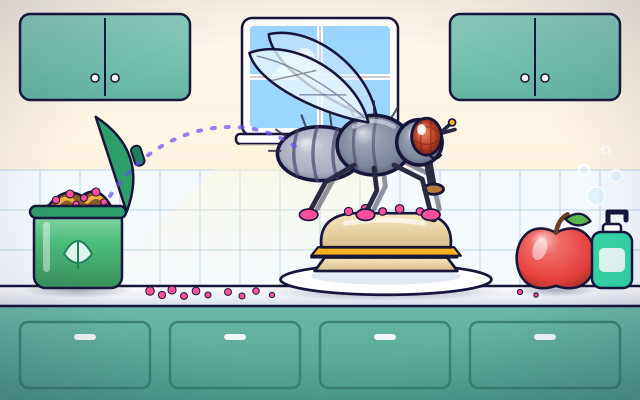
The interactive parts didn't load. The explanations below still work; try reloading the page.
What a fly carries
- A fly buzzes into the kitchen and heads for the sandwich. People always shoo flies away from food. What is the problem with a few tiny footsteps?
- Here is a fly's foot, magnified. It has two claws and two soft pads covered in tiny hairs. The pads are a little sticky, so a fly can walk up glass and across the ceiling.
- We sprinkled harmless pink marker dust on the compost. The fly lands there to look for food, and the dust sticks to its feet and leg hairs.
- Now watch where the pink goes. The fly lands on the counter, then the sandwich, then the apple. It leaves some markers each time, a little fewer with every landing.
- Real germs are far too small to see. Most germs are harmless, but a few kinds can upset your tummy. Since you cannot see where a fly has walked, a few good habits do the job.
- So keep the lid on the bin and a cover over food. Wipe the counter. And wash your hands with soap before you eat. Soap and water send the germs down the drain.
The parts of a housefly
Tap each part of the fly. Find the feet to see why things stick to them.
- Eyes. Each big eye is made of thousands of tiny lenses. A fly sees almost all around itself and notices movement very fast. That is why it is so hard to catch.
- Antennae. Two short antennae smell the air. They help the fly find food from far away.
- Sponge mouth. A housefly cannot bite or chew. Its mouth ends in a soft sponge that dabs up liquids. It has to wet dry food first to turn it into a drink.
- Wings. A housefly has one pair of wings that beat about 200 times every second. That makes the buzzing sound.
- Bristles. A fly is covered in stiff little hairs called bristles. They feel air movements, and tiny bits of dust and dirt get caught in them.
- Legs. Six jointed legs let a fly walk on any surface. You may see a fly rub its legs together. It is cleaning them.
- Feet. Each foot has two claws and two sticky pads, so a fly can walk upside down. Flies also taste with their feet. Tiny things on a surface stick to the pads.
Track the markers
Send the fly to the pink marker dust, then tap other things to make it land on them. Count the markers it leaves each time.
Experiment: The fly lands on the marker dust, then on the sandwich, the apple and the cookie. Which food gets the most markers?
- Tap the compost bin so the fly picks up pink markers.
- Tap the sandwich, then the apple, then the cookie.
- Compare the numbers above each food.
What we found: The first thing the fly lands on gets the most markers, because its feet are fullest then. Each landing after that gets fewer. But every landing gets some, so one dirty stop can reach many places.
Turn on JavaScript to try it yourself.
Three snacks, one fly
The fly will visit the bin, the counter and all three snacks. You may use two covers or lids. Keep every snack free of markers, then wash your hands. For 3 stars, use only one.
How flies carry germs
A housefly's feet are amazing. Each foot has two claws for gripping rough things and two soft pads covered in tiny hairs. The pads make a thin, sticky liquid, which is why a fly can walk up a window or stand upside down on the ceiling.
Sticky feet pick things up. Flies look for food in places like compost, bins and soil, where there are lots of germs. Germs are living things too small to see. When a fly lands there, some stick to its feet and to the stiff hairs on its legs.
When the fly lands again, some of what it is carrying rubs off. In our kitchen we used a harmless pink marker dust so you could see it happen. The first place the fly lands gets the most, and each place after that gets a little less.
Most germs are harmless, and many are helpful. A few kinds can upset your tummy if they get into food. So people use simple habits: keep a lid on the bin, cover food, wipe the counter, and wash hands with soap before eating. Soap loosens germs from your skin, and the water carries them down the drain.
Key words
- Germ
- A living thing too small to see. Most are harmless, but a few can make you unwell.
- Carrier
- An animal that moves tiny things from one place to another on its body.
- Marker
- A harmless colored powder used to show where something has been.
- Transfer
- Moving from one surface to another by touch.
- Source
- The place where something starts out.
Check your thinking
-
A fly lands on marker dust and then on a sandwich. What happens?
Show the answer
Some markers rub off its feet onto the sandwich. Tiny things stick to the fly's feet, and some rub off at the next landing.
-
Why do we wash our hands with soap before eating?
Show the answer
Soap and water lift germs off our skin and rinse them away. We cannot see germs, so we wash them off before they can get onto our food.
-
A fly visits the marker dust, then the plate, the cup and the spoon. Which gets the fewest markers?
Show the answer
The spoon, because the fly's feet have fewer markers left by then. Each landing uses up some of the markers, so later landings leave fewer.
-
There are three snacks on the counter and a fly nearby. Which one action protects all three?
Show the answer
Putting the lid on the bin, so the fly cannot pick anything up. If the fly never touches the dirty place, it has nothing to leave behind anywhere.
-
The glitter comparison works for markers. In what important way are real microbes different from glitter?
Show the answer
They are alive and can multiply on food that is warm and moist. Glitter only spreads. A few living microbes can become many, which is why food is covered and kept cool.
You're a Animals expert!
You watched, looked inside, tried it, solved the challenge and went deeper. Pick another question below, or switch the age at the top to see this topic another way.
More about animals
 #209
Animals
How do fleas live on pets and around homes?
Follow eggs, larvae, pupae, and adults through a model home.
#209
Animals
How do fleas live on pets and around homes?
Follow eggs, larvae, pupae, and adults through a model home.
 #210
Animals
How do ants follow scent trails?
Lay scent trails, introduce obstacles, and watch ants find routes to food.
#210
Animals
How do ants follow scent trails?
Lay scent trails, introduce obstacles, and watch ants find routes to food.
 #211
Animals
How do honeybees share the location of food?
Decode a simplified waggle dance and guide bees toward the matching flower patch.
#211
Animals
How do honeybees share the location of food?
Decode a simplified waggle dance and guide bees toward the matching flower patch.
 #212
Animals
How do paper wasps build nests?
Follow wood fibers through chewing and shaping into a nest's paper cells.
#212
Animals
How do paper wasps build nests?
Follow wood fibers through chewing and shaping into a nest's paper cells.
Keep exploring
Games to play next
- Classification ExplorerSort living things by what you can see, then follow and build yes-or-no keys.
- Habitat Builder 3DFind the right home for frogs, camels, polar bears and more.
- Forest Trails PhotosCreep up on the animals of a big forest valley and take the closest, best wildlife photos you can, without startling them.
Guide for grown-ups
- How to start homeschooling: a step-by-step guide for familiesA guide for parents · 7 min read
Science games by grade
Science worksheets by grade
- Preschool Science Worksheets
- Pre-K Science Worksheets
- Kindergarten Science Worksheets
- 1st Grade Science Worksheets
- 2nd Grade Science Worksheets
- 3rd Grade Science Worksheets
- 4th Grade Science Worksheets
- 5th Grade Science Worksheets
- 6th Grade Science Worksheets
- 7th Grade Science Worksheets
- 8th Grade Science Worksheets