How do dogs communicate without words?
A dog's tail, ears, face, body and voice all send messages. Learn to read them together.
The big idea: Dogs send messages with their tail, ears, face, body and voice. To understand a dog, you look at all the signals together and at what is happening around it.
It's like a game of charades: no talking allowed, so you use your arms, your face and the way you stand to show what you mean.
The interactive parts didn't load. The explanations below still work; try reloading the page.
How dogs talk without words
- Biscuit cannot speak, but Biscuit is talking all the time. Dogs send messages with their bodies. Let's learn to read them.
- Start with the tail. A loose, sweeping wag is friendly. A tail tucked between the legs means the dog is frightened. A tail held high and stiff means the dog is very alert.
- Next, the face. Soft ears and a loose, open mouth mean a calm dog. Ears pinned back, a closed mouth and licking the lips mean the dog is worried.
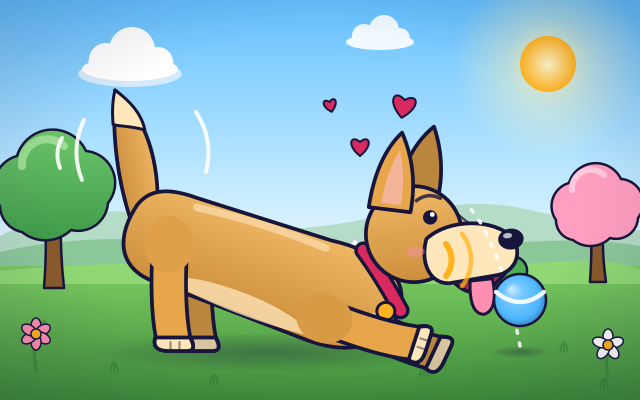
- Now the whole body. Front legs down and bottom in the air is a play bow: an invitation to play. A dog that crouches low and leans away wants more room.
- Sounds add to the message. A bark can mean excitement or an alarm. A whine asks for something. A growl is a polite warning: please stop and give me space.
- So before you pet a dog, ask the owner first. Then hold out your hand and let the dog come to you. A loose, wiggly dog is saying yes.
The parts a dog talks with
Tap each part of the dog. Watch it move through its messages.
- Tail. The tail is like a flag. Loose and sweeping means friendly. High and stiff means very alert. Tucked under means scared.
- Ears. Ears point at what the dog is interested in. Pricked forward means curious or alert. Pinned flat back means worried or scared.
- Eyes. Soft, squinty eyes belong to a relaxed dog. A worried dog opens its eyes wide and may turn its head away while still watching you.
- Mouth. A loose, open mouth means the dog is relaxed. A tightly shut mouth, licking the lips or yawning when not sleepy can mean the dog is worried.
- Body and posture. A loose, wiggly body is friendly, and a play bow invites a game. A dog that makes itself small and low is afraid. A tall, stiff, still dog wants space.
- Voice. Barks, whines, growls and howls all carry messages. A growl is not being naughty. It is the dog asking, clearly, for more space.
- Nose. Dogs greet by sniffing. Smells tell a dog who you are and how you feel. That is why you let a dog sniff your hand first.
Signal mixer
Change the tail, ears and body. Read the thought bubble. Can you make a dog that says, let's play, and one that says, I need space?
Experiment: A dog's tail is wagging. Does that always mean the dog is happy and friendly?
- Give the dog a loose, sweeping wag with a loose body. Read the bubble.
- Now choose the high, stiff wag and a stiff body. Read the bubble again.
- Try the tucked tail with a low body too.
What we found: A wag only tells you the dog is excited about something. A loose wag with a wiggly body is friendly. A stiff, fast wag on a high tail with a stiff body means, give me space. You have to read the whole dog.
Turn on JavaScript to try it yourself.
What should you do?
Four dogs are waiting. Read each dog's signals and choose the kind thing to do.
How to read a dog
Dogs are social animals. Long before they lived with people, their wolf ancestors lived in family groups, and living in a group works best when everyone can tell how the others feel. Dogs cannot speak, so they use their bodies: the tail, the ears, the eyes, the mouth and the way they stand.
A relaxed, friendly dog looks loose. Its tail swings in wide, easy sweeps, its ears are soft, its mouth hangs a little open and its whole body may wiggle. A dog that wants to play drops its front legs to the ground with its bottom in the air. That is called a play bow.
A worried dog looks tight and small. It may tuck its tail, press its ears back, lick its lips, yawn, turn its head away or crouch low. A dog that stands tall, stiff and very still, or growls, is asking clearly for space. A growl is not naughty. It is a useful warning, so step back calmly.
The most important rule is to read the whole dog, because one clue can trick you. A wagging tail only means a dog is excited. And always ask the owner before you pet a dog. Then let the dog sniff your hand and choose. Never disturb a dog that is eating or sleeping.
Key words
- Signal
- Something an animal does that sends a message to another animal.
- Play bow
- Front legs down, bottom up: a dog's invitation to play.
- Posture
- The way a body is held: tall or low, loose or stiff, leaning forward or back.
- Context
- What is happening around the dog, such as eating, meeting a stranger or hearing a loud noise.
- Stress signal
- A small sign that a dog is worried, like licking its lips, yawning or turning away.
Check your thinking
-
What does a play bow mean?
Show the answer
Come and play with me. A play bow is a dog's invitation to a game.
-
You see a friendly-looking dog with its owner. What do you do first?
Show the answer
Ask the owner if you may pet the dog. The owner knows the dog. After they say yes, let the dog sniff your hand and choose to come closer.
-
A dog's tail is tucked under, its ears are flat and it is crouching low. How does it feel?
Show the answer
Scared or worried, so give it space. A tucked tail, flat ears and a low body all say the dog is frightened. Giving space is the kind thing to do.
-
A dog is wagging its tail fast, but the tail is high and stiff and the dog is standing very still. What should you think?
Show the answer
The dog is tense, so I should give it space. A wag means excited, not always happy. A stiff body and a high, tight wag mean the dog is tense.
-
A dog is asleep in its bed. Is this a good time to pet it?
Show the answer
No. Let a sleeping dog rest. A dog woken suddenly can be startled. Let it sleep.
-
A dog growls softly when a child leans on it. What is the best way to understand the growl?
Show the answer
It is a clear warning that asks for space, and stepping back respects it. A growl is honest communication. A dog that is listened to does not need to give a stronger warning.
You're a Animals expert!
You watched, looked inside, tried it, solved the challenge and went deeper. Pick another question below, or switch the age at the top to see this topic another way.
More about animals
 #207
Animals
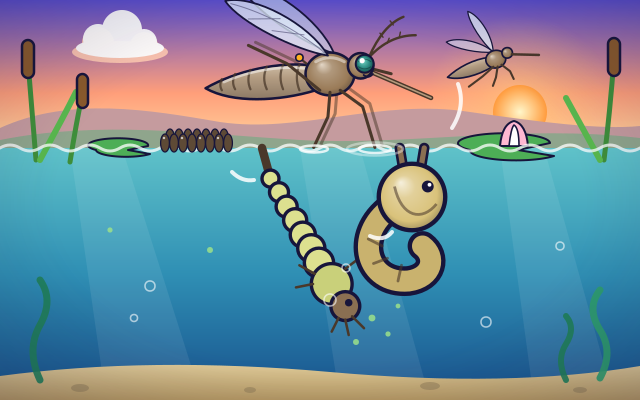
How do mosquitoes develop and find food?
Follow their life cycle and compare how adult females and males obtain food.
#207
Animals
How do mosquitoes develop and find food?
Follow their life cycle and compare how adult females and males obtain food.
 #208
Animals
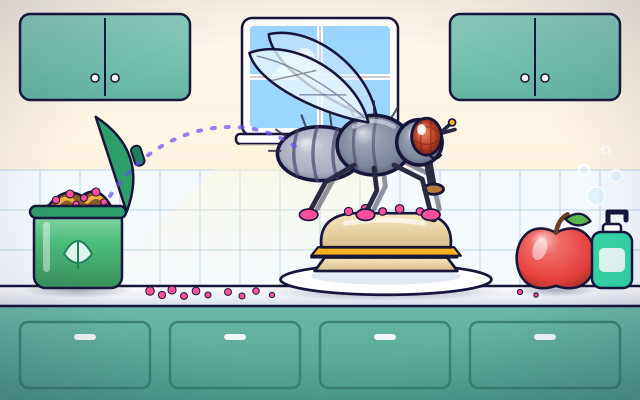
How can flies transfer germs between surfaces?
Track harmless markers on virtual fly feet as they contact different surfaces.
#208
Animals
How can flies transfer germs between surfaces?
Track harmless markers on virtual fly feet as they contact different surfaces.
 #209
Animals
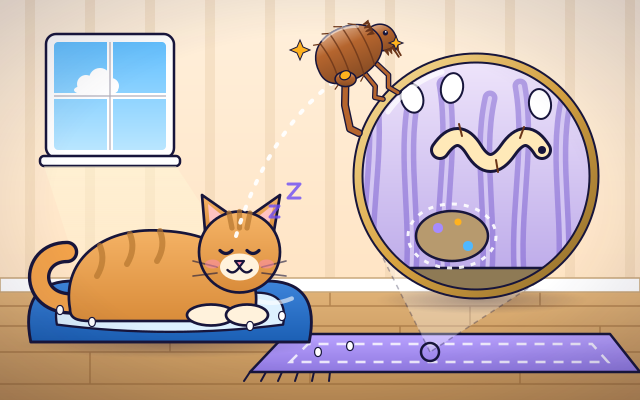
How do fleas live on pets and around homes?
Follow eggs, larvae, pupae, and adults through a model home.
#209
Animals
How do fleas live on pets and around homes?
Follow eggs, larvae, pupae, and adults through a model home.
 #210
Animals
How do ants follow scent trails?
Lay scent trails, introduce obstacles, and watch ants find routes to food.
#210
Animals
How do ants follow scent trails?
Lay scent trails, introduce obstacles, and watch ants find routes to food.
Keep exploring
Games to play next
- SheepdogGuide the flock together and close the gate on a perfect day.
- Habitat Builder 3DFind the right home for frogs, camels, polar bears and more.
- Classification ExplorerSort living things by what you can see, then follow and build yes-or-no keys.
Draw it or make it
- How to draw a standing dogDrawing lesson
- How to draw a puppy faceDrawing lesson
Guide for grown-ups
- How to start homeschooling: a step-by-step guide for familiesA guide for parents · 7 min read
Science games by grade
Science worksheets by grade
- Preschool Science Worksheets
- Pre-K Science Worksheets
- Kindergarten Science Worksheets
- 1st Grade Science Worksheets
- 2nd Grade Science Worksheets
- 3rd Grade Science Worksheets
- 4th Grade Science Worksheets
- 5th Grade Science Worksheets
- 6th Grade Science Worksheets
- 7th Grade Science Worksheets
- 8th Grade Science Worksheets