How do backflow preventers protect water supplies?
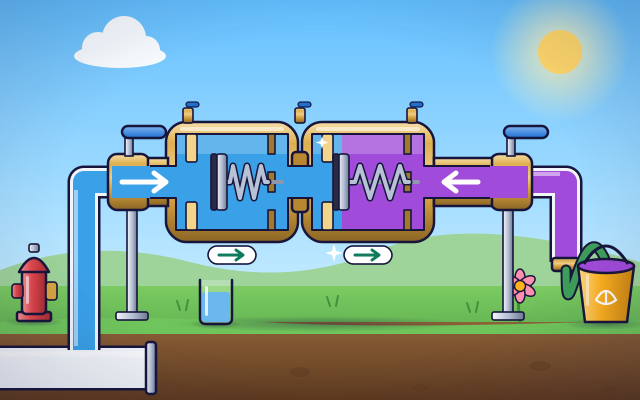
Spring-loaded one-way doors inside a pipe let clean water flow to a garden, and snap shut if water ever tries to flow back.
The big idea: Water flows from where the push is strong to where it is weak. If the city's push ever gets weak, water could run backward. One-way doors with springs close and stop it.
It's like a turnstile at an exit. It turns easily to let people out, but it locks if anyone pushes the other way.
The interactive parts didn't load. The explanations below still work; try reloading the page.
Keeping clean water clean
- A big pipe under the street, called a water main, pushes clean water to every home. Here it fills a drinking glass, and it feeds a garden hose in a bucket of purple plant food.
- The garden pipe has a backflow preventer. Inside are two round doors held shut by springs. The water's push is stronger than the springs, so both doors open.
- Down the street, firefighters open a hydrant. So much water pours out that the pressure in the main drops very low. The push is almost gone.
- Water always moves toward the weaker push. Now the weaker push is in the main, so the purple water from the bucket starts creeping backward along the pipe.
- The springs push both doors shut. The purple water presses on the second door, and that only squeezes it tighter. If a bit of grit held it open, the first door would still stop the water.
- The drinking water stays clean. When the hydrant closes, the main's pressure returns, the doors open and water flows to the garden again, the right way.
Look inside a backflow preventer
Tap each part. Watch it move when you find it.
- First door. The door is a round disc. Water coming from the city pushes it open. Water coming back pushes it shut.
- Seat. The seat is a smooth ring. A soft rubber face on the door presses against it, so no water can squeeze past.
- Spring. A spring pushes the door closed. The door does not wait for water to come back. It shuts as soon as the forward push is too weak.
- Second door. The second door is a spare. If a bit of grit keeps one door from closing, the other still stops the water.
- Middle chamber. Between the two doors is a small chamber. If the second door leaks, the purple water gets only this far.
- Test ports. A trained tester screws a pressure gauge onto these small ports to check that each door still closes tightly.
- Shutoff valves. A shutoff valve sits at each end. Turning the handles stops the water so the doors can be tested or repaired.
Change the push
Change the city's pressure, or open the hydrant. Try it with the backflow preventer in the pipe, then with it taken out. Watch the drinking glass.
Experiment: The city's pressure drops very low. What happens to the purple garden water?
- Leave the backflow preventer in. Open the hydrant and watch the doors.
- Close the hydrant. Now take the backflow preventer out.
- Open the hydrant again and watch the pipe and the drinking glass.
What we found: Water moves toward the weaker push. With the doors in the pipe, they snap shut and the purple water stops. With the doors taken out, the purple water runs all the way back to the main and into the drinking glass.
Turn on JavaScript to try it yourself.
Fix it before the test
This backflow preventer has three faults. Find and fix them, then run the test. Both doors must hold.
Why water can run backward
The water in a city's pipes is under pressure. Pumps and tall water towers push on it all the time, and that push is what makes water rush out when you open a tap. Water always moves from where the push is strong toward where it is weak.
Most of the time the strongest push is in the main, so water flows out to homes and gardens. But sometimes the main's push drops, for example when a pipe breaks or firefighters use a lot of water at once. For a little while, the push in a garden hose can be stronger than the push in the main. Then water tries to flow backward.
That matters if the hose is sitting in something you would not want to drink, like a bucket of plant food or a paddling pool. A backflow preventer stops it. Inside are two round doors, each pressed shut by a spring. Water going the right way pushes them open. Water going the wrong way pushes them shut even harder.
There are two doors so that one can be a spare. A trained tester checks them, often once a year. The simplest protection of all needs no parts: look at a kitchen tap. Its spout ends in the air, above the top of the sink. Dirty water cannot jump up across that air gap. Our cat-flap picture has one limit: a cat flap hangs loose, but these doors are held shut by springs.
Key words
- Backflow
- Water flowing the wrong way in a pipe, back toward the clean supply.
- Pressure
- How hard the water is being pushed.
- Check valve
- A one-way door for water.
- Cross-connection
- A place where drinking water pipes meet water that is not for drinking.
- Air gap
- An open space of air between a tap's spout and the water below it. Water cannot flow back up across it.
Check your thinking
-
What opens the doors in a backflow preventer?
Show the answer
Water pushing from the city side, harder than the springs. The city's push is stronger than the springs, so the discs move off their seats.
-
The main's pressure drops. What do the doors do?
Show the answer
The springs push them shut. With no strong push from the city, the springs close the doors. Water pushing back only presses them tighter.
-
Why are there two doors and not just one?
Show the answer
If one gets stuck open, the other still stops the water. A bit of grit can hold a door open. The second door is a spare.
-
Which way does water in a pipe flow?
Show the answer
From the stronger push toward the weaker push. Water moves from high pressure to low pressure. Usually the high pressure is in the main, but not always.
-
A kitchen tap ends in the air, above the top of the sink. Why is that safe?
Show the answer
Dirty water in the sink cannot jump up across the air to reach the tap. There is no pipe for the water to travel back along, only air.
You're a Home systems expert!
You watched, looked inside, tried it, solved the challenge and went deeper. Pick another question below, or switch the age at the top to see this topic another way.
More about home systems
 #194
Home systems
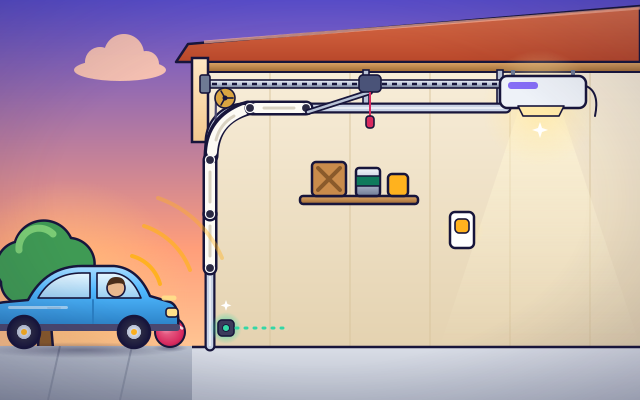
How does an automatic garage door open?
Explore the door's tracks, springs, cables, motor, and obstruction sensors.
#194
Home systems
How does an automatic garage door open?
Explore the door's tracks, springs, cables, motor, and obstruction sensors.
 #183
Home systems
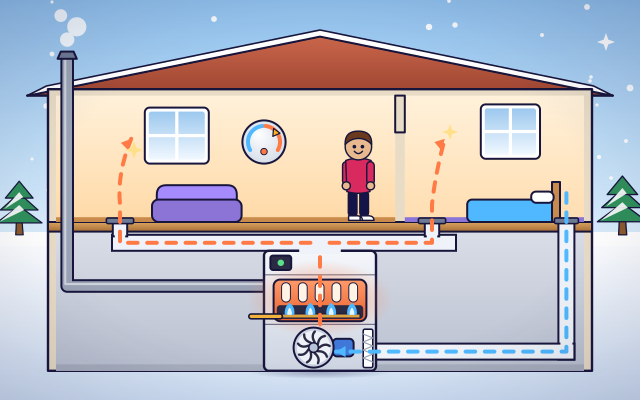
How does a furnace heat a home?
Follow air through heating, filtration, ducts, and vents while adjusting a thermostat.
#183
Home systems
How does a furnace heat a home?
Follow air through heating, filtration, ducts, and vents while adjusting a thermostat.
 #184
Home systems
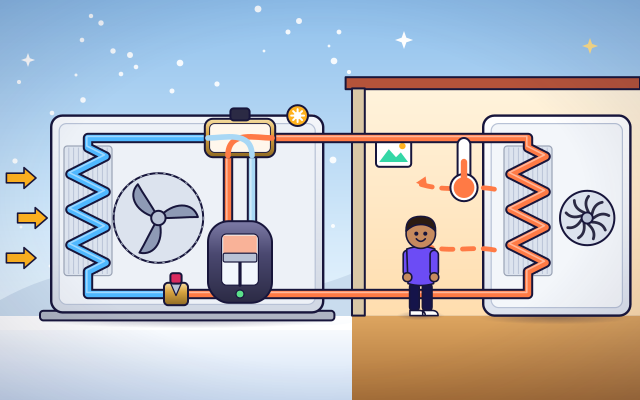
How does a heat pump warm a home?
Reverse a model refrigeration cycle and follow heat moving indoors.
#184
Home systems
How does a heat pump warm a home?
Reverse a model refrigeration cycle and follow heat moving indoors.
 #185
Home systems
How do boilers and radiators heat rooms?
Follow heated water through pipes and radiators and back for reheating.
#185
Home systems
How do boilers and radiators heat rooms?
Follow heated water through pipes and radiators and back for reheating.
Keep exploring
Games to play next
- Machine RepairFix levers, pulleys, gears and ramps so every contraption works.
- Circuit Workshop 3DWire up batteries, bulbs and switches on a 3D workbench.
- Weather LabPredict the weather in a box, then run a fair test to find out why.
Guide for grown-ups
- How to start homeschooling: a step-by-step guide for familiesA guide for parents · 7 min read
Science games by grade
Science worksheets by grade
- Preschool Science Worksheets
- Pre-K Science Worksheets
- Kindergarten Science Worksheets
- 1st Grade Science Worksheets
- 2nd Grade Science Worksheets
- 3rd Grade Science Worksheets
- 4th Grade Science Worksheets
- 5th Grade Science Worksheets
- 6th Grade Science Worksheets
- 7th Grade Science Worksheets
- 8th Grade Science Worksheets