How does a heat pump warm a home?
A heat pump does not make heat with a flame. It collects heat from the air outside, even on a cold day, and carries it indoors.
The big idea: Heat flows into things that are colder. A heat pump makes a special liquid colder than the outdoor air so it soaks up heat, then squeezes it hot so it gives that heat to the room.
It's like a sponge for heat: it soaks up warmth outdoors, gets squeezed indoors so the warmth comes out, and then goes back outside for more.
The interactive parts didn't load. The explanations below still work; try reloading the page.
How a heat pump warms a home
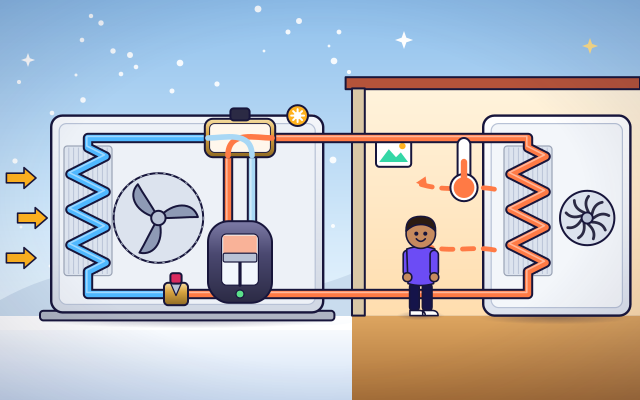
- It is a cold day, and the house needs warming. The box outside is a heat pump. It has no flame and no glowing wires. So where does its heat come from?
- A liquid called refrigerant flows through the outdoor pipes. It is even colder than the winter air, so heat flows from the air into it. The liquid soaks up the heat and boils into a gas.
- Next, the compressor squeezes the gas into a much smaller space. Squeezing a gas makes it hot, just as a bicycle pump warms up. Now the gas is hotter than the room.
- The hot gas flows through the indoor pipes. A fan blows room air across them, and the heat passes into the air. As it gives up its heat, the gas turns back into a liquid.
- The liquid then squirts through a tiny opening called the expansion valve. Its pressure drops, and it becomes very cold again, ready to soak up more heat outdoors. Round and round it goes.
- In summer, a reversing valve sends the refrigerant the other way round. Now the indoor pipes are the cold ones. They soak up heat from the room, and the outdoor pipes give it away.
Look inside a heat pump
Tap each part and follow the refrigerant around its loop.
- Outdoor coil. In winter the outdoor coil is the cold one. The refrigerant inside is colder than the air, so heat flows into it and it boils into a gas.
- Outdoor fan. The outdoor fan pulls a steady stream of fresh air across the coil, so there is always more air to take heat from.
- Compressor. The compressor is the heart of the heat pump. It squeezes the gas, which makes it hot, and pushes it around the loop. It is the part that uses electricity.
- Reversing valve. The reversing valve is a sliding switch for the refrigerant. One way sends the hot gas indoors for heating. The other way sends it outdoors for cooling.
- Indoor coil. In winter the indoor coil is the hot one. The hot gas inside gives its heat to the room air and turns back into a liquid.
- Indoor fan. The indoor fan blows room air across the coil and back into the room, warmer in winter and cooler in summer.
- Expansion valve. The expansion valve is a tiny opening. When the liquid squeezes through, its pressure drops and it becomes very cold, ready to soak up heat again.
- Refrigerant lines. Two copper pipes join the outdoor and indoor parts. The same refrigerant goes round and round inside, sealed in and never used up.
Run the cycle, then reverse it
Switch the compressor on and follow the heat. Then flip the reversing valve and see what changes.
Experiment: The heat pump is warming the room. What happens if you flip the reversing valve?
- Switch the compressor on. Which coil is hot and which is cold?
- Follow the heat arrows from the outdoor air to the room.
- Flip the reversing valve and look at the coils and the arrows again.
What we found: Flipping the valve sends the refrigerant the other way. The indoor coil becomes the cold one and soaks up heat from the room, and the outdoor coil gives that heat away. The same machine heats in winter and cools in summer.
Turn on JavaScript to try it yourself.
Three days, one machine
For each day, choose heat, cool or off, then run the day. Keep the room comfortable without wasting electricity.
Moving heat instead of making it
Heat always flows from a warmer thing to a colder thing. A hot drink warms your hands. Your warm hands melt a snowball. A heat pump uses this rule in a clever way: it makes something colder than the winter air, so that heat flows into it.
That something is a refrigerant, a liquid that boils at a very low temperature. In the outdoor pipes it is colder than the air, so it soaks up heat and boils into a gas. Then the compressor squeezes the gas. Squeezing makes it hot, hotter than the room. In the indoor pipes the hot gas gives its heat to the room air and turns back into a liquid.
Finally the liquid squirts through a tiny gap, the expansion valve. Its pressure drops and it becomes very cold again. Then it flows back outside to soak up more heat. The same refrigerant goes round and round.
Because a heat pump moves heat instead of making it, it can deliver about three times more heat than an electric heater using the same electricity. Our sponge comparison breaks down in one way: a sponge holds water, but the refrigerant holds heat by changing from a liquid to a gas and back.
Key words
- Refrigerant
- A special liquid that boils at a very low temperature and carries heat around the loop.
- Compressor
- A pump that squeezes the gas, which raises its pressure and makes it hot.
- Evaporate
- To change from a liquid into a gas. This takes in heat.
- Condense
- To change from a gas into a liquid. This gives out heat.
- Expansion valve
- A tiny opening that lets the refrigerant's pressure drop, which makes it cold.
- COP
- A number that tells how many units of heat you get for each unit of electricity.
Check your thinking
-
Where does a heat pump get most of its heat from in winter?
Show the answer
From the outdoor air. It collects heat from the outdoor air and carries it inside. Electricity only runs the compressor and fans.
-
Why does the compressor squeeze the gas?
Show the answer
To make it hotter than the room, so it can give its heat away. Heat only flows from warmer to colder, so the gas must be hotter than the room air to warm it.
-
How can heat flow from freezing outdoor air into the refrigerant?
Show the answer
The refrigerant is even colder than the air. Heat flows into whatever is colder. The expansion valve makes the refrigerant colder than the winter air.
-
What does the reversing valve do in summer?
Show the answer
It sends the refrigerant the other way, so heat is carried out of the house. With the flow reversed, the indoor coil is the cold one. It soaks up heat from the room and the outdoor coil gives it away.
-
Why does a heat pump's COP fall on very cold days?
Show the answer
The compressor must lift the heat across a larger temperature difference. A larger lift between the cold side and the hot side needs more work for each unit of heat moved.
You're a Home systems expert!
You watched, looked inside, tried it, solved the challenge and went deeper. Pick another question below, or switch the age at the top to see this topic another way.
More about home systems
 #185
Home systems
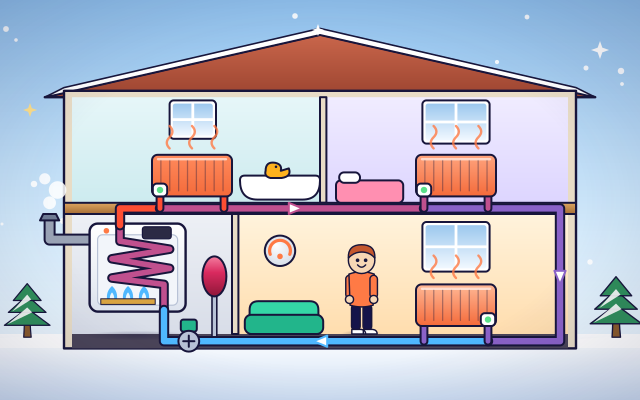
How do boilers and radiators heat rooms?
Follow heated water through pipes and radiators and back for reheating.
#185
Home systems
How do boilers and radiators heat rooms?
Follow heated water through pipes and radiators and back for reheating.
 #186
Home systems
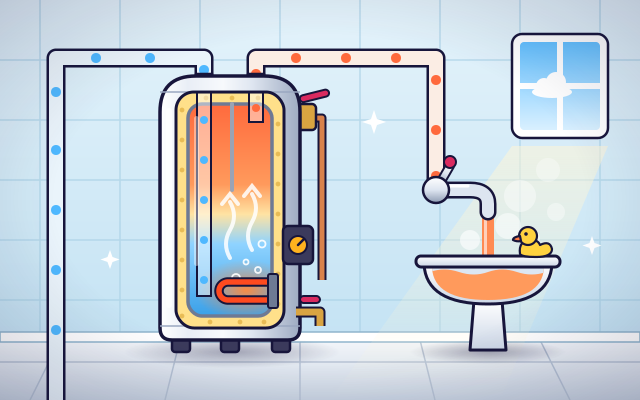
How does a water heater supply hot water?
Compare tank and tankless designs while following water from inlet to tap.
#186
Home systems
How does a water heater supply hot water?
Compare tank and tankless designs while following water from inlet to tap.
 #187
Home systems
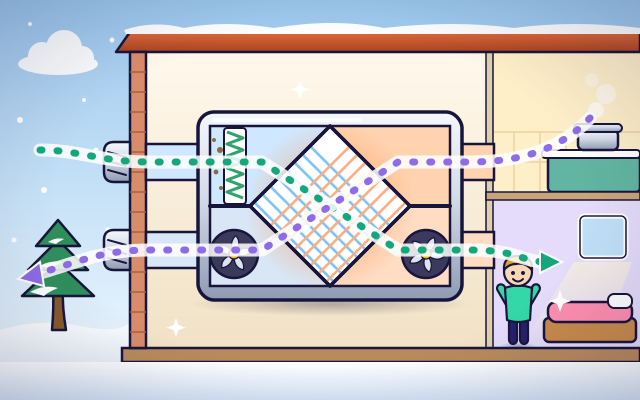
How do ventilation systems replace stale air?
Guide fresh and outgoing air through fans, filters, and a heat-recovery system.
#187
Home systems
How do ventilation systems replace stale air?
Guide fresh and outgoing air through fans, filters, and a heat-recovery system.
 #188
Home systems
How do air purifiers remove particles?
Follow air through filters and compare capture of differently sized particles.
#188
Home systems
How do air purifiers remove particles?
Follow air through filters and compare capture of differently sized particles.
Keep exploring
Games to play next
- Machine RepairFix levers, pulleys, gears and ramps so every contraption works.
- Circuit Workshop 3DWire up batteries, bulbs and switches on a 3D workbench.
- Weather LabPredict the weather in a box, then run a fair test to find out why.
Guide for grown-ups
- How to start homeschooling: a step-by-step guide for familiesA guide for parents · 7 min read
Science games by grade
Science worksheets by grade
- Preschool Science Worksheets
- Pre-K Science Worksheets
- Kindergarten Science Worksheets
- 1st Grade Science Worksheets
- 2nd Grade Science Worksheets
- 3rd Grade Science Worksheets
- 4th Grade Science Worksheets
- 5th Grade Science Worksheets
- 6th Grade Science Worksheets
- 7th Grade Science Worksheets
- 8th Grade Science Worksheets