How does an automatic garage door open?
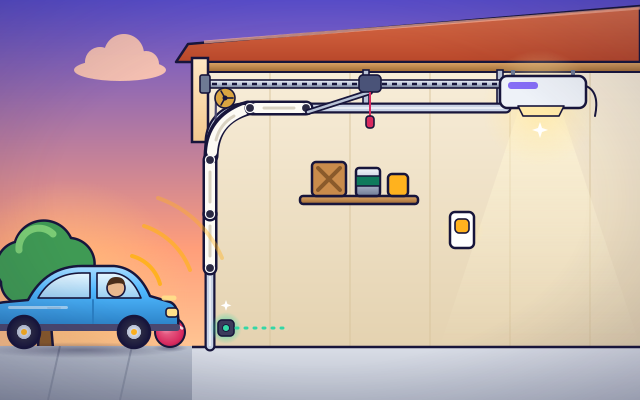
A wound-up spring balances the heavy door, a small motor slides it along curved tracks, and a light beam near the floor stops it if anything is in the way.
The big idea: A garage door is too heavy for a small motor to lift alone. A tightly wound spring pulls up on it with almost the same force as its weight, so the motor only has to give a gentle pull.
It's like a seesaw with a friend your own size. The spring is the friend. It balances the heavy door, so the motor gives only a small push.
The interactive parts didn't load. The explanations below still work; try reloading the page.
How the big door goes up
- A car pulls up to the garage. The driver presses a small remote. The door is as heavy as a grown-up or two. What lifts it?
- The remote sends a radio signal with a secret code. The opener on the ceiling checks the code. If it is right, a light comes on and the motor starts.
- The motor drives a chain along a rail. A sliding cart, called a trolley, is hooked to the top of the door. As it slides back, the door's panels roll up the tracks and round the curve.
- Here is the secret. Above the door is a spring, wound up tight. As it unwinds, it turns two drums that wind up wire cables. The cables lift the door from the bottom.
- The door ends up lying flat under the ceiling, held by the tracks. A switch tells the motor to stop at just the right place. The car drives in.
- As the door closes, a ball rolls underneath. Two small boxes near the floor shine an invisible beam across the doorway. The ball breaks the beam, so the door stops and goes back up.
Look inside a garage door
Tap each part. The small picture shows the same door seen from inside the garage.
- Door panels. The door is not one stiff sheet. It is made of several panels joined by hinges, so it can bend round the curve in the track.
- Tracks and rollers. Small wheels on the edges of the door roll inside metal tracks. The tracks go straight up, then bend, then run along under the ceiling.
- Spring. The spring sits on a bar above the door. It is wound up tight when the door is closed, and it pulls up on the door almost as hard as the door's weight pulls down.
- Cables and drums. A wire cable runs from each bottom corner of the door up to a drum on the spring's bar. When the spring turns the bar, the drums wind up the cables and lift the door.
- Opener. The opener holds an electric motor, a radio receiver that listens for the remote, and a light that comes on to help you see.
- Rail and trolley. The motor moves a chain along a rail. A sliding cart, the trolley, rides the chain. A metal arm links the trolley to the top of the door.
- Safety sensors. Two small boxes sit near the floor, one on each side. One shines an invisible beam of light and the other watches for it. If the beam is blocked, the door will not close.
- Release cord. A red handle hangs from the trolley. If the power goes out, a grown-up pulls it to unhook the door from the opener and lifts the door by hand. The spring still helps.
Motor, spring and beam
Open and close the door. Roll the ball under it while it closes. Then let the spring go slack and try to open the door again.
Experiment: What does most of the work of lifting the heavy door?
- With the spring wound up, open the door. Look at the motor's effort.
- Close the door. Now choose a slack spring.
- Press the button again. What does the motor do?
What we found: With the spring slack, the motor cannot lift the door at all. With the spring wound up, the door rises easily. The spring carries nearly all of the weight, and the motor only guides the door.
Turn on JavaScript to try it yourself.
Balance the door
A technician has fitted a new spring. Choose how many turns to wind it so the door stays still when it is let go halfway up.
The hidden helper
A garage door is big and heavy. Many weigh as much as a grown-up or two. Yet the motor that moves it is not much stronger than a kitchen blender. How can that be?
The answer is the spring above the door. When the door is closed, the spring is wound up tight, like the spring of a wind-up toy. It is always trying to unwind. As it does, it turns two drums that wind up wire cables, and the cables pull up on the bottom of the door. The spring pulls up almost exactly as hard as the door's weight pulls down, so the door feels light.
Now the motor has an easy job. It slides a small cart, called a trolley, along a rail on the ceiling. An arm joins the trolley to the top of the door. The door's panels are joined by hinges, and little wheels on their edges roll up the tracks, round the bend and along under the ceiling.
The door also keeps people safe. Near the floor, a small box shines an invisible beam across the doorway to another box. If a ball, a pet or a person breaks the beam while the door is closing, the door stops and goes back up. Our seesaw picture has a limit: on a seesaw your friend's weight never changes, but a spring pulls less as it unwinds. That works well, because less of the door is hanging as it rises. Never play under a moving door, and leave springs to trained technicians.
Key words
- Counterbalance
- A helper that pulls the other way, so a heavy thing feels light.
- Torsion spring
- A spring that works by being twisted, not stretched.
- Trolley
- The sliding cart on the opener's rail. It is linked to the door by an arm.
- Photoelectric sensor
- A pair of small boxes: one shines a beam of light and the other watches for it.
- Torque
- A turning force. It equals force times the distance from the turning point.
Check your thinking
-
What carries most of the garage door's weight?
Show the answer
A wound-up spring above the door. The spring pulls up almost as hard as the weight pulls down. The motor only gives a small push.
-
Something blocks the beam while the door is closing. What happens?
Show the answer
The door stops and goes back up. A broken beam tells the opener that something is in the doorway, so it reverses.
-
Why is the door made of several hinged panels?
Show the answer
So it can bend round the curve in the tracks. A stiff door could not turn the corner. Hinges let each panel follow the track.
-
The spring goes slack. What happens when you press the button?
Show the answer
The motor strains but cannot lift the door. Without the spring, the motor would have to lift the whole weight, and it is not strong enough.
-
Who should adjust a garage door spring?
Show the answer
A trained technician. A wound spring stores a lot of energy. It takes training and special tools to handle it safely.
You're a Home systems expert!
You watched, looked inside, tried it, solved the challenge and went deeper. Pick another question below, or switch the age at the top to see this topic another way.
More about home systems
 #183
Home systems
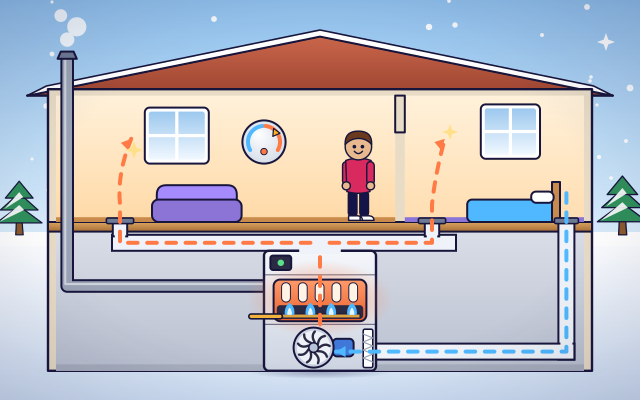
How does a furnace heat a home?
Follow air through heating, filtration, ducts, and vents while adjusting a thermostat.
#183
Home systems
How does a furnace heat a home?
Follow air through heating, filtration, ducts, and vents while adjusting a thermostat.
 #184
Home systems
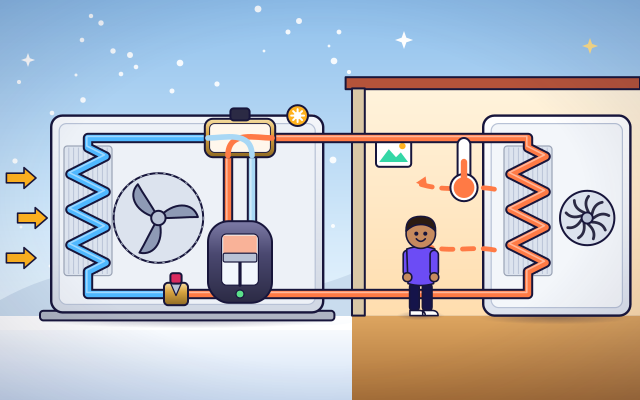
How does a heat pump warm a home?
Reverse a model refrigeration cycle and follow heat moving indoors.
#184
Home systems
How does a heat pump warm a home?
Reverse a model refrigeration cycle and follow heat moving indoors.
 #185
Home systems
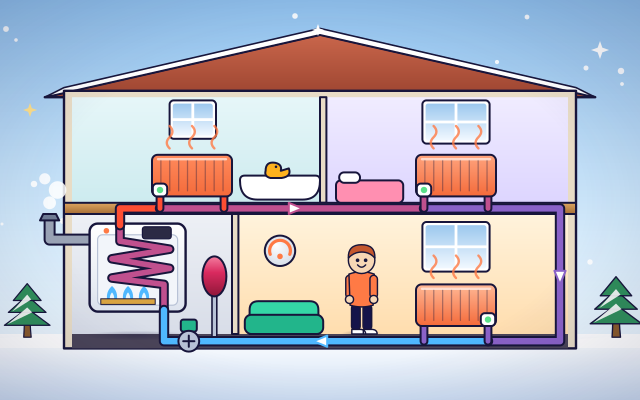
How do boilers and radiators heat rooms?
Follow heated water through pipes and radiators and back for reheating.
#185
Home systems
How do boilers and radiators heat rooms?
Follow heated water through pipes and radiators and back for reheating.
 #186
Home systems
How does a water heater supply hot water?
Compare tank and tankless designs while following water from inlet to tap.
#186
Home systems
How does a water heater supply hot water?
Compare tank and tankless designs while following water from inlet to tap.
Keep exploring
Games to play next
- Machine RepairFix levers, pulleys, gears and ramps so every contraption works.
- Circuit Workshop 3DWire up batteries, bulbs and switches on a 3D workbench.
- Weather LabPredict the weather in a box, then run a fair test to find out why.
Guide for grown-ups
- How to start homeschooling: a step-by-step guide for familiesA guide for parents · 7 min read
Science games by grade
Science worksheets by grade
- Preschool Science Worksheets
- Pre-K Science Worksheets
- Kindergarten Science Worksheets
- 1st Grade Science Worksheets
- 2nd Grade Science Worksheets
- 3rd Grade Science Worksheets
- 4th Grade Science Worksheets
- 5th Grade Science Worksheets
- 6th Grade Science Worksheets
- 7th Grade Science Worksheets
- 8th Grade Science Worksheets