How does a furnace heat a home?
A furnace heats air in the basement, and a fan pushes that warm air through ducts to every room until the thermostat says it is warm enough.
The big idea: A furnace keeps the same air going round and round: cool air is pulled in, cleaned by a filter, warmed, and blown back to the rooms. A thermostat switches it on when the room is too cold and off when it is warm enough.
It's like a hair dryer for the whole house: a fan blows air past something hot, and the warm air travels through tubes to every room.
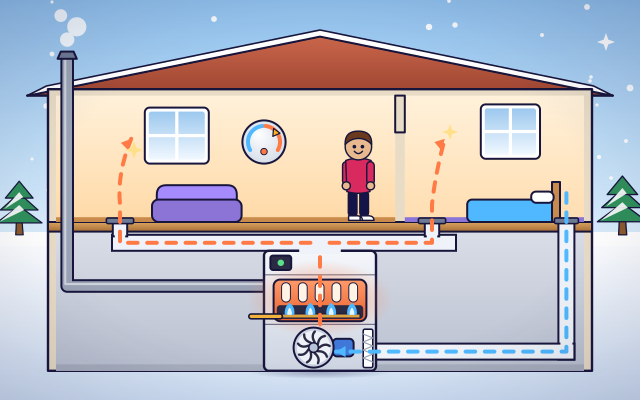
The interactive parts didn't load. The explanations below still work; try reloading the page.
How a furnace heats a home
- It is a snowy day, and heat is leaking out of the house through the walls and windows. The rooms are getting chilly. Something has to put that heat back.
- The thermostat on the wall measures the room's temperature. The room is colder than the number it is set to, so, click, it sends a signal down a wire to the furnace.
- In the furnace, burners light inside a sealed metal box called the heat exchanger. The box gets very hot. The smoky gases stay inside it and leave through a pipe to the outdoors.
- Now a big fan called the blower starts. It pulls cool air from the rooms through a filter that traps dust, then pushes it past the hot heat exchanger. The air comes out warm.
- The warm air travels along metal tubes called ducts and flows out of a vent in each room. Cooler air is drawn back through a return vent, so the same air goes round and round.
- When the room is as warm as the thermostat's setting, the thermostat stops the signal. The flames go out, and the furnace rests until the room cools down again.
Look inside a furnace system
Tap each part and follow the air on its trip around the house.
- Thermostat. The thermostat measures the room's temperature. If the room is colder than its setting, it signals the furnace to start. When the room is warm enough, it signals it to stop.
- Return vent. The return vent is where cool room air is drawn back toward the furnace to be warmed again. Without it, the fan would have no air to push.
- Air filter. The filter is a screen of fine fibers. Air passes through, but dust, fluff and pet hair get stuck. A grown-up swaps it for a clean one every few months.
- Blower. The blower is a drum-shaped fan turned by an electric motor. It pulls air in through the filter and pushes it past the heat and into the ducts.
- Burners. The burners make a row of small blue flames from gas. They light only when the thermostat asks for heat, and they burn inside the sealed heat exchanger.
- Heat exchanger. The heat exchanger is a metal box with the flames inside and the house air outside. Heat passes through the hot metal, but the smoky gases never touch the air you breathe.
- Flue. The flue is a pipe that carries the burned gases from the heat exchanger up and out of the house, so only clean, warm air goes into the rooms.
- Supply ducts. Supply ducts are metal tubes hidden under floors and inside walls. They carry the warm air from the furnace to each room.
- Vent. The vent, also called a register, is the grille where warm air enters the room. If a rug or a toy box covers it, the warm air cannot get out.
Set the thermostat, follow the air
Set the thermostat warmer than the room and follow the air. Then watch what the furnace does when the room is warm enough.
Experiment: The thermostat is set to 20 degrees. What does the furnace do when the room reaches 20?
- Slide the thermostat up to about 20.
- Follow the blue air into the furnace and the orange air out to the rooms.
- Keep watching the room temperature as it reaches the setting.
What we found: When the room reaches the setting, the thermostat stops calling for heat and the flames go out. When the room cools a little, it calls again. That is how it keeps the room close to the temperature you chose.
Turn on JavaScript to try it yourself.
Why is it still cold?
Get both rooms into the cozy zone. Something is stopping the warm air: find it and fix it.
A loop of air and a clever switch
On a cold day, heat leaks out of a house all the time, through the walls, the roof, the windows and every little gap. A furnace does not have to make the house hot once. It has to keep replacing the heat that escapes.
A forced-air furnace does this by moving air in a big loop. A fan called the blower pulls cool air out of the rooms through a return vent. The air passes through a filter that catches dust. Then it blows past a very hot metal box, the heat exchanger, and picks up heat. Finally it travels through ducts and comes out of the vents in each room.
Why the metal box? The flames burn inside it, and their smoky gases go up a pipe called the flue to the outdoors. The air you breathe only touches the outside of the box. Heat can pass through the metal, but the gases cannot.
The thermostat is the boss of the whole system. It measures the room. Too cold: it switches the furnace on. Warm enough: it switches it off. Our hair dryer comparison breaks down here, because a hair dryer blows new air from the room out into the open, while a furnace keeps warming the same air and has a thermostat to decide when to stop.
Key words
- Thermostat
- A switch that measures temperature and turns the heating on or off to keep a room at the setting you choose.
- Heat exchanger
- A metal part that lets heat pass from one flowing thing to another without letting them mix.
- Duct
- A tube or channel that carries air around a building.
- Blower
- The fan inside a furnace that pushes air through the ducts.
- Flue
- A pipe that carries burned gases safely outdoors.
- Feedback
- When a machine checks its own result and uses it to decide what to do next.
Check your thinking
-
What pushes the warm air through the ducts?
Show the answer
The blower fan. The blower is a fan. It pulls air in and pushes it past the heat and into the ducts.
-
A toy box is covering the vent in your room. What happens?
Show the answer
Less warm air gets into the room, so it stays chilly. The warm air has to come out of the vent. A blocked vent means the heat cannot reach the room.
-
The room is 22 degrees and the thermostat is set to 20. What does the furnace do?
Show the answer
It stays off, because the room is already warm enough. The thermostat only asks for heat when the room is colder than the setting.
-
Why do the flames burn inside a sealed metal box?
Show the answer
So the smoky gases go outdoors and never mix with the air in the rooms. Heat passes through the metal, but the gases stay inside and leave through the flue.
-
On a much colder day, with the thermostat at the same setting, what changes?
Show the answer
The furnace runs for more of the time, because the house loses heat faster. Heat loss grows with the difference between indoor and outdoor temperature, so more heat must be supplied to hold the same set point.
You're a Home systems expert!
You watched, looked inside, tried it, solved the challenge and went deeper. Pick another question below, or switch the age at the top to see this topic another way.
More about home systems
 #184
Home systems
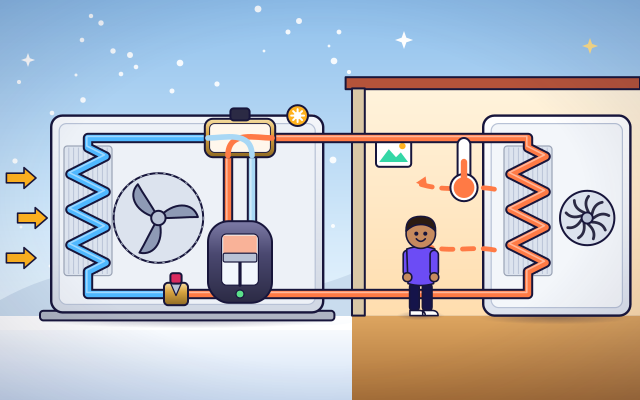
How does a heat pump warm a home?
Reverse a model refrigeration cycle and follow heat moving indoors.
#184
Home systems
How does a heat pump warm a home?
Reverse a model refrigeration cycle and follow heat moving indoors.
 #185
Home systems
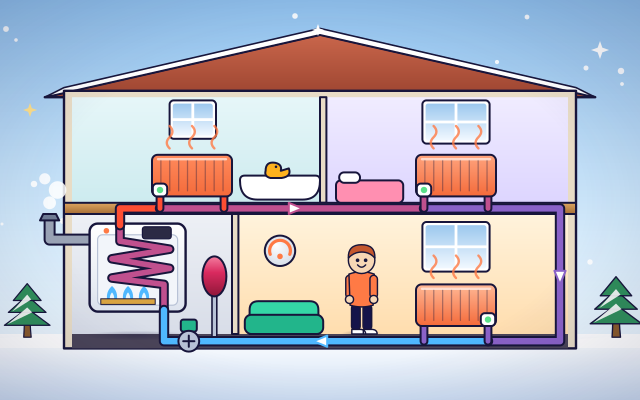
How do boilers and radiators heat rooms?
Follow heated water through pipes and radiators and back for reheating.
#185
Home systems
How do boilers and radiators heat rooms?
Follow heated water through pipes and radiators and back for reheating.
 #186
Home systems
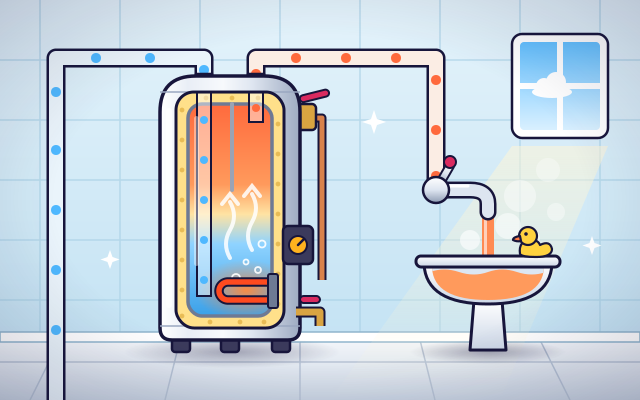
How does a water heater supply hot water?
Compare tank and tankless designs while following water from inlet to tap.
#186
Home systems
How does a water heater supply hot water?
Compare tank and tankless designs while following water from inlet to tap.
 #187
Home systems
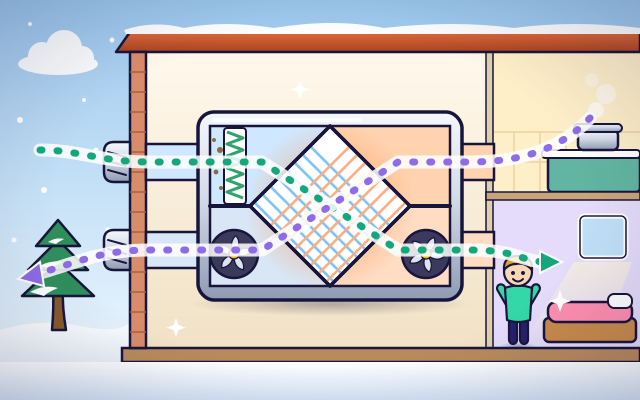
How do ventilation systems replace stale air?
Guide fresh and outgoing air through fans, filters, and a heat-recovery system.
#187
Home systems
How do ventilation systems replace stale air?
Guide fresh and outgoing air through fans, filters, and a heat-recovery system.
Keep exploring
Games to play next
- Machine RepairFix levers, pulleys, gears and ramps so every contraption works.
- Circuit Workshop 3DWire up batteries, bulbs and switches on a 3D workbench.
- Weather LabPredict the weather in a box, then run a fair test to find out why.
Guide for grown-ups
- How to start homeschooling: a step-by-step guide for familiesA guide for parents · 7 min read
Science games by grade
Science worksheets by grade
- Preschool Science Worksheets
- Pre-K Science Worksheets
- Kindergarten Science Worksheets
- 1st Grade Science Worksheets
- 2nd Grade Science Worksheets
- 3rd Grade Science Worksheets
- 4th Grade Science Worksheets
- 5th Grade Science Worksheets
- 6th Grade Science Worksheets
- 7th Grade Science Worksheets
- 8th Grade Science Worksheets