How does baking powder help cakes rise?
Baking powder makes thousands of gas bubbles inside the batter. Watch them form, swell in the oven and get baked in.
The big idea: Baking powder holds two powders that make a gas called carbon dioxide when they get wet and warm. The gas blows bubbles all through the batter. In the oven the bubbles swell, and then the batter sets firm around them. That is why cake is soft and full of little holes.
It's like blowing up thousands of tiny balloons inside the batter. The oven bakes the batter firm around them, so the cake stays puffed up.

The interactive parts didn't load. The explanations below still work; try reloading the page.
How a cake gets its holes
- Here are two cakes made from the same batter. One is flat and dense. The other is tall and soft, full of tiny holes. The only difference is one teaspoon of baking powder.
- Under a magnifier, baking powder is a mix of three things: baking soda, a sour powder called an acid, and starch. The starch keeps the other two dry and apart, so nothing happens in the tin.
- When the powder is stirred into wet batter, the baking soda and the acid dissolve and meet. They react with a fizz and make bubbles of a gas called carbon dioxide.
- In the oven the batter warms up. The heat sets off a second burst of gas, and warm gas takes up more room, so every bubble swells. The batter rises higher and higher.
- When the batter gets hot enough, the egg and flour in it turn firm, like a cooked egg. Now the walls around the bubbles are solid, and the bubbles are trapped.
- Cut a slice and look closely: thousands of little holes. Each one was a gas bubble from the baking powder. They are what make a cake light and soft.
Inside the powder, inside the cake
On the left is baking powder under a magnifier. On the right is a cake cut in half while it bakes. Tap each part.
- Baking soda. The blue grains are baking soda. It can make carbon dioxide gas, but only when it meets an acid.
- Dry acid. The pink grains are a dry acid, a sour powder. When it dissolves and meets the baking soda, the two react and fizz.
- Starch. The white grains are starch. It soaks up dampness and sits between the other grains, so they do not react too early.
- Gas bubble. A bubble of carbon dioxide. As the batter heats up, more gas joins it and the gas inside expands, so the bubble swells.
- Stretchy batter. The batter is thick and stretchy enough to hold the bubbles in. If the bubbles get too big, they break through and the gas escapes.
- Crust. The top of the cake dries out and gets hotter than the inside. It browns and firms up into a crust.
- Oven heat. The heat does three jobs: it sets off more gas, it makes the gas expand, and it finally bakes the batter firm. Ovens are for grown-ups to handle.
Bake-off: how much powder?
Choose the baking powder and the oven heat, then bake. The left pan has no powder, for comparison. What makes the best cake? What happens with too much?
Experiment: One teaspoon of baking powder makes a tall, fluffy cake. What will happen if you use twice as much?
- Bake with 1 teaspoon and a medium oven. Compare the two pans.
- Now bake with 2 teaspoons. Watch the bubbles near the end.
- Try a low oven and a high oven with 1 teaspoon.
What we found: With no powder the cake stays flat, because there is no gas to make bubbles. With the right amount it rises and the batter sets around the bubbles. With too much, the bubbles grow too big for the batter to hold: they join up and pop, and the cake rises and then sinks.
Turn on JavaScript to try it yourself.
Rise into the green band
Bake a cake that rises into the green band and stays there: golden, not burnt, not gooey and not sunken. Set the powder and the oven, then bake.
How baking powder works
A cake starts as a thick, wet batter. If you baked it just like that, it would come out flat and heavy. To make it light, bakers need to fill the batter with gas bubbles. Baking powder is the easiest way to do that.
Baking powder is a mix of three powders. Baking soda can make a gas called carbon dioxide, but only when it meets an acid. The second powder is a dry acid. The third is starch, which keeps the other two dry and apart. In the tin nothing happens. But as soon as the powder is stirred into wet batter, the baking soda and the acid dissolve, meet and fizz.
In the oven, three things happen. The heat sets off a second burst of gas. The gas warms up and takes more room, so every bubble swells. And when the batter gets hot enough, the egg and flour in it turn firm, just as a runny egg turns solid in a pan. The bubbles are now trapped inside solid walls. Even after the gas has leaked out, the holes stay.
The amount has to be right. With too little powder there are few bubbles and the cake is dense. With too much, the bubbles grow so big that they join up, burst through the top and let the gas out, and the cake sinks. The balloon comparison only goes so far: a real balloon stays closed, but the bubbles in a cake end up as open holes in a sponge.
Key words
- Baking powder
- A mix of baking soda, a dry acid and starch that makes gas in wet, warm batter.
- Carbon dioxide
- The gas in the bubbles. It is the same gas that makes soda fizzy.
- Acid
- A sour substance, like the one in lemon juice.
- Base
- The chemical opposite of an acid. Baking soda is a mild base.
- Leavening
- Making dough or batter rise by filling it with gas.
- Set
- To turn from runny to firm when heated, as an egg does.
Check your thinking
-
What does baking powder make inside the batter?
Show the answer
Bubbles of carbon dioxide gas. The gas blows thousands of bubbles, which become the holes in the cake.
-
Why does nothing happen while baking powder sits dry in its tin?
Show the answer
The acid and the baking soda cannot meet until they dissolve in liquid. The two powders react only when they are dissolved, and the starch keeps them dry.
-
Why does a cake keep its puffed-up shape after it comes out of the oven?
Show the answer
The heat set the batter firm around the bubbles. Egg and flour turn firm when they get hot, so the walls around the bubbles become solid.
-
A cake baked in an oven that is much too cool comes out pale and gooey. Why?
Show the answer
The batter never got hot enough to set, and gas leaked away while it waited. The batter must reach about 85 degrees to turn firm. Until then, bubbles can rise and escape.
-
A pancake recipe uses baking soda, not baking powder, together with yogurt. Why does it still rise?
Show the answer
Yogurt is acidic, so it supplies the acid that baking soda needs. Baking soda is only the base. It needs an acid, and sour ingredients such as yogurt, buttermilk or lemon juice provide one.
You're a Everyday chemistry & materials expert!
You watched, looked inside, tried it, solved the challenge and went deeper. Pick another question below, or switch the age at the top to see this topic another way.
More about everyday chemistry & materials
 #420
Everyday chemistry & materials
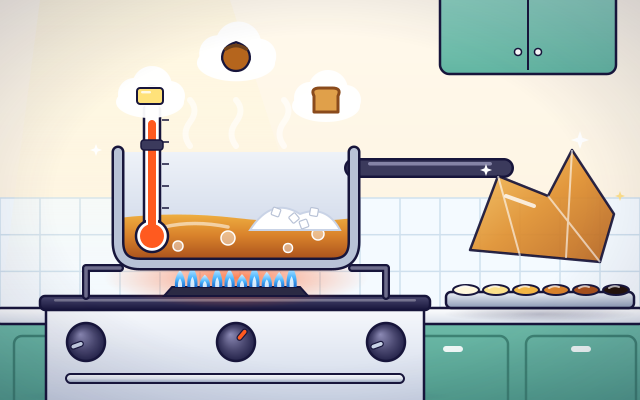
How does sugar turn into caramel?
Follow changes in color, aroma, and structure as virtual sugar heats.
#420
Everyday chemistry & materials
How does sugar turn into caramel?
Follow changes in color, aroma, and structure as virtual sugar heats.
 #421
Everyday chemistry & materials
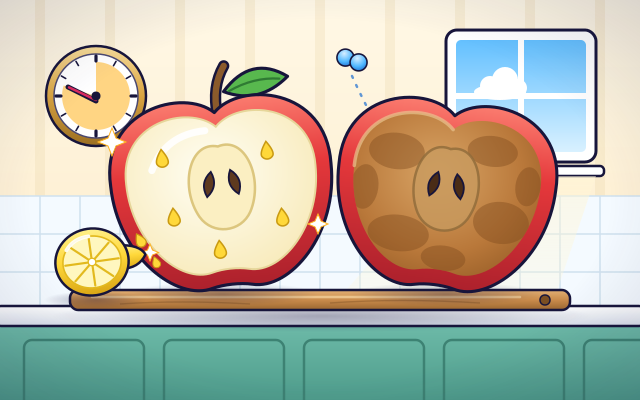
Why do cut apples turn brown?
Explore exposed fruit surfaces, oxygen, and enzymes in a simplified browning animation.
#421
Everyday chemistry & materials
Why do cut apples turn brown?
Explore exposed fruit surfaces, oxygen, and enzymes in a simplified browning animation.
 #422
Everyday chemistry & materials
How do acids and bases behave?
Test fictional household samples with virtual indicators and explore neutralization.
#422
Everyday chemistry & materials
How do acids and bases behave?
Test fictional household samples with virtual indicators and explore neutralization.
 #423
Everyday chemistry & materials
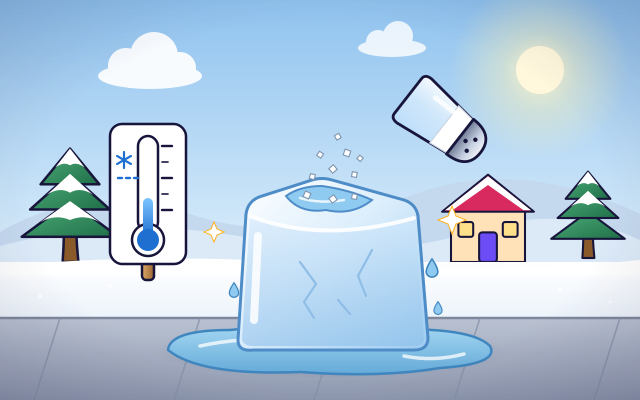
Why does salt change how ice melts?
Compare pure water and saltwater as temperature changes in a virtual freezing experiment.
#423
Everyday chemistry & materials
Why does salt change how ice melts?
Compare pure water and saltwater as temperature changes in a virtual freezing experiment.
Keep exploring
Games to play next
- Ratio KitchenScale recipes, fill ratio tables and find the better buy.
- Weather LabPredict the weather in a box, then run a fair test to find out why.
- Science QuizzesOlly's Science Quiz Show: plants, animals, the body, weather, space and more, for every grade.
Guide for grown-ups
- How to start homeschooling: a step-by-step guide for familiesA guide for parents · 7 min read
Science games by grade
Science worksheets by grade
- Preschool Science Worksheets
- Pre-K Science Worksheets
- Kindergarten Science Worksheets
- 1st Grade Science Worksheets
- 2nd Grade Science Worksheets
- 3rd Grade Science Worksheets
- 4th Grade Science Worksheets
- 5th Grade Science Worksheets
- 6th Grade Science Worksheets
- 7th Grade Science Worksheets
- 8th Grade Science Worksheets