How do batteries power things?
Look inside a battery, see chemical energy become electricity, and find out which gadgets gobble energy fastest.
The big idea: A battery is a store of chemical energy. When it's connected in a circuit, its chemicals react and push electrons around the circuit, so the stored energy becomes electrical energy. Hungry devices use it up faster.
It's like
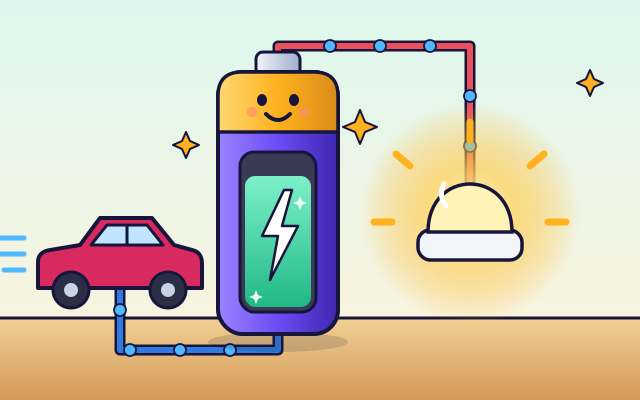
The interactive parts didn't load. The explanations below still work; try reloading the page.
What's inside a battery?
- Remote-control cars, clocks, flashlights and phones all run on batteries. A battery is a little package of energy you can carry anywhere.
- Inside, a battery has two different chemicals kept apart by a thin wall. Together they store energy, a bit like the energy stored in food.
- Connect a circuit and the chemicals react. The negative end gives out electrons, which travel through the wire and the bulb to the positive end. Inside, charged particles move to keep things balanced.
- Some devices are hungrier than others. A tiny LED sips energy slowly, while a toy car's motor gulps it down, so the same battery runs out much sooner.
- When the chemicals are used up, the reaction stops and the battery is flat. The energy didn't vanish: it became motion, light, sound and heat.
- Rechargeable batteries, like the one in a phone, can be refilled. A charger pushes electrons backward and runs the chemical reaction in reverse.
Inside an AA battery
This is a simplified cutaway of an AA battery connected to a bulb. Tap each part to see its job.
- Positive end (+). The bump on top is the positive terminal. Electrons that have traveled around the circuit come back into the battery here.
- Negative end (−). The flat end is the negative terminal. Electrons released by the chemicals flow out of here into the wire.
- Zinc powder (negative electrode). The middle is packed with zinc powder in a gel. When the battery works, the zinc slowly changes and gives away electrons. That's where the energy comes from.
- Manganese dioxide (positive electrode). A ring of dark manganese dioxide lines the inside of the can. It takes in the electrons that come back around the circuit.
- Separator. A thin paper-like wall keeps the two chemicals from touching. Charged particles can slip through it, but the chemicals can't mix.
- Electrolyte. A damp chemical paste called the electrolyte soaks everything. It lets charged particles called ions move inside the battery to keep the loop going.
- Current collector. A brass pin runs down the middle of the zinc. It collects the electrons and carries them to the negative end.
- Steel can. The steel can holds everything together and connects the positive chemicals to the positive end. A label wraps around the outside.
Energy race: which device is hungriest?
Connect each device to a fresh battery and watch the energy level fall. Time is sped up. Which device empties the battery fastest?
Experiment: Which device will empty the battery fastest?
- Press New battery, then choose a device.
- Watch how fast the energy level falls and how many hours pass.
- Try the LED and the toy car. Which one makes the battery go flat first?
What we found: The toy car empties the battery fastest because its motor needs lots of power. The LED and the clock sip energy so slowly that the same battery lasts days or even years. The battery holds the same energy each time: what changes is how fast the device uses it.
Turn on JavaScript to try it yourself.
Camping power plan
Your tent needs a light and a fan from 8 pm to 6 am. Choose devices so the battery lasts all night.
Batteries: energy in a can
A battery stores energy in chemicals. Inside an AA battery are two different materials: zinc powder in the middle and manganese dioxide around the outside, with a damp paste called the electrolyte and a thin wall called the separator between them.
When you connect the battery in a circuit, the chemicals start to react. The zinc gives away tiny charged particles called electrons. They can't get through the separator, so they travel out of the negative end, through the wires and your device, and back in at the positive end. That flow of electrons is the electric current.
The battery doesn't make energy from nothing. It changes chemical energy into electrical energy, and the device changes that into light, sound, motion or heat. When the zinc is used up, the reaction stops and the battery is flat.
Different devices use energy at different rates. A clock or an LED sips it slowly, so a battery can last months. A toy car's motor gulps it quickly. Rechargeable batteries can be refilled by a charger, which runs the reaction backward. Old batteries should always be recycled, never thrown in the trash or opened.
Key words
- Electrode
- One of the two chemical ends inside a battery, positive or negative.
- Electrolyte
- A damp paste inside a battery that lets charged particles move.
- Electron
- A tiny particle with negative charge. A flow of electrons in a wire is an electric current.
- Power
- How fast a device uses energy. Measured in watts.
- Watt-hour
- The energy used by a 1-watt device running for 1 hour. Battery capacity is often given in watt-hours.
- Rechargeable
- A battery whose chemical reaction can be reversed by a charger so it can be used again.
Check your thinking
-
What kind of energy does a battery store?
Show the answer
Chemical energy. The chemicals inside store energy until a circuit lets them react.
-
Which device would make a battery go flat fastest?
Show the answer
A toy car with a motor. Motors need lots of power, so they use the stored energy quickly.
-
Where do electrons leave a battery?
Show the answer
The negative (−) end. The zinc releases electrons, which flow out of the negative end, around the circuit and back in at the positive end.
-
What should you do with a used-up battery?
Show the answer
Recycle it with a grown-up's help. Batteries hold chemicals that can sting or leak, so they should be recycled, never opened or burned.
-
Why do batteries run down faster in very cold weather?
Show the answer
The chemical reactions slow down. Chemical reactions are slower when cold, so the cell can't deliver as much of its stored energy.
You're a Electricity & energy expert!
You watched, looked inside, tried it, solved the challenge and went deeper. Pick another question below, or switch the age at the top to see this topic another way.
More about electricity & energy
 #43
Electricity & energy
How do solar panels make electricity?
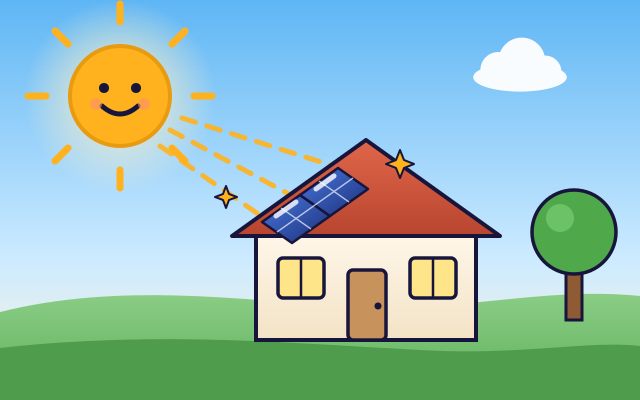
Explore a solar cell and follow sunlight becoming electrical energy. Adjust shade, panel direction, and time of day while watching output change.
#43
Electricity & energy
How do solar panels make electricity?
Explore a solar cell and follow sunlight becoming electrical energy. Adjust shade, panel direction, and time of day while watching output change.
 #44
Electricity & energy
How do wind turbines make electricity?
Follow wind turning the blades and driving a generator. Explore the inside of a turbine and power a model village under different wind conditions.
#44
Electricity & energy
How do wind turbines make electricity?
Follow wind turning the blades and driving a generator. Explore the inside of a turbine and power a model village under different wind conditions.
 #45
Electricity & energy
How do electric motors make things move?
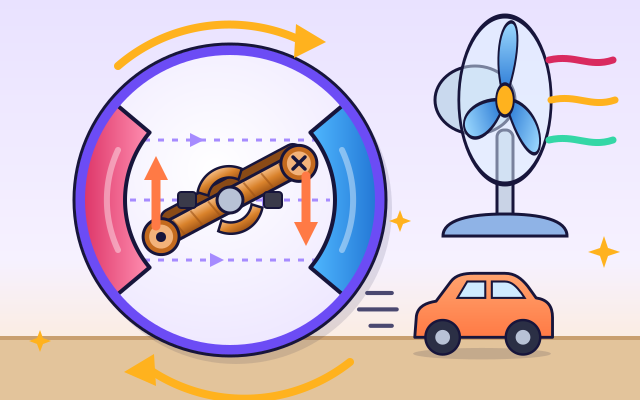
Explore magnets, coils, and a turning shaft in a simplified motor. Use it to drive a fan, toy car, or conveyor belt.
#45
Electricity & energy
How do electric motors make things move?
Explore magnets, coils, and a turning shaft in a simplified motor. Use it to drive a fan, toy car, or conveyor belt.
 #46
Electricity & energy
How do generators make electricity?
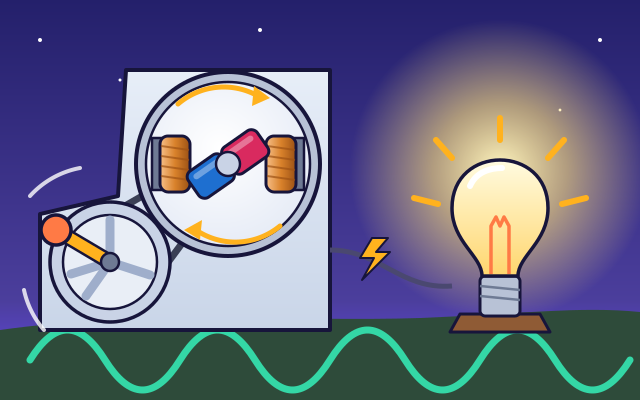
Move magnets and coils in a simulation to explore electricity generation. Turn a virtual hand crank and compare how connected devices respond.
#46
Electricity & energy
How do generators make electricity?
Move magnets and coils in a simulation to explore electricity generation. Turn a virtual hand crank and compare how connected devices respond.
Keep exploring
Games to play next
- Circuit Workshop 3DWire up batteries, bulbs and switches on a 3D workbench.
- SwitchworksFlip switches to light the lamps in the target pattern — in as few presses as you can.
- Machine RepairFix levers, pulleys, gears and ramps so every contraption works.
Guide for grown-ups
- How to start homeschooling: a step-by-step guide for familiesA guide for parents · 7 min read
Science games by grade
Science worksheets by grade
- Preschool Science Worksheets
- Pre-K Science Worksheets
- Kindergarten Science Worksheets
- 1st Grade Science Worksheets
- 2nd Grade Science Worksheets
- 3rd Grade Science Worksheets
- 4th Grade Science Worksheets
- 5th Grade Science Worksheets
- 6th Grade Science Worksheets
- 7th Grade Science Worksheets
- 8th Grade Science Worksheets