How do generators make electricity?
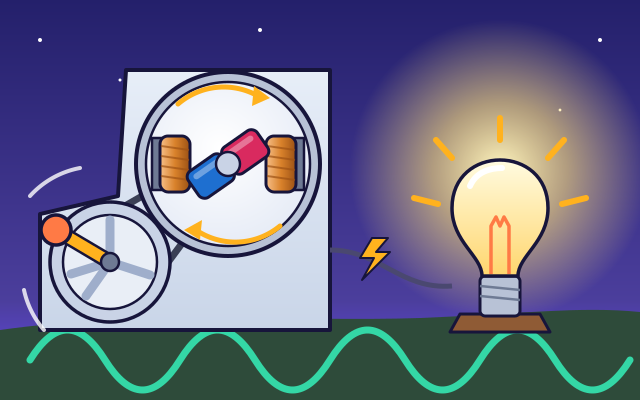
A generator turns movement into electricity by spinning magnets past coils of wire.
The big idea: When a magnet moves near a coil of wire, it pushes electricity through the wire. A generator keeps a magnet spinning past coils, so electricity keeps flowing. The faster it spins, the more electricity it makes.
It's like
The interactive parts didn't load. The explanations below still work; try reloading the page.
Making electricity from motion
- This camping lamp has no battery to run down. Turn its handle, and the lamp lights up. Inside is a small generator that turns your movement into electricity.
- Push a magnet into a coil and the meter's needle swings: electricity is flowing! Hold it still and the needle drops to zero. Pull it out and the needle swings the other way.
- Move the magnet slowly and the needle barely moves. Move it quickly and the needle swings far. The faster the magnet moves, the more electricity flows.
- A generator spins the magnet so it keeps moving. Each time a pole sweeps past a coil, the electricity flows one way, then the other way. This is called alternating current.
- Power stations use the same idea, but enormous. Steam, falling water or wind spins a turbine, the turbine spins a giant generator, and the electricity travels to towns and cities.
- With nothing plugged in, the handle turns easily. Switch on the lamps, and it gets much harder to turn. Electricity is not free: your muscles supply the energy that the lamps use.
Inside a hand-crank generator
We took the cover off a hand-crank generator. Tap each part to watch it work.
- Crank handle. The crank is where your energy goes in. Turning the handle spins the big gear.
- Gears and chain. The crank turns a big gear. A chain links it to a small gear, like on a bike. Each turn of the big gear spins the small one about 6 times, so the magnet spins much faster than your hand.
- Spinning magnet. The magnet in the middle spins with the small gear. Its north and south poles sweep past the coils again and again.
- Coils of wire. The coils are made of hundreds of turns of thin copper wire. When the magnet sweeps past, it pushes electricity around them.
- Iron cores. The coils are wound around iron. Iron gathers the magnet's field and guides it through the coils, making more electricity.
- Wires. Wires carry the electricity from the coils to whatever is plugged in. The current goes back and forth: that's alternating current.
- Lamp. The lamp turns electricity into light. Crank faster and it glows brighter.
Crank lab: speed and gadgets
Turn the crank slowly and then quickly. Plug in the lamp, the fan or the radio. Which one needs the fastest cranking? Which makes the crank hardest to turn?
Experiment: What happens to the lamp when you crank faster?
- Plug in the lamp.
- Crank slowly and look at the lamp.
- Now crank fast. Compare the light and how hard the crank feels.
What we found: Cranking faster makes the magnet sweep past the coils faster, so more electricity flows and the lamp glows brighter. But the crank also gets harder to turn: the extra light energy comes from your arm!
Turn on JavaScript to try it yourself.
Power every gadget
Power the lamp, the fan and the radio in turn. Keep each one working for 3 seconds, but don't make the lamp too bright!
Magnets, motion and electricity
Inside every wire are tiny particles called electrons. A moving magnet can push those electrons along the wire, and moving electrons are an electric current. The magnet has to be moving: a magnet that just sits next to a wire makes no electricity at all.
A generator keeps the magnet moving by spinning it. Each time a north pole and then a south pole sweep past a coil, the push on the electrons changes direction. So the current flows one way, then the other, many times a second. This is called alternating current, or AC.
The faster the magnet spins, the more electricity flows. Stronger magnets and more turns of wire in the coils help too. That's why hand-crank generators use gears: a big gear turns a small gear, so the magnet spins much faster than your hand.
Generators don't make energy out of nothing. When a lamp is connected, the current in the coils pushes back against the spinning magnet, so the crank gets harder to turn. The energy that lights the lamp comes from your arm, or from steam, water or wind in a power station.
Key words
- Generator
- A machine that turns movement (kinetic energy) into electrical energy.
- Electromagnetic induction
- Making electricity by moving a magnet near a coil of wire.
- Alternating current (AC)
- Electricity that keeps changing direction, back and forth.
- Frequency
- How many times each second the current flows back and forth.
- Turbine
- A wheel with blades that steam, water or wind spins to turn a generator.
Check your thinking
-
What do you need to make electricity with a magnet and a coil?
Show the answer
The magnet must move. A still magnet makes no electricity. It has to move past the coil.
-
How can you get more electricity from a crank generator?
Show the answer
Crank faster. A faster magnet changes the field faster, so more electricity flows.
-
Why is the crank harder to turn when the lamp is on?
Show the answer
Your arm is giving energy to the lamp. Energy isn't free. The light energy comes from the work your arm does.
-
What turns the generators in a power station?
Show the answer
Turbines spun by steam, water or wind. A turbine is a wheel with blades. Steam, water or wind spins it, and it spins the generator.
-
Why is the electricity from a generator called alternating current?
Show the answer
It flows one way, then the other, again and again. As north and south poles take turns sweeping past the coil, the current keeps reversing.
You're a Electricity & energy expert!
You watched, looked inside, tried it, solved the challenge and went deeper. Pick another question below, or switch the age at the top to see this topic another way.
More about electricity & energy
 #47
Electricity & energy
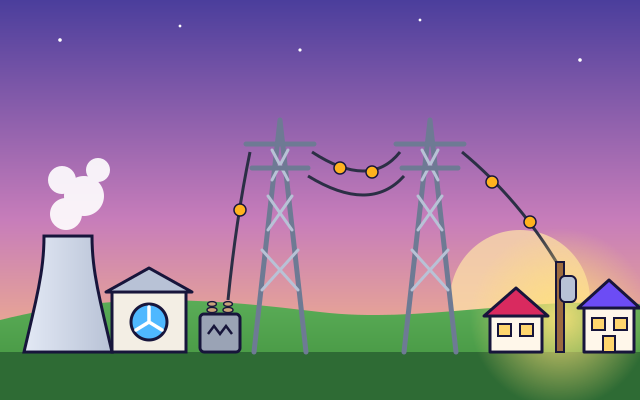
How does electricity reach our homes?
Follow electricity through generators, substations, power lines, and neighborhood connections. Connect a model town and restore power after a simulated fault.
#47
Electricity & energy
How does electricity reach our homes?
Follow electricity through generators, substations, power lines, and neighborhood connections. Connect a model town and restore power after a simulated fault.
 #48
Electricity & energy
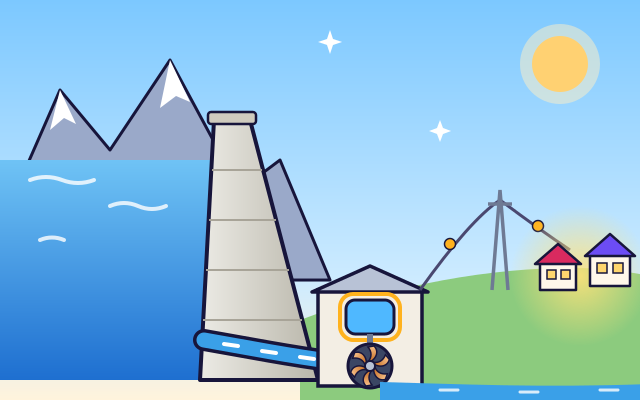
How does flowing water generate electricity?
Guide water through a hydroelectric turbine and generator. Adjust water flow and height in a simplified model and compare electricity output.
#48
Electricity & energy
How does flowing water generate electricity?
Guide water through a hydroelectric turbine and generator. Adjust water flow and height in a simplified model and compare electricity output.
 #376
Electricity & energy
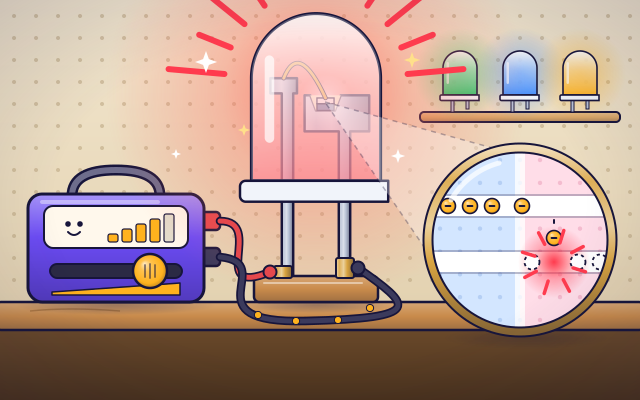
How do LEDs produce light?
Explore a simplified semiconductor junction as electrical energy becomes light.
#376
Electricity & energy
How do LEDs produce light?
Explore a simplified semiconductor junction as electrical energy becomes light.
 #377
Electricity & energy
How do LCD screens make pictures?
Control tiny screen elements and color filters to build a pixel-based picture.
#377
Electricity & energy
How do LCD screens make pictures?
Control tiny screen elements and color filters to build a pixel-based picture.
Keep exploring
Games to play next
- Circuit Workshop 3DWire up batteries, bulbs and switches on a 3D workbench.
- SwitchworksFlip switches to light the lamps in the target pattern — in as few presses as you can.
- Machine RepairFix levers, pulleys, gears and ramps so every contraption works.
Guide for grown-ups
- How to start homeschooling: a step-by-step guide for familiesA guide for parents · 7 min read
Science games by grade
Science worksheets by grade
- Preschool Science Worksheets
- Pre-K Science Worksheets
- Kindergarten Science Worksheets
- 1st Grade Science Worksheets
- 2nd Grade Science Worksheets
- 3rd Grade Science Worksheets
- 4th Grade Science Worksheets
- 5th Grade Science Worksheets
- 6th Grade Science Worksheets
- 7th Grade Science Worksheets
- 8th Grade Science Worksheets