How do electric motors make things move?
Inside every motor, magnets push on a wire coil carrying electricity, and that push spins a shaft.
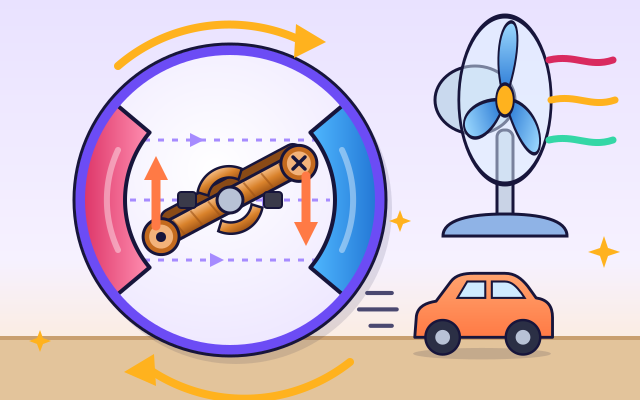
The big idea: Electricity flowing through a coil of wire turns it into a magnet. The motor's magnets push one side of the coil up and the other side down, so the coil turns. A clever switch called a commutator flips the current every half turn to keep it spinning.
It's like
The interactive parts didn't load. The explanations below still work; try reloading the page.
Inside a spinning motor
- Flip a switch and the fan whirls and the toy car rolls away. Inside each one is a small electric motor that turns electricity into movement.
- Every magnet has a north pole and a south pole. Opposite poles pull together, and matching poles push apart. Motors use these pushes and pulls.
- When electricity flows through a coil of wire, the coil becomes a magnet: an electromagnet. Switch it off, and the magnet goes away.
- Put the coil between two magnets. One side of the coil is pushed up and the other side is pushed down, so the coil twists around its middle.
- After half a turn, the pushes would stop the coil. So a split ring called a commutator flips the current each half turn, and the coil keeps spinning the same way.
- Motors are all around you: in fans, toy cars, washing machines, drills and conveyor belts that carry boxes in factories.
A model motor, opened up
This model motor has no cover, so you can see every part. Tap each one to watch it work.
- Magnets. A north pole on top and a south pole below make a strong magnetic field across the coil. The magnets never move.
- Coil. The coil is many turns of thin copper wire. When current flows, the magnets push one side up and the other side down, so the coil turns.
- Shaft. The coil is fixed to the shaft, a strong metal rod. When the coil turns, the shaft turns, and it can drive a fan, a wheel or a belt.
- Commutator. The commutator is a copper ring split into two halves. It turns with the coil and flips the direction of the current every half turn.
- Brushes. The brushes are blocks of carbon pressed against the spinning commutator by springs. They let electricity flow into a part that is turning.
- Battery. The battery pushes current through the wires, brushes and coil. Turn it around and the current flows the other way, so the motor spins backward.
- Bearings. The bearings hold the shaft in place and let it spin smoothly with very little rubbing.
- Fan. The fan is the load: the job the motor does. The faster the shaft turns, the more air the fan pushes.
Motor lab: power, magnets and direction
Turn up the battery, change the magnets and choose a job for the motor. Then try flipping the battery. What happens?
Experiment: What will happen if you flip the battery around while the motor is running?
- Turn the battery up until the motor spins.
- Notice which way the coil and fan turn.
- Switch on Flip the battery and watch again.
What we found: Flipping the battery makes the current flow the other way through the coil. Then the magnets push each side the opposite way, so the motor spins backward. That is how toy cars drive in reverse!
Turn on JavaScript to try it yourself.
Load the truck
Build a motor that carries all 3 parcels up the belt into the truck before it leaves.
Magnets, coils and a clever switch
Magnets have two ends, called poles: north and south. A north pole and a south pole pull toward each other, while two north poles (or two south poles) push each other away. The space around a magnet where you can feel these pushes and pulls is called its magnetic field.
Electricity can make magnets too. When current flows through a coil of wire, the coil becomes an electromagnet with its own north and south poles. Switch the current off and the magnetism disappears. The more turns of wire, the stronger the electromagnet.
In a motor, the coil sits between two magnets. The magnets push one side of the coil up and the other side down, so the coil twists. After half a turn, the pushes would hold the coil still. That's why motors have a commutator: a split ring that flips the current every half turn so the coil keeps spinning the same way.
To make a motor spin faster, you can use a bigger battery voltage. To make it stronger, you can use stronger magnets or more turns of wire. Flip the battery around, and the motor spins backward. Toy cars use this trick to drive in reverse.
Key words
- Magnetic field
- The space around a magnet where it pushes or pulls.
- Electromagnet
- A coil of wire that becomes a magnet when current flows through it.
- Commutator
- A split ring that flips the current every half turn so the motor keeps spinning one way.
- Torque
- A turning push.
- Back EMF
- The voltage a spinning motor makes, which pushes back against the battery and limits the current.
- Stall
- When a motor's load is too heavy and it can't turn.
Check your thinking
-
What turns a coil of wire into a magnet?
Show the answer
Electricity flowing through it. Current flowing through a coil makes a magnetic field, so the coil becomes an electromagnet.
-
What do two north poles do when you bring them together?
Show the answer
They push each other away. Like poles repel and unlike poles attract.
-
What would happen to a motor with no commutator?
Show the answer
The coil would rock back and forth and stop. Without the flip, the pushes hold the coil upright after half a turn, so it stops.
-
How can you make a motor spin the other way?
Show the answer
Turn the battery around. Reversed current means reversed pushes, so the coil turns the opposite way.
-
Why does a motor draw the most current when it is stalled?
Show the answer
With no spinning there is no back EMF, so I = V ÷ R. Back EMF grows with speed. At zero speed it is zero, so only the coil's resistance limits the current.
-
Which change makes a motor spin faster?
Show the answer
Using a bigger battery voltage. More voltage pushes more current, which makes a stronger turning push.
You're a Electricity & energy expert!
You watched, looked inside, tried it, solved the challenge and went deeper. Pick another question below, or switch the age at the top to see this topic another way.
More about electricity & energy
 #46
Electricity & energy
How do generators make electricity?
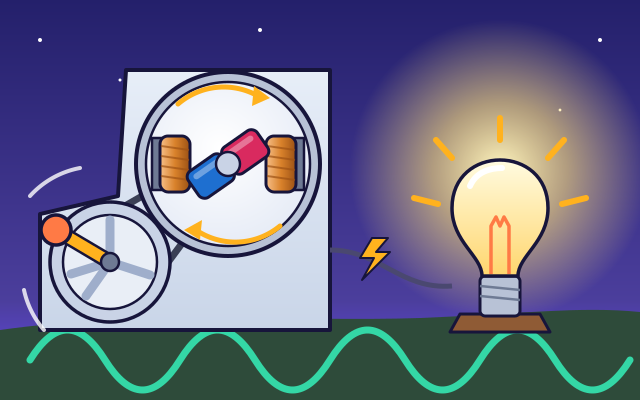
Move magnets and coils in a simulation to explore electricity generation. Turn a virtual hand crank and compare how connected devices respond.
#46
Electricity & energy
How do generators make electricity?
Move magnets and coils in a simulation to explore electricity generation. Turn a virtual hand crank and compare how connected devices respond.
 #47
Electricity & energy
How does electricity reach our homes?
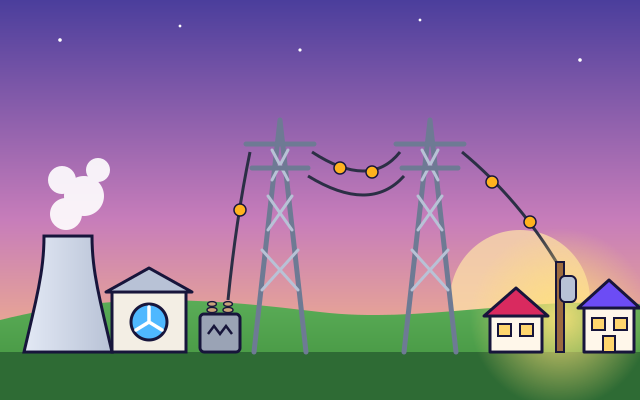
Follow electricity through generators, substations, power lines, and neighborhood connections. Connect a model town and restore power after a simulated fault.
#47
Electricity & energy
How does electricity reach our homes?
Follow electricity through generators, substations, power lines, and neighborhood connections. Connect a model town and restore power after a simulated fault.
 #48
Electricity & energy
How does flowing water generate electricity?
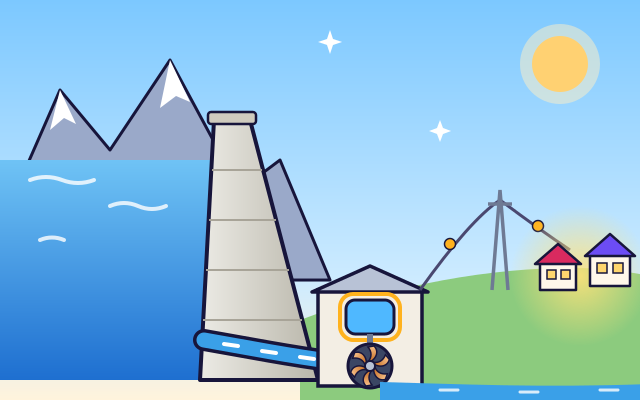
Guide water through a hydroelectric turbine and generator. Adjust water flow and height in a simplified model and compare electricity output.
#48
Electricity & energy
How does flowing water generate electricity?
Guide water through a hydroelectric turbine and generator. Adjust water flow and height in a simplified model and compare electricity output.
 #376
Electricity & energy
How do LEDs produce light?
Explore a simplified semiconductor junction as electrical energy becomes light.
#376
Electricity & energy
How do LEDs produce light?
Explore a simplified semiconductor junction as electrical energy becomes light.
Keep exploring
Games to play next
- Circuit Workshop 3DWire up batteries, bulbs and switches on a 3D workbench.
- SwitchworksFlip switches to light the lamps in the target pattern — in as few presses as you can.
- Machine RepairFix levers, pulleys, gears and ramps so every contraption works.
Guide for grown-ups
- How to start homeschooling: a step-by-step guide for familiesA guide for parents · 7 min read
Science games by grade
Science worksheets by grade
- Preschool Science Worksheets
- Pre-K Science Worksheets
- Kindergarten Science Worksheets
- 1st Grade Science Worksheets
- 2nd Grade Science Worksheets
- 3rd Grade Science Worksheets
- 4th Grade Science Worksheets
- 5th Grade Science Worksheets
- 6th Grade Science Worksheets
- 7th Grade Science Worksheets
- 8th Grade Science Worksheets