How do wind turbines make electricity?
Follow the wind as it turns the blades, spins a generator and lights up a village, and see why wind speed matters so much.
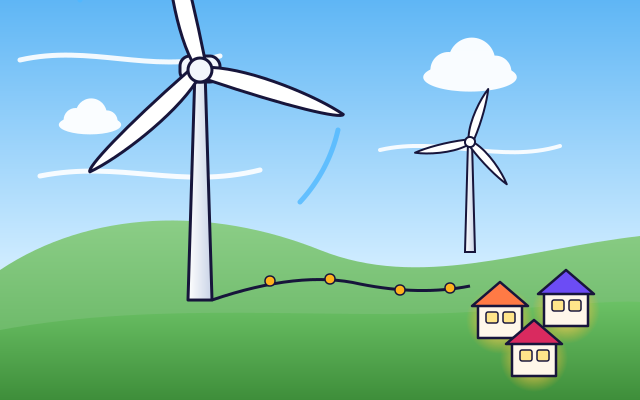
The big idea: Wind is moving air, and moving air carries energy. The blades are shaped like wings, so the wind makes them spin. The spinning shaft turns a generator, which makes electricity. Twice the wind speed gives about eight times the power.
It's like
The interactive parts didn't load. The explanations below still work; try reloading the page.
From a breeze to a light bulb
- Wind is air on the move. The sun warms some places more than others, and air rushes from one place to another. Moving air carries energy.
- The blades are shaped like airplane wings. As the wind flows past, it lifts each blade sideways, and that pushes the whole rotor around.
- The blades turn slowly, about once every four seconds. Inside the box on top, called the nacelle, a gearbox turns that slow spin into a fast one for the generator.
- The generator spins magnets past coils of copper wire. A moving magnet pushes the electrons in the wire along, making an electric current.
- Cables carry the electricity down the tower. Power lines take it to homes, schools and shops, where it lights rooms and runs fridges.
- In very light wind the blades don't turn. As the wind gets stronger, the power climbs fast. In a storm, the turbine turns its blades sideways and stops, so it isn't damaged.
Inside the nacelle
This simplified cutaway shows the machines inside the nacelle at the top of the tower. Tap each part.
- Blades. Three long blades, shaped like wings, catch the wind. On big turbines each blade can be longer than a jumbo jet's wing.
- Hub and pitch system. The blades are bolted to the hub. Motors inside can twist each blade to catch more wind or to let the wind slip past.
- Main shaft. A thick steel shaft carries the turning force from the hub into the nacelle. It turns slowly but very strongly.
- Gearbox. Big gears turn little gears. The gearbox makes the slow spin of the blades into a fast spin for the generator, about a hundred times faster.
- Generator. Inside the generator, magnets spin past coils of copper wire. This makes an electric current, the same idea as a bike's dynamo light.
- Brake. A disc brake can stop the shaft for repairs or in an emergency, a bit like the brakes on a bicycle.
- Wind sensors. Spinning cups measure the wind speed and a vane shows its direction. The turbine's computer uses them to decide when to start and stop.
- Yaw drive. Motors and a big gear ring turn the whole nacelle so the blades always face into the wind.
- Tower and cable. The tower lifts the blades high up, where the wind is stronger and steadier. Cables inside carry the electricity down to the ground.
Wind speed and power
Change the wind speed and count how many houses light up. What happens when the wind is twice as fast?
Experiment: If the wind blows twice as fast, how much more power does the turbine make?
- Set the wind to 5 m/s. Count the lit houses.
- Set the wind to 10 m/s. Count again.
- Now try a storm. What does the turbine do?
What we found: Doubling the wind speed gives about eight times the power: at 5 m/s one house lights up, at 10 m/s eight do. That's because faster wind brings more air each second, and each bit of air carries more energy. In a storm, the turbine stops to protect itself.
Turn on JavaScript to try it yourself.
Turbine designer
Choose where to build, how tall the tower is and how long the blades are, so all 12 houses light up. For 3 stars, spend as few coins as possible.
Catching the wind
Wind is moving air. It happens because the sun heats the Earth unevenly: warm air rises and cooler air rushes in to take its place. Like anything that moves, moving air carries energy, called kinetic energy.
A wind turbine's blades are shaped like airplane wings. As the wind flows past them, it pushes each blade sideways, which turns the rotor. The rotor turns a shaft, a gearbox makes the spin much faster, and the generator uses spinning magnets and coils of wire to make electricity.
Wind speed matters enormously. If the wind blows twice as fast, the turbine can make about eight times as much power. That's why turbines are built on hilltops, along coasts and out at sea, and why their towers are so tall: the wind is stronger and steadier higher up.
When the wind is too light, the blades don't turn. In a storm, the turbine turns its blades sideways and stops so it won't be damaged. Because the wind isn't always blowing, wind power is used together with other sources and with energy storage. Wind is renewable: it won't run out.
Key words
- Kinetic energy
- The energy something has because it is moving.
- Generator
- A machine that spins magnets near coils of wire to make electricity.
- Nacelle
- The housing at the top of the tower that holds the gearbox, generator and controls.
- Swept area
- The circle the blades sweep through as they spin.
- Cut-in and cut-out speed
- The lowest wind speed at which a turbine starts making power, and the highest before it shuts down for safety.
- Betz limit
- No turbine can catch all the wind's energy; the most possible is about 59%.
Check your thinking
-
What kind of energy does the wind have?
Show the answer
Kinetic energy (energy of motion). Wind is moving air, and moving things have kinetic energy.
-
If the wind speed doubles, about how much more power can the turbine make?
Show the answer
About 8 times as much. Power grows with the wind speed cubed: 2 × 2 × 2 = 8.
-
Why does a turbine stop in a very strong storm?
Show the answer
To protect itself from damage. Very strong winds could damage the blades and tower, so the turbine turns its blades sideways and stops.
-
Why are wind turbines built on tall towers?
Show the answer
The wind is faster and steadier higher up. Near the ground, trees and buildings slow the wind. Higher up it blows faster.
-
Why can't a turbine capture 100% of the wind's energy?
Show the answer
The air must keep moving through the rotor, so some energy stays in it. If the turbine stopped the air completely, no more air could pass through. The best possible is the Betz limit, about 59%.
You're a Electricity & energy expert!
You watched, looked inside, tried it, solved the challenge and went deeper. Pick another question below, or switch the age at the top to see this topic another way.
More about electricity & energy
 #45
Electricity & energy
How do electric motors make things move?
Explore magnets, coils, and a turning shaft in a simplified motor. Use it to drive a fan, toy car, or conveyor belt.
#45
Electricity & energy
How do electric motors make things move?
Explore magnets, coils, and a turning shaft in a simplified motor. Use it to drive a fan, toy car, or conveyor belt.
 #46
Electricity & energy
How do generators make electricity?
Move magnets and coils in a simulation to explore electricity generation. Turn a virtual hand crank and compare how connected devices respond.
#46
Electricity & energy
How do generators make electricity?
Move magnets and coils in a simulation to explore electricity generation. Turn a virtual hand crank and compare how connected devices respond.
 #47
Electricity & energy
How does electricity reach our homes?
Follow electricity through generators, substations, power lines, and neighborhood connections. Connect a model town and restore power after a simulated fault.
#47
Electricity & energy
How does electricity reach our homes?
Follow electricity through generators, substations, power lines, and neighborhood connections. Connect a model town and restore power after a simulated fault.
 #48
Electricity & energy
How does flowing water generate electricity?
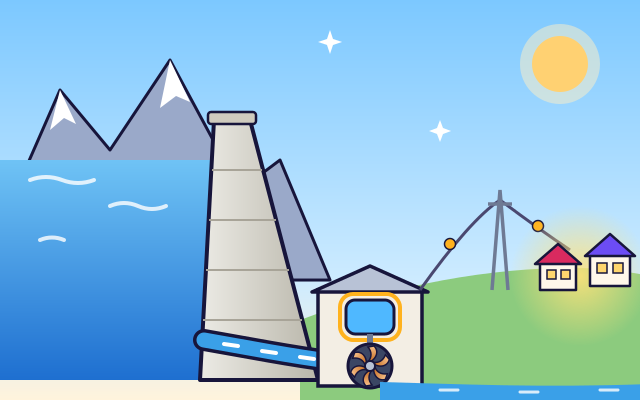
Guide water through a hydroelectric turbine and generator. Adjust water flow and height in a simplified model and compare electricity output.
#48
Electricity & energy
How does flowing water generate electricity?
Guide water through a hydroelectric turbine and generator. Adjust water flow and height in a simplified model and compare electricity output.
Keep exploring
Games to play next
- Circuit Workshop 3DWire up batteries, bulbs and switches on a 3D workbench.
- SwitchworksFlip switches to light the lamps in the target pattern — in as few presses as you can.
- Machine RepairFix levers, pulleys, gears and ramps so every contraption works.
Draw it or make it
- Flat Folded WindmillOrigami
Guide for grown-ups
- How to start homeschooling: a step-by-step guide for familiesA guide for parents · 7 min read
Science games by grade
Science worksheets by grade
- Preschool Science Worksheets
- Pre-K Science Worksheets
- Kindergarten Science Worksheets
- 1st Grade Science Worksheets
- 2nd Grade Science Worksheets
- 3rd Grade Science Worksheets
- 4th Grade Science Worksheets
- 5th Grade Science Worksheets
- 6th Grade Science Worksheets
- 7th Grade Science Worksheets
- 8th Grade Science Worksheets