How does a baby develop before birth?
For about nine months a baby grows in the womb, kept warm, cushioned and fed. Follow the gentle timeline.
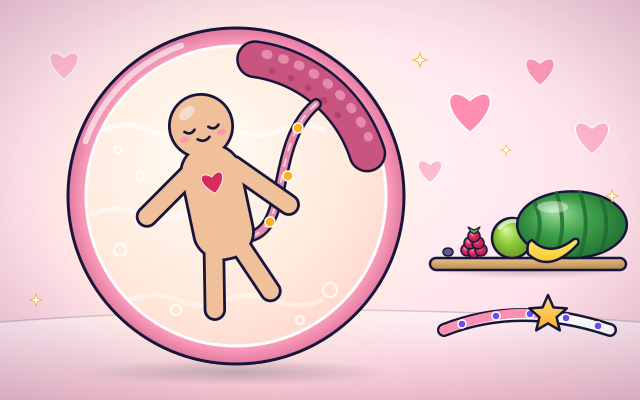
The big idea: Before birth a baby grows in the womb for about nine months. It floats in warm liquid, and the placenta and cord bring it food and oxygen.
It's like a tiny seed in a garden: it is kept warm, safe and fed while it slowly grows into something much bigger.
The interactive parts didn't load. The explanations below still work; try reloading the page.
Nine months of growing
- Before a baby is born, it spends about nine months growing inside its mother, in a stretchy bag of muscle called the womb. What happens in all that time?
- At the start, the baby is a tiny ball of cells, smaller than a poppy seed. The cells divide again and again. By two months it is the size of a raspberry, with a beating heart.
- The baby floats in a bag of warm liquid. The liquid cushions bumps, keeps the baby warm and gives it room to wiggle and stretch.
- The baby does not eat or breathe air yet. An organ called the placenta passes food and oxygen from mom's blood, through the cord, to the baby. Waste travels back the other way.
- Month by month the baby grows: lime, avocado, banana. Its shape changes too. At first the head is half of its whole length. Later the body and legs catch up.
- In the last months the baby can hear voices, opens its eyes and puts on weight. After about nine months it is ready to meet its family.
Inside the womb
Tap each part of this simple picture to find out what it does for the baby.
- The womb. The womb is a strong, stretchy bag of muscle inside the mother. It grows from about the size of a pear to the size of a watermelon to make room.
- The water cushion. The baby floats in warm liquid inside a thin bag. The liquid works like a cushion and lets the baby move easily.
- The placenta. The placenta grows on the wall of the womb. It passes food and oxygen from mom's blood to the baby and takes waste away.
- The cord. The umbilical cord is a bendy tube that joins the baby's tummy to the placenta. Your belly button is where your cord once was!
- The baby. The baby moves, stretches, sleeps and wakes. From about the middle of the nine months, mom can feel the kicks.
- A tiny heart. The baby's heart starts beating very early, when the baby is smaller than a pea. It beats about twice as fast as a grown-up's heart.
Slide through nine months
Drag the star along the timeline. Watch the baby's size and shape change, and tap the placenta to send food and oxygen down the cord.
Experiment: As the baby grows, what happens to its head compared with the rest of its body?
- Drag the star to month 2 and look at the two colored bars beside the baby.
- Drag slowly to month 5, then on to month 9.
- Compare the amber head bar with the blue body bar each time.
What we found: At two months the head is about half of the baby's whole length. By nine months it is only about a quarter. The head keeps growing, but the body, arms and legs grow faster and catch up.
Turn on JavaScript to try it yourself.
The baby's first moments
Each card names a moment. Drag the star to the time it first happens, then press That is when! Watch the picture for clues.
Nine months of getting ready
Every person started out smaller than a poppy seed, as a tiny ball of cells. The cells divided again and again, and soon they began to take on different jobs: some became heart, some skin, some brain. All of this happens in the womb, a stretchy bag of muscle inside the mother that grows as the baby grows.
A baby in the womb does not eat with its mouth or breathe air. Everything it needs comes through the placenta, an organ that grows on the wall of the womb just for this job. Food and oxygen pass from the mother's blood into the baby's blood and travel down the cord to the baby's tummy. Waste goes back the other way. Your belly button shows where your cord was joined.
The baby floats in warm liquid that cushions it like a pillow. As the months go by it grows from the size of a raspberry to a lime, a banana and at last about as heavy as a small watermelon. Its shape changes too: early on, the head is half of the whole baby, and later the body and legs catch up.
Our seed comparison is not perfect. A seed carries its own packed lunch and grows alone, but a baby gets a fresh supply from its mother every moment. Babies also grow at their own pace, so sizes are always about, never exactly.
Key words
- Womb
- The stretchy, muscular bag inside a mother where a baby grows before it is born.
- Placenta
- An organ that grows on the wall of the womb and passes food and oxygen to the baby and takes waste away.
- Umbilical cord
- The bendy tube that joins the baby to the placenta.
- Amniotic fluid
- The warm liquid that surrounds and cushions the baby.
- Embryo and fetus
- Names for a baby before birth: embryo for about the first two months, fetus after that.
Check your thinking
-
How does a baby get food and oxygen before it is born?
Show the answer
From mom's blood, through the placenta and the cord. The placenta passes food and oxygen from mom's blood to the baby's blood, and the cord carries them to the baby.
-
What does the warm liquid around the baby do?
Show the answer
It cushions the baby and gives it room to move. The liquid spreads out bumps and lets the baby wiggle, which helps its muscles grow.
-
How does the baby's shape change as it grows?
Show the answer
The head becomes a smaller share because the body and legs catch up. The head is about half of the baby at two months and about a quarter at nine months.
-
In this model, when is most of the baby's mass added?
Show the answer
In the last three months. A typical fetus weighs about 1 kilogram at 28 weeks and over 3 kilograms at 40 weeks, so more than half of the mass is added near the end.
-
What does your belly button show?
Show the answer
Where your cord was joined to you. The umbilical cord joined your tummy to the placenta. The belly button is the mark it left.
You're a Human body expert!
You watched, looked inside, tried it, solved the challenge and went deeper. Pick another question below, or switch the age at the top to see this topic another way.
More about human body
 #263
Human body
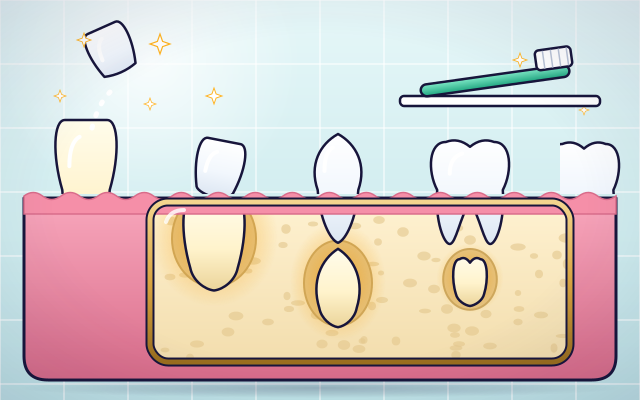
How do adult teeth replace baby teeth?
Reveal changes above and below the gums through a dental-development timeline.
#263
Human body
How do adult teeth replace baby teeth?
Reveal changes above and below the gums through a dental-development timeline.
 #264
Human body
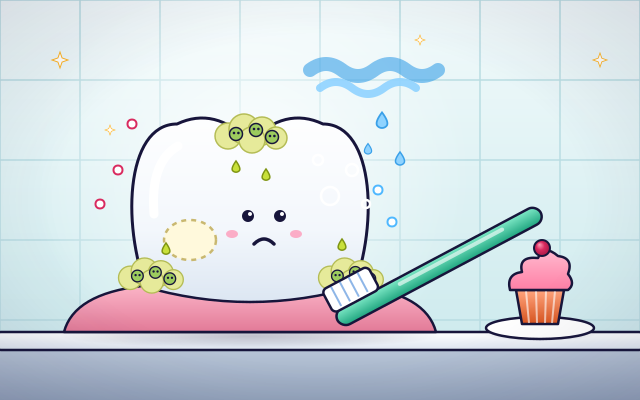
How does tooth decay develop?
Explore plaque, acids, enamel damage, and protective saliva on a model tooth.
#264
Human body
How does tooth decay develop?
Explore plaque, acids, enamel damage, and protective saliva on a model tooth.
 #265
Human body
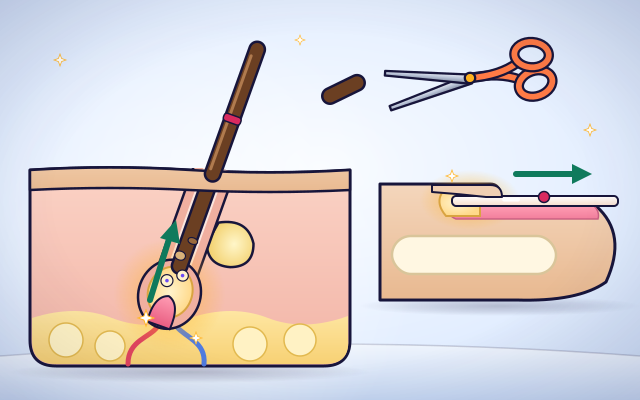
How do hair and nails grow?
Follow newly produced cells into growing hair and nails beneath a skin cutaway.
#265
Human body
How do hair and nails grow?
Follow newly produced cells into growing hair and nails beneath a skin cutaway.
 #266
Human body
How do fingerprints form?
Explore developing skin ridges and compare loops, arches, and whorls.
#266
Human body
How do fingerprints form?
Explore developing skin ridges and compare loops, arches, and whorls.
Keep exploring
Games to play next
- Body ExplorerTap, match and label your way around the amazing human body.
- Label LabPut the right labels on beautiful science diagrams, from bean plants to heart chambers.
- Science QuizzesOlly's Science Quiz Show: plants, animals, the body, weather, space and more, for every grade.
Guide for grown-ups
- How to start homeschooling: a step-by-step guide for familiesA guide for parents · 7 min read
Science games by grade
Science worksheets by grade
- Preschool Science Worksheets
- Pre-K Science Worksheets
- Kindergarten Science Worksheets
- 1st Grade Science Worksheets
- 2nd Grade Science Worksheets
- 3rd Grade Science Worksheets
- 4th Grade Science Worksheets
- 5th Grade Science Worksheets
- 6th Grade Science Worksheets
- 7th Grade Science Worksheets
- 8th Grade Science Worksheets