How does tooth decay develop?
Plaque germs turn sugar into acid that weakens enamel. Saliva repairs it, if teeth get a rest. Try it on a model tooth.
The big idea: Bacteria in plaque turn sugar into acid. Acid pulls minerals out of enamel, and saliva puts them back. A cavity forms when teeth lose minerals faster than saliva can replace them.
It's like a sandcastle by the sea: each wave takes a little sand, and you pack some back between waves. If the waves never stop, a hole forms.
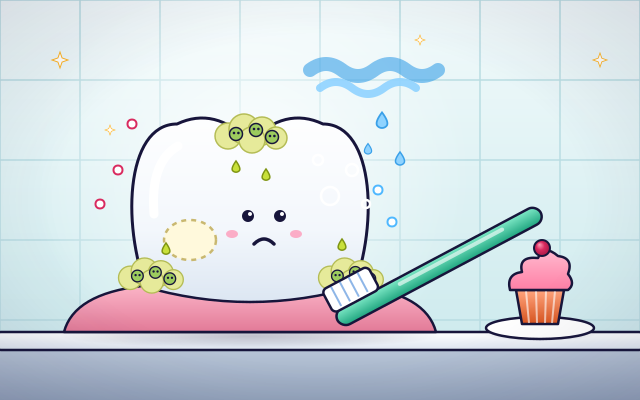
The interactive parts didn't load. The explanations below still work; try reloading the page.
How a cavity starts
- This model tooth is covered in enamel, the hardest material in your body. Enamel is built from tightly packed minerals. So how can a tooth get a hole?
- Every mouth is home to tiny living things called bacteria. Many are harmless. They build a soft, sticky film on teeth called plaque, which grows back a few hours after brushing.
- When you eat or drink something with sugar, plaque bacteria feed on it too. Within minutes they give off acid, right against the tooth.
- Acid pulls minerals out of the enamel, like waves taking sand from a sandcastle. If it happens a lot, a chalky white spot appears. That is the first sign of a weak place.
- Your saliva is a tooth's best friend. It washes sugar away, cancels out the acid, and carries minerals back into the enamel. That repair takes about half an hour or more.
- A cavity only forms when acid wins again and again. So brush twice a day to clear plaque, and give your teeth rests between sweet things. Then saliva can keep up with repairs.
The tooth, the plaque and the helpers
Tap each part of the picture to see what it does to the tooth.
- Enamel. Enamel is the tooth's hard outer coat. It is made of minerals packed tightly together. It has no living cells, so it cannot grow back by itself.
- Plaque. Plaque is a soft, sticky film of bacteria. You can feel it as fuzziness on unbrushed teeth. It holds acid right against the enamel.
- Sugar. Sugar is food for plaque bacteria. It is not the amount in one go that matters most to teeth, but how often sugar arrives and how long it stays.
- Acid. After their sugar meal, bacteria give off acid. Acid dissolves minerals out of enamel, a tiny bit at a time.
- A weak spot. After many acid attacks, a dull, chalky white spot shows where enamel has lost minerals. At this stage saliva and fluoride can still repair it.
- Saliva. Saliva rinses away sugar, cancels acid and brings minerals back to the enamel. You make less saliva while you sleep, which is why brushing before bed matters.
- Toothbrush and fluoride. Brushing removes plaque, so there are fewer bacteria to make acid. Toothpaste with fluoride helps saliva rebuild enamel even stronger.
Acid attack and repair
Give the model tooth a sweet treat and watch the dial and the strength bar. Then let it rest, rinse or brush. What happens if sweets keep coming with no rest?
Experiment: A tooth gets the same sweets two ways: one treat and then a long rest, or little sweet sips all day long. Which is easier on the tooth?
- Press Sweet treat once. Watch the dial dip and come back, and the strength bar recover.
- Now switch on Sweet sips all day and watch the dial.
- Switch it off again, then try brushing first and giving a treat.
What we found: After one treat the acid attack ends in about half an hour, and saliva puts the lost minerals back. With sweet sips all day the acid never stops, saliva never gets its turn, and the tooth keeps getting weaker. Rests matter more than amounts.
Turn on JavaScript to try it yourself.
Plan a tooth-friendly day
This day includes three meals and some sweets. Choose when to have the sweets and when to brush, then press Play the day. Keep the tooth strong through the day and the night.
The tug of war on your teeth
Your teeth are covered in enamel, the hardest stuff in your body. Enamel is made of minerals packed together like bricks. It is tough enough to chew for a lifetime, but acid can slowly dissolve it.
Your mouth is full of tiny living things called bacteria. Most are harmless. They live in plaque, the sticky film that builds up on teeth. When sugar arrives, some of these bacteria feed on it and give off acid. For about half an hour the acid pulls minerals out of the enamel.
Then your saliva goes to work. It washes away the sugar, cancels out the acid and carries minerals back into the enamel. So a tooth is always in a tug of war: minerals out, minerals in. A cavity forms only when acid wins again and again, for weeks and months. First comes a chalky white spot, which can still be repaired. A real hole cannot heal, but a dentist can fix it with a filling.
That is why all kinds of foods can fit into a tooth-friendly day. What helps most is giving teeth rests between sweet things, drinking water, brushing twice a day with fluoride toothpaste and visiting the dentist. The sandcastle comparison is not perfect: sand does not go back by itself, but saliva repairs your enamel all day long.
Key words
- Enamel
- The hard, mineral coat of a tooth.
- Plaque
- A soft, sticky film of bacteria that grows on teeth.
- Acid
- A sour chemical. The acid made by plaque bacteria can dissolve enamel minerals.
- Saliva
- The watery liquid in your mouth, also called spit. It washes teeth, cancels acid and brings minerals back.
- Cavity
- A hole in a tooth where too many minerals have been lost. A dentist can repair it with a filling.
- Fluoride
- A mineral in most toothpastes that helps make enamel stronger.
Check your thinking
-
What do plaque bacteria make when they feed on sugar?
Show the answer
Acid. The bacteria turn sugar into acid, and acid dissolves minerals out of enamel.
-
How does saliva help your teeth?
Show the answer
It washes sugar away, cancels acid and brings minerals back. Saliva is the repair crew: it clears sugar, neutralizes acid and remineralizes enamel.
-
Why is sipping a sweet drink all afternoon harder on teeth than having the same drink with lunch?
Show the answer
The acid never stops, so saliva gets no time to repair. Each sip restarts the acid attack. Without rests, minerals keep leaving and none come back.
-
A chalky white spot has appeared on a tooth. What does it mean?
Show the answer
The enamel has lost minerals there, and it can still be repaired. A white spot is an early warning. Saliva, fluoride and good brushing can put minerals back.
-
At about what pH does enamel begin to dissolve?
Show the answer
Below about 5.5. About pH 5.5 is the critical pH for enamel. Neutral is 7, and lower numbers are more acidic.
-
Why is brushing before bed especially useful?
Show the answer
You make less saliva while you sleep, so teeth have less protection. With less saliva at night, plaque left on teeth can keep its acid there for a long time.
You're a Human body expert!
You watched, looked inside, tried it, solved the challenge and went deeper. Pick another question below, or switch the age at the top to see this topic another way.
More about human body
 #265
Human body
How do hair and nails grow?
Follow newly produced cells into growing hair and nails beneath a skin cutaway.
#265
Human body
How do hair and nails grow?
Follow newly produced cells into growing hair and nails beneath a skin cutaway.
 #266
Human body
How do fingerprints form?
Explore developing skin ridges and compare loops, arches, and whorls.
#266
Human body
How do fingerprints form?
Explore developing skin ridges and compare loops, arches, and whorls.
 #267
Human body
Why do we get goosebumps?
Activate tiny muscles attached to hair follicles and observe changes in the skin.
#267
Human body
Why do we get goosebumps?
Activate tiny muscles attached to hair follicles and observe changes in the skin.
 #268
Human body
How does a sneeze happen?
Follow an irritation signal and coordinate the muscles involved in a sneeze animation.
#268
Human body
How does a sneeze happen?
Follow an irritation signal and coordinate the muscles involved in a sneeze animation.
Keep exploring
Games to play next
- Body ExplorerTap, match and label your way around the amazing human body.
- Life Skills & Health QuizzesOlly's Life Skills Quiz Show: healthy habits, safety, feelings, money, time and kind, safe screens.
- Label LabPut the right labels on beautiful science diagrams, from bean plants to heart chambers.
Guide for grown-ups
- How to start homeschooling: a step-by-step guide for familiesA guide for parents · 7 min read
Science games by grade
Science worksheets by grade
- Preschool Science Worksheets
- Pre-K Science Worksheets
- Kindergarten Science Worksheets
- 1st Grade Science Worksheets
- 2nd Grade Science Worksheets
- 3rd Grade Science Worksheets
- 4th Grade Science Worksheets
- 5th Grade Science Worksheets
- 6th Grade Science Worksheets
- 7th Grade Science Worksheets
- 8th Grade Science Worksheets