How does a pressure cooker cook food?
Seal the lid, trap the steam and watch the pressure climb: that is how water gets hotter than boiling and food cooks faster.
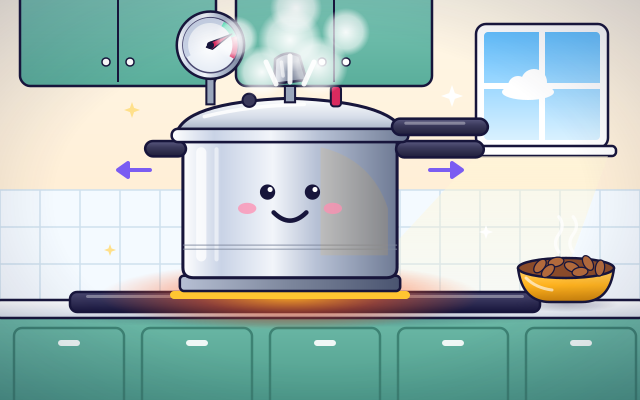
The big idea: In an open pot, water cannot get hotter than 100 degrees Celsius. A sealed pot traps the steam, the pressure rises, and under pressure water boils at a higher temperature. Hotter water cooks food faster.
It's like pumping up a bicycle tire: the more air you squeeze in, the harder it pushes back. Trapped steam fills the sealed pot the same way.
The interactive parts didn't load. The explanations below still work; try reloading the page.
Trapped steam, faster dinner
- Dried beans need about an hour of boiling in an ordinary pot before they are soft enough to eat. Turning the heat up does not help. Why not?
- Water heats up until it boils at 100 degrees Celsius. Then it stops getting hotter. Any extra heat just turns more water into steam, and the steam floats away with the heat.
- A pressure cooker has a lid that locks. A rubber ring called a gasket fills the gap between the lid and the pot, so the steam cannot escape. Only grown-ups use a pressure cooker.
- As the water boils, more and more steam is packed into the same space. The crowded steam pushes hard on everything: that push is pressure. Under pressure, water has to get hotter before it can boil.
- A small weight sits on a hole in the lid. When the pressure is high enough, the steam lifts the weight and a little escapes. That stops the pressure from going any higher. A red pin shows the lid is locked.
- Water at 120 degrees cooks beans in about a third of the time. When they are done, a grown-up turns off the heat. The lid stays locked until the pot has cooled and the pressure is gone.
Look inside a pressure cooker
Tap each part of the pressure cooker. Watch how it helps to trap the steam and keep things safe.
- Strong pot. The pot is made of thick, strong metal so it can hold the push of the steam. Its heavy base spreads the heat from the burner.
- Locking lid. The lid twists and locks onto the pot, like a jar lid with strong hooks. The two handles line up when it is locked. Only grown-ups lock and unlock it.
- Gasket. The gasket is a soft rubber ring between the lid and the pot. The steam's push squeezes it into the gap, making a seal that steam cannot pass.
- Water and steam. The water at the bottom boils and makes steam. The steam cannot leave, so it packs in tighter and tighter and pushes on the walls, the lid and the water.
- Pressure valve. A small weight sits on a pipe in the lid. When the steam pushes hard enough, it lifts the weight and escapes with a hiss. That keeps the pressure from rising too far.
- Locking pin. The steam pushes this little pin up. While it is up, it blocks the lid from turning, so the pot cannot be opened while there is pressure inside.
- Safety valve. This is a backup. If the main valve ever got blocked, this second valve would open and let the steam out.
Open pot against sealed cooker
Turn up the heat under both pots. One is open and one is sealed. Watch the thermometers, the steam and the beans.
Experiment: Both pots get the same heat. Which one will have hotter water?
- Turn the heat to High.
- Watch the open pot's thermometer. Where does it stop?
- Now watch the sealed cooker's thermometer and its gauge. Which beans cook first?
What we found: The open pot stops at 100 degrees, because its steam escapes and takes the heat away. The sealed cooker traps the steam, the pressure rises, and its water climbs to about 120 degrees before the valve lifts. That hotter water cooks the beans about three times faster.
Turn on JavaScript to try it yourself.
Beans by dinner time
Cook the beans before the clock's hand leaves the green slice, and do not let the water steam away. Heat fast, then turn the heat down.
Pressure and boiling
When you heat water in an ordinary pot, it gets hotter until it reaches 100 degrees Celsius. Then it boils, and something odd happens: it stops getting hotter. All the extra heat goes into turning water into steam, and the steam drifts away. That is why turning up the stove does not cook pasta or beans any faster.
A pressure cooker changes the rules by trapping the steam. Its lid locks on, and a rubber ring called a gasket seals the gap. As more and more steam is made, it is squeezed into the same space, a bit like air being pumped into a bicycle tire. Squeezed steam pushes hard on everything around it. That push is called pressure.
Pressure pushes down on the water too, and that makes it harder for the water to boil. The water now has to reach about 120 degrees before it can bubble. Water that hot cooks food about three times faster, so beans that take an hour can be ready in about twenty minutes.
A pressure cooker has clever parts to keep the pressure just right. A weighted valve lets out extra steam with a hiss, a pin locks the lid while there is pressure inside, and a backup valve stands by. Even so, a pressure cooker is a tool for grown-ups. They wait for it to cool before the lid can be unlocked.
Key words
- Pressure
- How hard a gas or liquid pushes on the things around it.
- Boiling point
- The temperature at which a liquid bubbles and turns into gas.
- Steam
- Water that has turned into a gas.
- Gasket
- A soft ring that seals the gap between two parts so nothing leaks through.
- Relief valve
- A valve that opens by itself to let out extra pressure.
Check your thinking
-
Why can water in a pressure cooker get hotter than 100 degrees?
Show the answer
Trapped steam raises the pressure, and that raises the boiling point. Under higher pressure, water must be hotter before it can boil.
-
What does the weighted valve do?
Show the answer
It lets out extra steam so the pressure stays steady. When the steam pushes hard enough, it lifts the weight and escapes. That stops the pressure from rising.
-
You turn the stove up high under an open pot that is already boiling. What happens?
Show the answer
The water boils away faster but gets no hotter. Boiling water stays at its boiling point. Extra heat just makes more steam.
-
Who should use a pressure cooker, and when can its lid be unlocked?
Show the answer
A grown-up, after it has cooled and the pressure is gone. The steam inside is very hot and under pressure, so a grown-up waits until the pin drops.
-
Why is a pressure cooker especially useful high in the mountains?
Show the answer
Air pressure is lower there, so open water boils well below 100 degrees and cooks slowly. At 3,000 meters water boils near 90 degrees Celsius. A sealed cooker restores a high pressure and a high boiling point.
You're a Everyday machines expert!
You watched, looked inside, tried it, solved the challenge and went deeper. Pick another question below, or switch the age at the top to see this topic another way.
More about everyday machines
 #149
Everyday machines
How does an electric kettle switch itself off?
Follow steam to a switching mechanism and watch the heating circuit disconnect.
#149
Everyday machines
How does an electric kettle switch itself off?
Follow steam to a switching mechanism and watch the heating circuit disconnect.
 #162
Everyday machines
How does an electric toothbrush move its head?
Follow motor movement into rotating or vibrating brush mechanisms.
#162
Everyday machines
How does an electric toothbrush move its head?
Follow motor movement into rotating or vibrating brush mechanisms.
 #200
Everyday machines
How does a steam cleaner work?
Follow water through heating and delivery, then watch steam loosen simulated dirt.
#200
Everyday machines
How does a steam cleaner work?
Follow water through heating and delivery, then watch steam loosen simulated dirt.
 #31
Everyday machines
How does a refrigerator keep food cold?
Explore a transparent refrigerator and follow heat moving from the food compartment into the room. Open its door and observe what changes.
#31
Everyday machines
How does a refrigerator keep food cold?
Explore a transparent refrigerator and follow heat moving from the food compartment into the room. Open its door and observe what changes.
Keep exploring
Games to play next
- Machine RepairFix levers, pulleys, gears and ramps so every contraption works.
- Circuit Workshop 3DWire up batteries, bulbs and switches on a 3D workbench.
- Clock TowerKeep the town on time: set the tower clock's hands just right.
Guide for grown-ups
- How to start homeschooling: a step-by-step guide for familiesA guide for parents · 7 min read
Science games by grade
Science worksheets by grade
- Preschool Science Worksheets
- Pre-K Science Worksheets
- Kindergarten Science Worksheets
- 1st Grade Science Worksheets
- 2nd Grade Science Worksheets
- 3rd Grade Science Worksheets
- 4th Grade Science Worksheets
- 5th Grade Science Worksheets
- 6th Grade Science Worksheets
- 7th Grade Science Worksheets
- 8th Grade Science Worksheets