How do cells release energy from food?
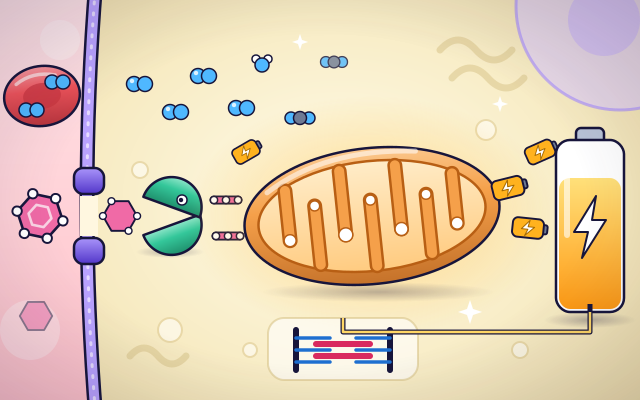
Inside every cell, sugar and oxygen are turned into charged-up energy carriers that power moving, thinking and growing.
The big idea: Cells break sugar apart, using oxygen, a little at a time. The energy that is released charges small carriers called ATP, which power every job in the cell.
It's like a charging station for rechargeable batteries: fuel goes in, full batteries come out, the batteries power the gadgets, and the flat ones come back to be charged again.
The interactive parts didn't load. The explanations below still work; try reloading the page.
How a cell gets its energy
- Zoe is running. Her leg muscles are made of millions of tiny cells, and every one of them needs energy to pull. Where does a cell get it?
- Zoom into one cell. Blood brings it two things: a sugar called glucose, from the food Zoe ate, and oxygen, from the air she breathes.
- Step one happens in the cell's watery middle. The glucose is split into two smaller pieces. That releases a little energy: enough to charge two ATP, the cell's tiny batteries.
- The pieces enter a mitochondrion, the cell's powerhouse. There they are taken apart completely, with the help of oxygen. Carbon dioxide and water come out: you breathe them away.
- This is where the big payoff comes. With oxygen, the mitochondrion charges about 28 more ATP from the same sugar. That makes about 30 in all, instead of only 2.
- ATP powers the cell's jobs: muscle fibers pull, pumps push, and builders make new parts. Used batteries go back to the powerhouse to be charged again, thousands of times a day.
The cell's energy system
Tap each part to follow the sugar from the cell's door to a charged battery.
- Glucose (sugar). Glucose is a simple sugar that your body makes from food. It carries stored energy to every cell.
- Oxygen. Oxygen from the air travels in red blood cells. Cells need it to get most of the energy out of sugar.
- Cell membrane. The membrane is the cell's thin outer skin. Special doors let glucose in, and oxygen slips straight through.
- Sugar splitter. Helper molecules called enzymes split glucose into two pieces. This first step makes a little energy and needs no oxygen.
- Mitochondrion. The mitochondrion is the cell's powerhouse. Its folded inside gives lots of room for the machinery that charges ATP.
- Carbon dioxide and water. When sugar is fully taken apart, what is left is carbon dioxide and water. Blood carries the carbon dioxide to your lungs, and you breathe it out.
- ATP store. ATP is the cell's rechargeable battery. A cell holds only a small store, so it has to keep charging more.
- The cell's jobs. ATP powers everything a cell does: muscle fibers pull, pumps move materials, and builders make new parts.
Sugar, oxygen and ATP
Feed the cell a sugar and count the ATP. Then switch the oxygen supply off and feed it another. What changes?
Experiment: A cell gets one sugar but no oxygen. How many ATP batteries can it charge, compared with when oxygen is there?
- With the oxygen supply on, tap the sugar. Count the ATP it makes.
- Switch the oxygen supply off.
- Tap the sugar again and compare.
What we found: With oxygen, one sugar charges about 30 ATP. Without oxygen, the powerhouse cannot finish the job, so the cell gets only the 2 ATP from splitting the sugar. That is why you breathe harder when you run.
Turn on JavaScript to try it yourself.
Make 90 ATP
The muscle cell needs 90 ATP. Load sugars and oxygen, then press Go. Use as little as you can.
How cells release energy
Everything you do uses energy, even sleeping. The energy comes from food, but a cell cannot use a bite of sandwich directly. First your body breaks food down into small molecules such as the sugar glucose. Then each cell releases the energy stored in the glucose and uses it to charge its own tiny batteries, called ATP.
The cell does this in steps. First, in the cell's watery middle, the glucose is split into two pieces. That charges just 2 ATP. Then the pieces go into a mitochondrion, the cell's powerhouse, where they are taken apart completely. This part needs oxygen, and it charges about 28 more ATP.
What is left over is carbon dioxide and water. Your blood carries the carbon dioxide to your lungs and you breathe it out. So breathing and eating are two halves of one job: getting oxygen and fuel to your cells, and taking the wastes away.
When you sprint, your muscles can use ATP faster than oxygen arrives. Then they get some extra ATP from the first step alone, which is quick but gives very little. The battery comparison is useful, but not perfect: a cell does not store charged ATP for long. It keeps only a few seconds' worth and recharges it again and again.
Key words
- Glucose
- A simple sugar that is the main fuel for cells.
- ATP
- The cell's tiny rechargeable battery.
- Mitochondrion
- The part of a cell where most ATP is made. The plural is mitochondria.
- Cellular respiration
- The way cells release energy from sugar using oxygen.
- Enzyme
- A helper molecule that speeds up one particular chemical change.
- Glycolysis
- The first stage, in which glucose is split in two. It needs no oxygen.
Check your thinking
-
What does a cell need in order to get the most energy from sugar?
Show the answer
Oxygen. The powerhouse needs oxygen to take the sugar pieces apart completely.
-
Where in the cell is most ATP made?
Show the answer
In the mitochondria. Splitting the sugar makes 2 ATP. The mitochondria make about 28 more.
-
Why do you breathe faster when you run?
Show the answer
Your muscle cells need more oxygen to charge more ATP. Working muscles use ATP quickly, so their cells need more oxygen and release more carbon dioxide.
-
What happens to the carbon dioxide your cells make?
Show the answer
Blood carries it to the lungs and you breathe it out. Carbon dioxide is a waste. It leaves the cell, travels in the blood and is breathed out.
-
Why does a cell release the energy of glucose in many small steps instead of all at once?
Show the answer
So that much of the energy can be captured as ATP instead of being lost as heat. Small enzyme-controlled steps let the cell couple energy release to making ATP. Burning sugar in one step would release the same energy as heat and light.
You're a Human body expert!
You watched, looked inside, tried it, solved the challenge and went deeper. Pick another question below, or switch the age at the top to see this topic another way.
More about human body
 #274
Human body
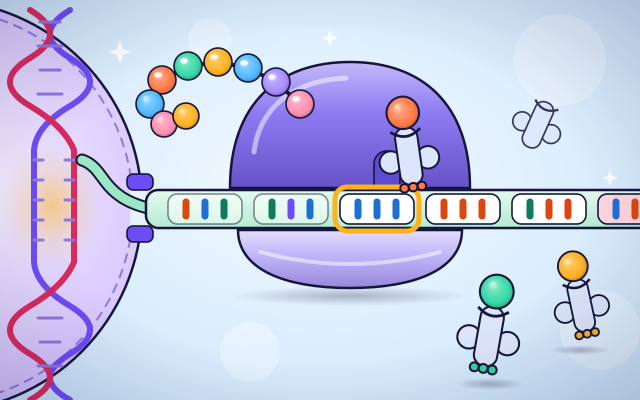
How do cells build proteins?
Follow a message from DNA to a ribosome and assemble an amino-acid chain.
#274
Human body
How do cells build proteins?
Follow a message from DNA to a ribosome and assemble an amino-acid chain.
 #275
Human body
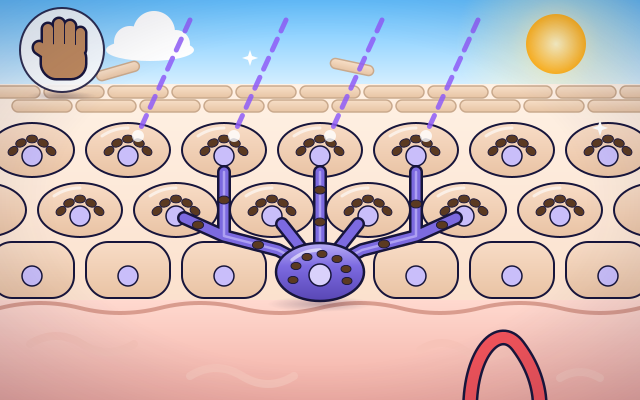
How does skin make its pigment?
Explore pigment-producing cells and follow melanin into surrounding skin cells.
#275
Human body
How does skin make its pigment?
Explore pigment-producing cells and follow melanin into surrounding skin cells.
 #84
Human body
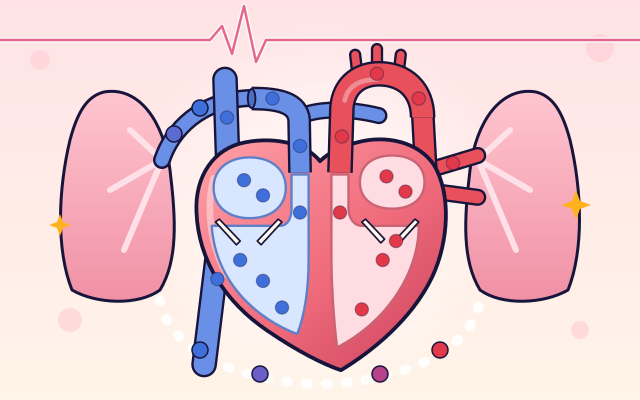
How does the heart pump blood?
Follow blood through the heart, lungs, and body. Explore chambers and valves, and compare a resting heartbeat with one during exercise.
#84
Human body
How does the heart pump blood?
Follow blood through the heart, lungs, and body. Explore chambers and valves, and compare a resting heartbeat with one during exercise.
 #85
Human body
How do our lungs help us breathe?
Move a virtual diaphragm and watch the lungs expand and contract. Zoom into a simplified animation of oxygen and carbon dioxide exchange.
#85
Human body
How do our lungs help us breathe?
Move a virtual diaphragm and watch the lungs expand and contract. Zoom into a simplified animation of oxygen and carbon dioxide exchange.
Keep exploring
Games to play next
- Label LabPut the right labels on beautiful science diagrams, from bean plants to heart chambers.
- Body ExplorerTap, match and label your way around the amazing human body.
- Science QuizzesOlly's Science Quiz Show: plants, animals, the body, weather, space and more, for every grade.
Guide for grown-ups
- How to start homeschooling: a step-by-step guide for familiesA guide for parents · 7 min read
Science games by grade
Science worksheets by grade
- Preschool Science Worksheets
- Pre-K Science Worksheets
- Kindergarten Science Worksheets
- 1st Grade Science Worksheets
- 2nd Grade Science Worksheets
- 3rd Grade Science Worksheets
- 4th Grade Science Worksheets
- 5th Grade Science Worksheets
- 6th Grade Science Worksheets
- 7th Grade Science Worksheets
- 8th Grade Science Worksheets