How does skin make its pigment?
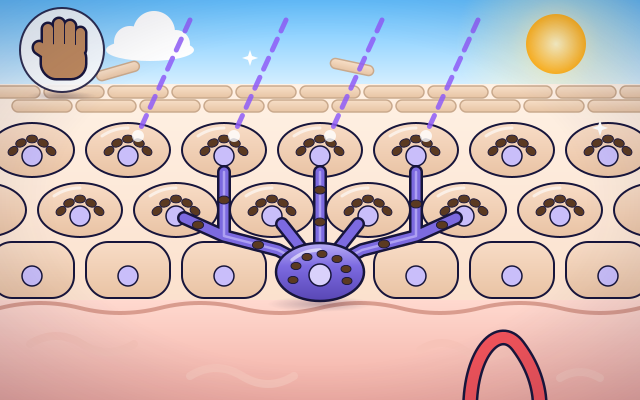
Pigment cells deep in your skin make melanin and pass it to their neighbors, where it shades each cell like a tiny umbrella.
The big idea: All people have about the same number of pigment cells. Skin tones differ because those cells make different amounts of the same pigment, melanin, which helps shield skin cells from the sun.
It's like tiny umbrellas: a pigment cell hands out little sunshades, and each skin cell holds them up over its most important part.
The interactive parts didn't load. The explanations below still work; try reloading the page.
The pigment makers
- Skin comes in many beautiful shades, and every one of them is healthy. What gives skin its color? The answer is the same for everybody.
- Zoom in on a tiny slice of skin. The outer part is built of cells stacked in layers. New cells are made at the bottom and slowly move up to the surface.
- In the bottom layer are pigment cells called melanocytes. Each one has long branching arms. Inside, it makes melanin and packs it into tiny packets.
- The packets travel out along the arms and are handed to the skin cells nearby. One pigment cell supplies about thirty or forty neighbors.
- Each skin cell gathers its melanin into a cap over its nucleus, on the side facing the sun. The cap soaks up harmful ultraviolet light, like a tiny umbrella.
- Everyone has about the same number of pigment cells. In some people they make more melanin, and in some they make less. Same pigment, different amounts: every shade is healthy and beautiful.
A slice of skin
Tap each part of this slice of skin to see what it does.
- Outer layer. The surface is made of flat, tough cells that have finished their work. They flake off all the time, and new ones replace them.
- Skin cell. Skin cells are stacked in layers. They are born at the bottom, and they receive melanin from the pigment cell.
- Pigment cell. The pigment cell, called a melanocyte, makes melanin. Everyone has about the same number of these cells.
- Branching arms. The arms reach between the skin cells nearby. Melanin packets travel along them to be handed over.
- Melanin packet. Melanin is made and stored in tiny packets. More packets, and darker ones, give a deeper skin tone.
- Pigment cap. Each skin cell arranges its melanin in a cap on the sunny side of its nucleus, like a tiny umbrella.
- Nucleus. The nucleus holds the cell's instructions, its DNA. Too much strong sunlight can damage it, so the cap helps protect it.
- Deeper skin. Below is a springy layer with blood vessels, nerves and stretchy fibers. It feeds the cells above.
More melanin, less melanin
Change how much melanin the pigment cell makes and watch the skin cells and the skin tone. Then switch on the sunshine and see what the caps do.
Experiment: Two people have very different skin tones. How do their pigment cells compare?
- Slide the melanin all the way down. Count the pigment cells in the picture.
- Slide it all the way up and count again.
- Switch on the sunshine and compare how much light gets past the caps.
What we found: The number of pigment cells does not change. They simply make more or less of the same pigment. More melanin gives a deeper skin tone and thicker caps, which stop more of the sun's ultraviolet light.
Turn on JavaScript to try it yourself.
A cap for every cell
Share the melanin out: give every skin cell 2 packets before the sun test. You have 16 packets. Tap the cells to send them, then press Sun test.
How skin makes its pigment
The color of skin comes mostly from a pigment called melanin. It is made by special cells called melanocytes, which live in the bottom layer of the outer skin. A melanocyte looks a little like an octopus, with long arms reaching between the cells around it.
Inside the melanocyte, melanin is packed into tiny packets. The packets travel along the arms and are passed to the neighboring skin cells. Each skin cell collects its packets into a cap on top of its nucleus, on the sunny side. The cap soaks up ultraviolet light from the sun, which could otherwise harm the cell.
Here is the surprising part: people of every skin tone have about the same number of melanocytes. In some people these cells make more melanin, and in some they make less. That depends mostly on the instructions passed down from parents. Sunshine also tells the cells to make extra, which is what a tan is.
Every skin tone is healthy and beautiful. The umbrella comparison is helpful, but a melanin cap is not a perfect shield. It lets some ultraviolet light through in all skin, so everyone's skin is safer with shade, hats and sunscreen when the sun is strong. Freckles are just small spots where the pigment cells are extra busy.
Key words
- Melanin
- The pigment that gives skin, hair and eyes their color.
- Melanocyte
- A cell that makes melanin and passes it to the cells around it.
- Melanosome
- A tiny packet in which melanin is made, stored and moved.
- Epidermis
- The outer part of the skin, made of layers of cells.
- Ultraviolet (UV) light
- Light from the sun that we cannot see. Too much of it can damage skin cells.
Check your thinking
-
What is the pigment that colors skin called?
Show the answer
Melanin. Melanin is the pigment made by the skin's pigment cells.
-
Why do skin cells arrange their melanin as a cap over the nucleus?
Show the answer
To absorb ultraviolet light before it reaches the cell's DNA. The cap sits on the sunny side of the nucleus and soaks up ultraviolet light.
-
What mainly makes one person's skin tone deeper than another's?
Show the answer
Their pigment cells make more melanin. Everyone has about the same number of pigment cells and the same pigment. The amount made is what differs.
-
A friend says, "My skin never burns, so the sun cannot harm it." What does the science say?
Show the answer
Melanin blocks only part of the ultraviolet light, so all skin benefits from shade and sunscreen. A melanin cap is a partial shield in every skin tone, so sun protection is useful for everyone.
-
What is a tan?
Show the answer
Extra melanin made by melanocytes in response to ultraviolet light. Ultraviolet light signals the melanocytes to make and deliver more melanin over several days. It shows that the skin has already had a large dose.
You're a Human body expert!
You watched, looked inside, tried it, solved the challenge and went deeper. Pick another question below, or switch the age at the top to see this topic another way.
More about human body
 #84
Human body
How does the heart pump blood?
Follow blood through the heart, lungs, and body. Explore chambers and valves, and compare a resting heartbeat with one during exercise.
#84
Human body
How does the heart pump blood?
Follow blood through the heart, lungs, and body. Explore chambers and valves, and compare a resting heartbeat with one during exercise.
 #85
Human body
How do our lungs help us breathe?
Move a virtual diaphragm and watch the lungs expand and contract. Zoom into a simplified animation of oxygen and carbon dioxide exchange.
#85
Human body
How do our lungs help us breathe?
Move a virtual diaphragm and watch the lungs expand and contract. Zoom into a simplified animation of oxygen and carbon dioxide exchange.
 #86
Human body
What happens to food after we eat it?
Follow a bite through the mouth, stomach, and intestines. Explore how food is broken down and how nutrients enter the body.
#86
Human body
What happens to food after we eat it?
Follow a bite through the mouth, stomach, and intestines. Explore how food is broken down and how nutrients enter the body.
 #87
Human body
How do bones, muscles, and joints help us move?
Activate muscles around a skeleton's joints to bend an arm, walk, or kick. Compare joint types and discover how muscles work together.
#87
Human body
How do bones, muscles, and joints help us move?
Activate muscles around a skeleton's joints to bend an arm, walk, or kick. Compare joint types and discover how muscles work together.
Keep exploring
Games to play next
- Body ExplorerTap, match and label your way around the amazing human body.
- Label LabPut the right labels on beautiful science diagrams, from bean plants to heart chambers.
- Science QuizzesOlly's Science Quiz Show: plants, animals, the body, weather, space and more, for every grade.
Guide for grown-ups
- How to start homeschooling: a step-by-step guide for familiesA guide for parents · 7 min read
Science games by grade
Science worksheets by grade
- Preschool Science Worksheets
- Pre-K Science Worksheets
- Kindergarten Science Worksheets
- 1st Grade Science Worksheets
- 2nd Grade Science Worksheets
- 3rd Grade Science Worksheets
- 4th Grade Science Worksheets
- 5th Grade Science Worksheets
- 6th Grade Science Worksheets
- 7th Grade Science Worksheets
- 8th Grade Science Worksheets