How do our lungs help us breathe?
A strong muscle called the diaphragm pulls air into your lungs, where oxygen moves into your blood.
The big idea: Your diaphragm pulls down and your ribs lift, so your chest gets bigger and air rushes into your lungs. Deep inside, oxygen moves from the air into your blood, and carbon dioxide moves out to be breathed away.
It's like
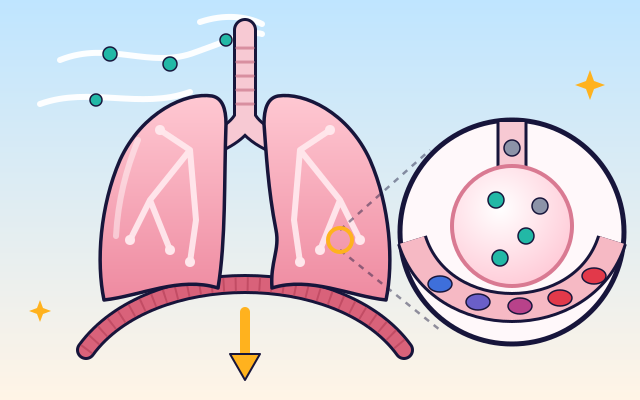
The interactive parts didn't load. The explanations below still work; try reloading the page.
The journey of a breath
- Put your hands on your ribs and take a deep breath. Feel your chest get bigger? You breathe in and out about 20 times a minute without even thinking about it.
- Air enters through your nose or mouth, travels down your windpipe, and splits into two tubes called bronchi, one for each lung.
- Under your lungs is a dome-shaped muscle called the diaphragm. When it pulls down and your ribs lift, your chest gets bigger and air rushes in. When it relaxes, air flows out.
- The tubes end in millions of tiny air sacs called alveoli. They look like bunches of grapes, and each one is wrapped in tiny blood vessels.
- The walls of the alveoli are super thin. Oxygen slips through into your blood, and carbon dioxide, a waste gas, slips out into the air sac to be breathed out.
- When you run, your muscles need more oxygen and make more carbon dioxide. So you breathe faster and deeper, and your heart speeds up to carry it all.
Inside the breathing system
Tap each part to see what it does. The magnifier shows the tiny air sacs at the end of the tubes.
- Nose and mouth. Air comes in through your nose or mouth. Tiny hairs and sticky mucus in your nose catch dust, and the air is warmed up on the way in.
- Windpipe (trachea). The windpipe, or trachea, carries air from your throat down to your chest. Stiff rings keep it open, like the ridges on a vacuum hose.
- Bronchi. At the bottom of the windpipe, the tube splits into two bronchi. One goes into each lung.
- Bronchioles. The bronchi branch again and again into thinner and thinner tubes called bronchioles, like the branches and twigs of an upside-down tree.
- Alveoli. At the end of every bronchiole are tiny air sacs called alveoli. Their walls are so thin that oxygen can pass straight through into your blood.
- Capillaries. Each air sac is wrapped in tiny blood vessels called capillaries. Blood passing by picks up oxygen and drops off carbon dioxide.
- Lungs. Your two lungs are soft and spongy, like sponges full of tiny air pockets. They stretch when you breathe in and spring back when you breathe out.
- Diaphragm. The diaphragm is a dome-shaped muscle under your lungs. When it tightens it flattens and pulls down, making room for air. When it relaxes it bounces back up.
- Ribs and rib muscles. Your ribs protect your lungs and heart like a cage. Muscles between the ribs lift them up and out when you take a deep breath.
Move the diaphragm
Drag the diaphragm down and up (or use the slider). Watch the lungs, the air, and the tiny air sac in the magnifier where oxygen moves into the blood.
Experiment: What happens to your lungs when the diaphragm moves down?
- Start with the diaphragm all the way up.
- Pull it all the way down and watch the air.
- Push it back up. Which way does the air go now?
What we found: When the diaphragm pulls down, the space in your chest gets bigger. Your lungs stretch to fill it and air rushes in. When it relaxes and moves up, the space gets smaller and air is pushed out.
Turn on JavaScript to try it yourself.
Breathe for the runner
The runner needs oxygen! Press Start, then keep breathing in and out so the oxygen and carbon dioxide meters stay in the green until the finish.
How breathing works
Your lungs can't move by themselves. They are soft and stretchy, and they sit inside your chest, which is a closed space. Breathing in starts with your diaphragm, a dome-shaped muscle under your lungs. When it tightens, it pulls down and flattens. The muscles between your ribs can lift your ribs up and out too.
That makes the space inside your chest bigger, and your lungs stretch to fill it. Air rushes in through your nose or mouth, down your windpipe and into smaller and smaller tubes. When the diaphragm relaxes, it moves back up, your stretchy lungs spring back, and air is pushed out.
The tubes end in tiny air sacs called alveoli. Their walls are thinner than a soap bubble and are wrapped in tiny blood vessels. Oxygen moves from the air into your blood, and carbon dioxide, the waste gas your body makes, moves from your blood into the air sac so you can breathe it out.
When you exercise, your muscles use more oxygen and make more carbon dioxide. Your brain notices and makes you breathe faster and deeper. That's why you puff after a race!
Key words
- Diaphragm
- The dome-shaped muscle under the lungs that pulls down to breathe in.
- Trachea
- The windpipe: the tube that carries air from the throat to the lungs.
- Alveoli
- Tiny air sacs at the ends of the airways where oxygen enters the blood.
- Diffusion
- When something spreads from where there is a lot of it to where there is less.
- Carbon dioxide
- A waste gas made by your cells, carried by your blood to your lungs and breathed out.
Check your thinking
-
Which muscle pulls down to help you breathe in?
Show the answer
The diaphragm. The diaphragm is the dome-shaped muscle under your lungs. It pulls down to make room for air.
-
Where does oxygen pass into your blood?
Show the answer
In the tiny air sacs called alveoli. The alveoli have very thin walls wrapped in blood vessels, so oxygen can pass through.
-
Which gas do you breathe out more of than you breathe in?
Show the answer
Carbon dioxide. Your cells make carbon dioxide as waste. Your blood carries it to your lungs to be breathed out.
-
Why are alveoli so good at gas exchange?
Show the answer
Huge surface area, very thin walls and a rich blood supply. A large area, a very short diffusion distance and constant blood flow all make diffusion fast.
-
What do your ribs do when you take a deep breath?
Show the answer
They lift up and out. Muscles between your ribs lift them up and out, which makes your chest even bigger.
You're a Human body expert!
You watched, looked inside, tried it, solved the challenge and went deeper. Pick another question below, or switch the age at the top to see this topic another way.
More about human body
 #86
Human body
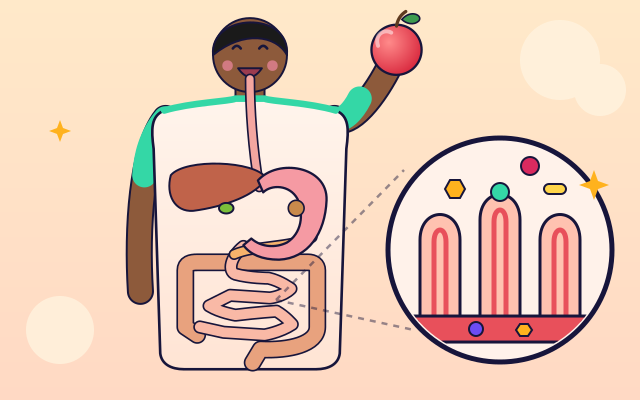
What happens to food after we eat it?
Follow a bite through the mouth, stomach, and intestines. Explore how food is broken down and how nutrients enter the body.
#86
Human body
What happens to food after we eat it?
Follow a bite through the mouth, stomach, and intestines. Explore how food is broken down and how nutrients enter the body.
 #87
Human body
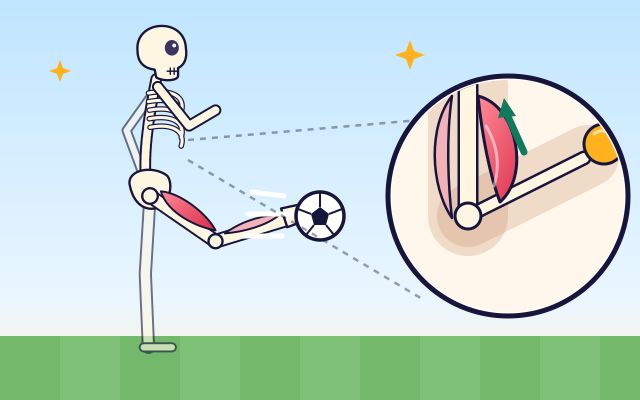
How do bones, muscles, and joints help us move?
Activate muscles around a skeleton's joints to bend an arm, walk, or kick. Compare joint types and discover how muscles work together.
#87
Human body
How do bones, muscles, and joints help us move?
Activate muscles around a skeleton's joints to bend an arm, walk, or kick. Compare joint types and discover how muscles work together.
 #88
Human body
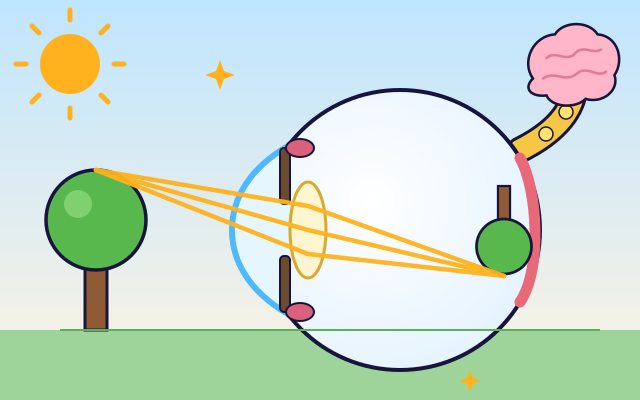
How do our eyes see?
Follow light through the pupil and lens to the retina, then trace signals toward the brain. Adjust focus for nearby and distant objects.
#88
Human body
How do our eyes see?
Follow light through the pupil and lens to the retina, then trace signals toward the brain. Adjust focus for nearby and distant objects.
 #89
Human body
How do our ears hear?
Follow sound through the ear canal, eardrum, tiny bones, and inner ear. Compare how different pitches create different patterns of vibration.
#89
Human body
How do our ears hear?
Follow sound through the ear canal, eardrum, tiny bones, and inner ear. Compare how different pitches create different patterns of vibration.
Keep exploring
Games to play next
- Body ExplorerTap, match and label your way around the amazing human body.
- Science QuizzesOlly's Science Quiz Show: plants, animals, the body, weather, space and more, for every grade.
- Label LabPut the right labels on beautiful science diagrams, from bean plants to heart chambers.
Guide for grown-ups
- How to start homeschooling: a step-by-step guide for familiesA guide for parents · 7 min read
Science games by grade
Science worksheets by grade
- Preschool Science Worksheets
- Pre-K Science Worksheets
- Kindergarten Science Worksheets
- 1st Grade Science Worksheets
- 2nd Grade Science Worksheets
- 3rd Grade Science Worksheets
- 4th Grade Science Worksheets
- 5th Grade Science Worksheets
- 6th Grade Science Worksheets
- 7th Grade Science Worksheets
- 8th Grade Science Worksheets