How do cells build proteins?
Cells copy a recipe from DNA, carry the message to a ribosome and join amino acids, one by one, into a protein.
The big idea: DNA holds the recipes. The cell copies one recipe as a message, and a ribosome reads the message three letters at a time to join the right amino acids into a chain.
It's like cooking from a library cookbook: the book stays in the library, so you copy one recipe onto a card, take it to the kitchen and follow it step by step.
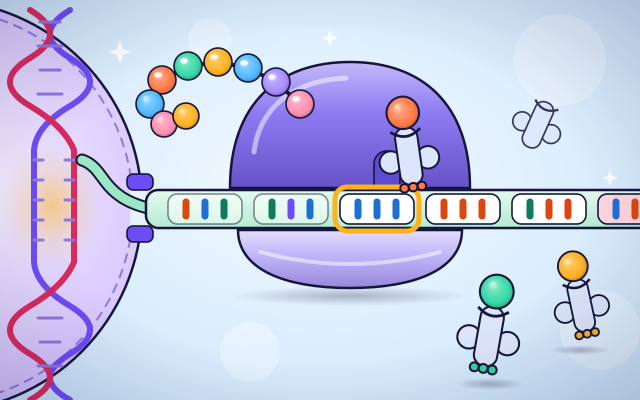
The interactive parts didn't load. The explanations below still work; try reloading the page.
From recipe to protein
- Your cells build proteins all the time: for muscles, for hair and for the helpers that digest your food. Each protein has its own recipe. The recipes are kept safe in the nucleus.
- The recipes are written along DNA, a long twisted ladder. DNA never leaves the nucleus. Instead, the cell unzips one recipe and makes a copy of it, called messenger RNA.
- The message slips out of the nucleus through a tiny pore and travels to a ribosome, the cell's protein-building machine.
- The ribosome reads the message three letters at a time. Each three-letter word calls for one kind of building block, an amino acid. A carrier with the matching code brings it in.
- The message slides along, word by word. Each new amino acid is joined to the last, like beads on a string. The empty carriers float away to pick up more.
- A special word means stop. The chain is released and folds up into its own shape. The shape lets the protein do its job, so the order of the beads really matters.
The protein builders
Tap each part to see what it does as a protein is built.
- Nucleus. The nucleus is like a library. It keeps the cell's DNA safe behind a double wall with tiny pores.
- DNA. DNA is a long twisted ladder. Its rungs are made of four chemical letters, and their order spells out the recipes.
- Messenger RNA. Messenger RNA is a copy of one recipe. It carries the instructions from the nucleus out to the ribosome.
- Ribosome. The ribosome is the cell's protein-building machine. It holds the message, reads it and joins the amino acids together.
- Codon (a three-letter word). Three letters make one word, called a codon. Each codon stands for one amino acid, or for stop.
- Carrier (transfer RNA). A carrier called transfer RNA brings one amino acid. Its three-letter tag has to match the word on the message.
- Amino acid. Amino acids are the building blocks of proteins. There are 20 kinds, and they come from the protein in your food.
- Protein chain. The amino acids join into a long chain, which folds into a shape. That shape lets the protein do its job.
Be the ribosome
Read the three letters in the ribosome. Use the key to find the carrier that matches, and tap it. Build the chain until the message says stop.
Experiment: What decides which amino acid is added next?
- Tap a carrier that does not match and see what happens.
- Now use the key to pick the carrier that matches.
- Keep going until the message says stop.
What we found: Only the carrier whose code matches the three letters is accepted. So the order of letters in the message sets the order of amino acids in the chain.
Turn on JavaScript to try it yourself.
Build it without a slip
Build the whole protein from the message. Use the key, and try not to pick a wrong carrier.
How cells build proteins
Proteins are the busy workers and the building materials of your body. Your muscles, your hair and the helpers that digest your food are all proteins. Every protein is a chain of small building blocks called amino acids, joined in an exact order.
The orders are stored in your DNA, which stays inside the nucleus of each cell. When the cell needs a protein, it does not send out the DNA. It makes a copy of one recipe, called messenger RNA, and sends that out through a pore in the nucleus.
A ribosome grabs the message and reads it three letters at a time. Each three-letter word, called a codon, stands for one amino acid. Carriers called transfer RNA bring the amino acids, and only the carrier that matches the word is accepted. The ribosome joins the amino acids one after another until a word that means stop.
Then the chain folds into a shape, and the shape lets it do its job. The cookbook comparison is helpful, but real recipes use only four letters, and a real protein has hundreds of amino acids, not the handful in this model. The amino acids themselves come from the protein you eat, which your body takes apart and reuses.
Key words
- Protein
- A chain of amino acids folded into a shape that does a job in the body.
- DNA
- The long molecule in the nucleus that stores the cell's recipes.
- Messenger RNA (mRNA)
- A copy of one gene that carries its instructions to a ribosome.
- Ribosome
- The cell's machine for joining amino acids into a protein.
- Codon
- Three letters of the message that stand for one amino acid, or for stop.
- Amino acid
- One of the 20 kinds of building block that proteins are made from.
Check your thinking
-
What does a ribosome do?
Show the answer
It reads the message and joins amino acids into a chain. The ribosome reads the message three letters at a time and links the amino acids.
-
Why does the cell make a copy of the recipe instead of sending out the DNA?
Show the answer
The DNA stays safe in the nucleus and can be copied again and again. Keeping the original protected means it is not damaged, and many copies can be made from it.
-
A message has 12 letters before the stop word. How many amino acids will the chain have?
Show the answer
4. Each amino acid needs a three-letter word, and 12 divided by 3 is 4.
-
What would happen if one word in the message were changed to a word for a different amino acid?
Show the answer
One bead in the chain would be different, and the shape might change. The message sets the order of the amino acids, so a changed word puts a different amino acid in that place.
-
Why do some changes to a single DNA base have no effect on the protein?
Show the answer
Several different codons can stand for the same amino acid. There are 64 codons for 20 amino acids, so the code is redundant. A change to another codon for the same amino acid leaves the protein unchanged.
You're a Human body expert!
You watched, looked inside, tried it, solved the challenge and went deeper. Pick another question below, or switch the age at the top to see this topic another way.
More about human body
 #275
Human body
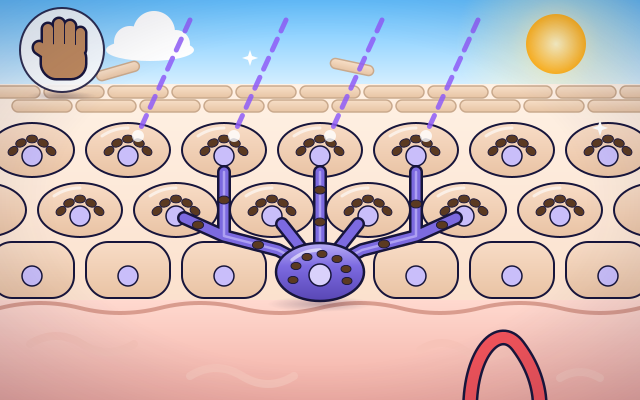
How does skin make its pigment?
Explore pigment-producing cells and follow melanin into surrounding skin cells.
#275
Human body
How does skin make its pigment?
Explore pigment-producing cells and follow melanin into surrounding skin cells.
 #84
Human body
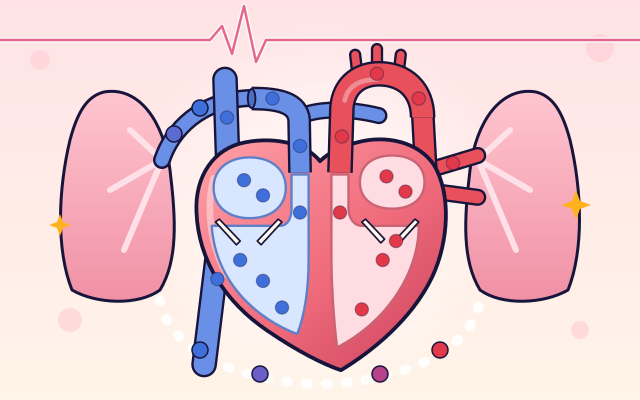
How does the heart pump blood?
Follow blood through the heart, lungs, and body. Explore chambers and valves, and compare a resting heartbeat with one during exercise.
#84
Human body
How does the heart pump blood?
Follow blood through the heart, lungs, and body. Explore chambers and valves, and compare a resting heartbeat with one during exercise.
 #85
Human body
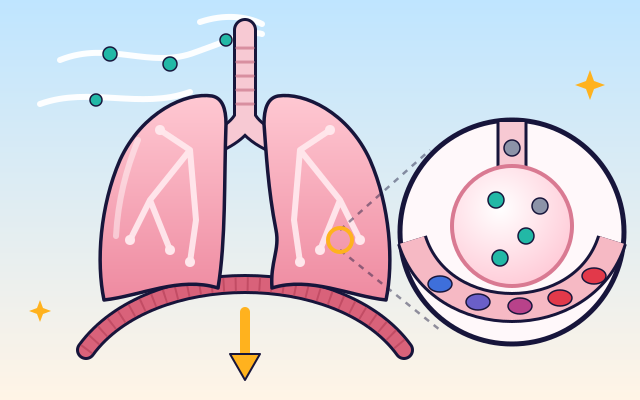
How do our lungs help us breathe?
Move a virtual diaphragm and watch the lungs expand and contract. Zoom into a simplified animation of oxygen and carbon dioxide exchange.
#85
Human body
How do our lungs help us breathe?
Move a virtual diaphragm and watch the lungs expand and contract. Zoom into a simplified animation of oxygen and carbon dioxide exchange.
 #86
Human body
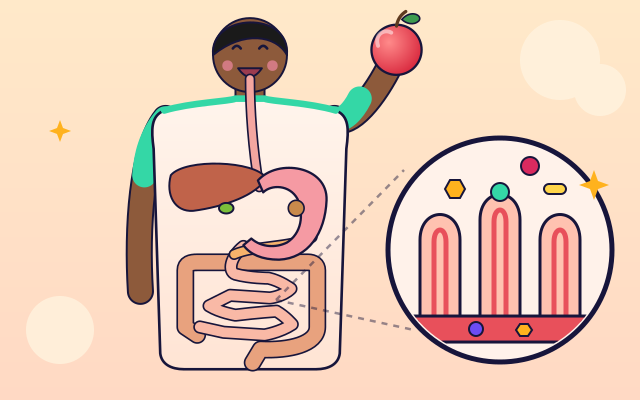
What happens to food after we eat it?
Follow a bite through the mouth, stomach, and intestines. Explore how food is broken down and how nutrients enter the body.
#86
Human body
What happens to food after we eat it?
Follow a bite through the mouth, stomach, and intestines. Explore how food is broken down and how nutrients enter the body.
Keep exploring
Games to play next
- Label LabPut the right labels on beautiful science diagrams, from bean plants to heart chambers.
- Body ExplorerTap, match and label your way around the amazing human body.
- Science QuizzesOlly's Science Quiz Show: plants, animals, the body, weather, space and more, for every grade.
Guide for grown-ups
- How to start homeschooling: a step-by-step guide for familiesA guide for parents · 7 min read
Science games by grade
Science worksheets by grade
- Preschool Science Worksheets
- Pre-K Science Worksheets
- Kindergarten Science Worksheets
- 1st Grade Science Worksheets
- 2nd Grade Science Worksheets
- 3rd Grade Science Worksheets
- 4th Grade Science Worksheets
- 5th Grade Science Worksheets
- 6th Grade Science Worksheets
- 7th Grade Science Worksheets
- 8th Grade Science Worksheets