How does the heart pump blood?
Your heart is two pumps in one: one side sends blood to your lungs, the other sends it around your body.
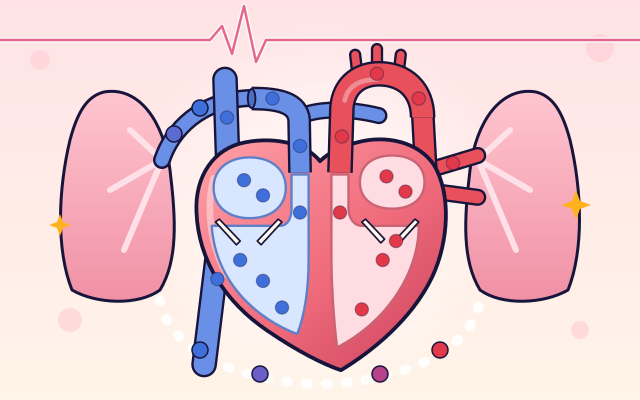
The big idea: The right side of your heart pumps blood to your lungs to pick up oxygen. The left side pumps that oxygen-rich blood to every part of your body. Valves make sure blood only flows one way.
It's like
The interactive parts didn't load. The explanations below still work; try reloading the page.
A trip through your heart
- Put your hand on your chest and feel it: thump, thump. That's your heart, a muscle about the size of your fist. It beats all day and all night.
- Your heart is really two pumps side by side. The right side pumps blood to the lungs. The left side pumps blood to the body. A wall called the septum keeps them apart.
- The right side pushes blood to your lungs. There it drops off carbon dioxide, a waste gas, and picks up oxygen. Real blood is always red; we color it blue when it's low in oxygen.
- The strong left side squeezes that oxygen-rich blood into the aorta, the biggest artery. Blood carries oxygen to every cell, then comes back to the heart through veins to go around again.
- Inside are four little doors called valves. They open to let blood through, then shut so it can't flow backward. The lub-dub of a heartbeat is the sound of valves closing.
- When you run, your muscles need much more oxygen. Your heart beats faster and pushes out more blood with each beat. When you rest again, it slowly calms down.
Inside the four rooms of the heart
Tap each part. We draw the heart as if you are facing a person, so the heart's right side is on your left!
- Right atrium. The right atrium is a top chamber. It collects oxygen-poor blood coming back from the body, then squeezes it down into the right ventricle.
- Right ventricle. The right ventricle is a bottom chamber. When it squeezes, it pushes blood up into the pulmonary artery and off to the lungs.
- Left atrium. The left atrium collects oxygen-rich blood coming back from the lungs, then squeezes it down into the left ventricle.
- Left ventricle. The left ventricle is the strongest chamber. Its thick wall squeezes hard enough to send blood all the way to your toes and back.
- Valves. Four valves work like one-way doors. They open when blood pushes forward and snap shut if it tries to flow back. Their closing makes the lub-dub sound.
- Septum. The septum is a muscle wall down the middle of the heart. It keeps oxygen-poor blood and oxygen-rich blood from mixing.
- Aorta. The aorta is the biggest artery in your body. It carries oxygen-rich blood from the left ventricle and branches to reach every part of you.
- Pulmonary artery. The pulmonary artery carries oxygen-poor blood from the right ventricle to the lungs to pick up oxygen.
- Vena cava. Two big veins called the venae cavae bring oxygen-poor blood back from the body into the right atrium: one from above and one from below.
- Pulmonary veins. The pulmonary veins bring oxygen-rich blood back from the lungs to the left atrium.
Resting heart, racing heart
Move the activity slider from resting to running. Watch the heart, the blood and the heartbeat line. Record what happens.
Experiment: What happens to your heartbeat when you go from resting to running?
- Start with the slider on Resting and record.
- Slide to Walking, then Running, recording each time.
- Compare the beats per minute in your table.
What we found: Your heart speeds up when you run! Working muscles need lots more oxygen, so the heart beats faster and pushes out more blood with every beat. When you rest, it slows back down.
Turn on JavaScript to try it yourself.
Blood's big trip
Guide a blood cell all the way around: from the body, through the heart to the lungs, back through the heart, and out to the body again. Tap each stop in order.
How the heart keeps blood moving
Your heart is a muscle about the size of your fist. It sits in the middle of your chest, between your lungs, tipped a little to the left. Inside are four hollow rooms called chambers. The two top ones are the atria and the two bottom ones are the ventricles.
The heart is really two pumps working together. The right side gets blood that has already given away its oxygen and sends it to the lungs. The left side gets fresh, oxygen-rich blood from the lungs and pumps it out to your whole body. Real blood is always red. Oxygen-rich blood is bright red and oxygen-poor blood is darker red, but pictures often color it blue to tell them apart.
Four valves act like one-way doors, so blood can't slosh backward. When doctors listen with a stethoscope, the lub-dub they hear is those valves snapping shut.
When you exercise, your muscles need much more oxygen. Your brain tells your heart to beat faster and squeeze harder. That's why you can feel your heart pounding after a race, and why it slows down again when you rest.
Key words
- Atrium
- A top chamber of the heart that collects blood coming in.
- Ventricle
- A bottom chamber of the heart that pumps blood out.
- Valve
- A one-way flap that lets blood flow forward and stops it from flowing back.
- Artery and vein
- Arteries carry blood away from the heart. Veins carry blood back to the heart.
- Heart rate
- How many times the heart beats in one minute (beats per minute, or bpm).
- Cardiac output
- How much blood the heart pumps in one minute.
Check your thinking
-
Which side of the heart pumps blood to the lungs?
Show the answer
The right side. The right side sends oxygen-poor blood to the lungs. The left side sends oxygen-rich blood to the body.
-
Why does your heart beat faster when you run?
Show the answer
Your muscles need more oxygen. Working muscles use lots of oxygen. A faster heartbeat delivers more oxygen-rich blood to them.
-
What makes the lub-dub sound of a heartbeat?
Show the answer
Valves snapping shut. Each time a set of valves closes, it makes a sound: lub, then dub.
-
A heart beats 80 times a minute and pumps 70 mL per beat. What is the cardiac output?
Show the answer
5.6 liters per minute. Cardiac output = heart rate × stroke volume = 80 × 70 mL = 5,600 mL, which is 5.6 L per minute.
-
Pictures often show some blood as blue. What color is real blood?
Show the answer
Always red: darker when low in oxygen. Blood is always red. Oxygen-poor blood is darker red. Diagrams use blue only to show it's low in oxygen.
-
Which chamber has the thickest wall?
Show the answer
The left ventricle. The left ventricle pumps blood all around the body, so it needs the strongest muscle.
You're a Human body expert!
You watched, looked inside, tried it, solved the challenge and went deeper. Pick another question below, or switch the age at the top to see this topic another way.
More about human body
 #85
Human body
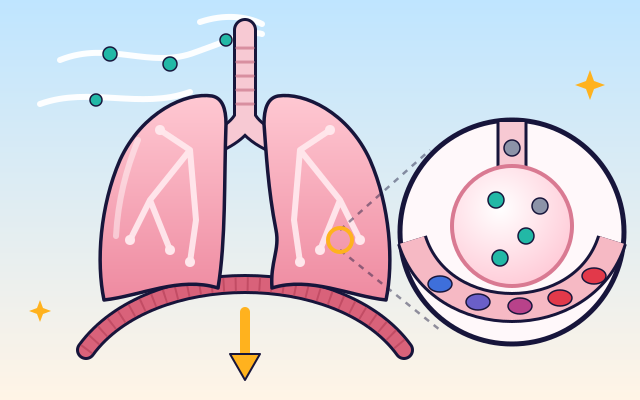
How do our lungs help us breathe?
Move a virtual diaphragm and watch the lungs expand and contract. Zoom into a simplified animation of oxygen and carbon dioxide exchange.
#85
Human body
How do our lungs help us breathe?
Move a virtual diaphragm and watch the lungs expand and contract. Zoom into a simplified animation of oxygen and carbon dioxide exchange.
 #86
Human body
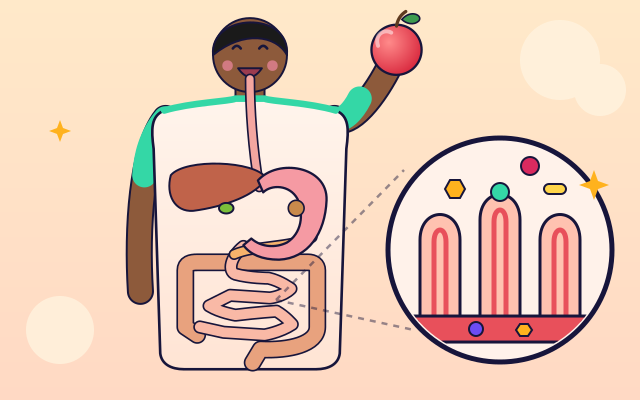
What happens to food after we eat it?
Follow a bite through the mouth, stomach, and intestines. Explore how food is broken down and how nutrients enter the body.
#86
Human body
What happens to food after we eat it?
Follow a bite through the mouth, stomach, and intestines. Explore how food is broken down and how nutrients enter the body.
 #87
Human body
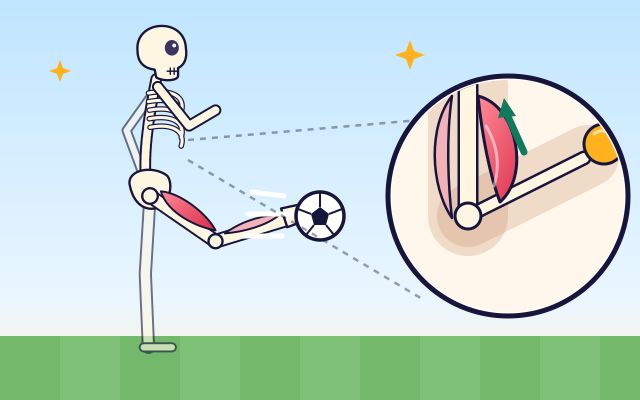
How do bones, muscles, and joints help us move?
Activate muscles around a skeleton's joints to bend an arm, walk, or kick. Compare joint types and discover how muscles work together.
#87
Human body
How do bones, muscles, and joints help us move?
Activate muscles around a skeleton's joints to bend an arm, walk, or kick. Compare joint types and discover how muscles work together.
 #88
Human body
How do our eyes see?
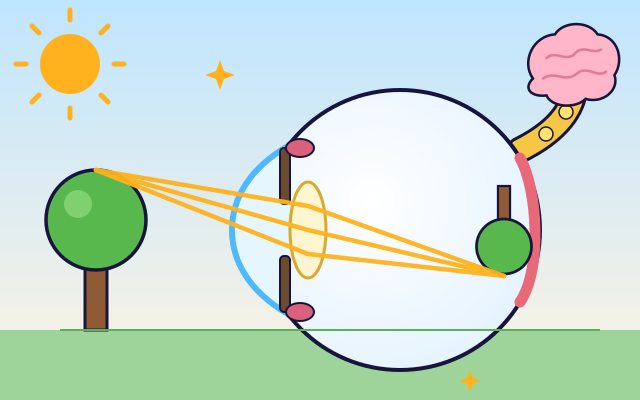
Follow light through the pupil and lens to the retina, then trace signals toward the brain. Adjust focus for nearby and distant objects.
#88
Human body
How do our eyes see?
Follow light through the pupil and lens to the retina, then trace signals toward the brain. Adjust focus for nearby and distant objects.
Keep exploring
Games to play next
- Body ExplorerTap, match and label your way around the amazing human body.
- Label LabPut the right labels on beautiful science diagrams, from bean plants to heart chambers.
- Science QuizzesOlly's Science Quiz Show: plants, animals, the body, weather, space and more, for every grade.
Guide for grown-ups
- How to start homeschooling: a step-by-step guide for familiesA guide for parents · 7 min read
Science games by grade
Science worksheets by grade
- Preschool Science Worksheets
- Pre-K Science Worksheets
- Kindergarten Science Worksheets
- 1st Grade Science Worksheets
- 2nd Grade Science Worksheets
- 3rd Grade Science Worksheets
- 4th Grade Science Worksheets
- 5th Grade Science Worksheets
- 6th Grade Science Worksheets
- 7th Grade Science Worksheets
- 8th Grade Science Worksheets