How do cats clean themselves with their tongues?
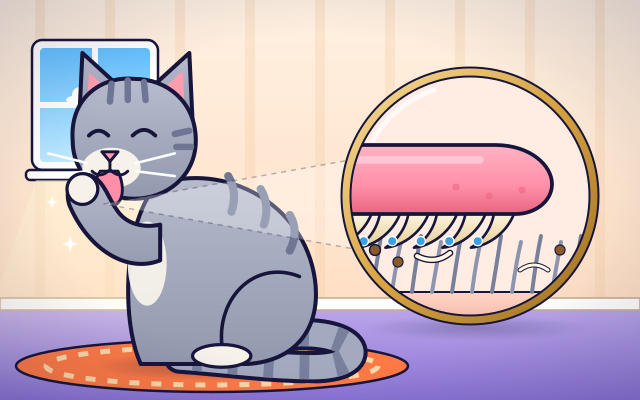
Hundreds of tiny backward-pointing spines on a cat's tongue comb the fur and carry spit deep down to the skin.
The big idea: A cat's tongue is covered in spines that point backward. They rake out dirt and loose hair like a comb, and each spine carries a little spit deep into the fur to wash it.
It's like a hairbrush whose bristles each carry a drop of water: one stroke combs out the loose hair and washes right down to the skin.
The interactive parts didn't load. The explanations below still work; try reloading the page.
How a cat's tongue cleans fur
- Mimi washes herself many times a day with nothing but her tongue. Your tongue could never clean a fur coat. So what is special about hers?
- Up close, her tongue is covered in hundreds of tiny spines, all pointing backward toward her throat. They are made of the same stuff as her claws. That is why a cat's lick feels like sandpaper.
- As she pulls her tongue back through her fur, the spines dig in like the teeth of a rake. They catch dirt, loose hairs and tiny bugs and pull them out.
- Each spine has a hollow, scoop-shaped tip. In her mouth it picks up a tiny drop of spit. In her fur it lets the drop go, deep down by the skin, where a smooth tongue could never reach.
- The spit washes the fur and spreads her natural oils, so her coat stays sleek. And as the spit dries, it cools her skin, the way you feel cool when you step out of a bath.
- Because the spines point backward, loose hair can only move one way: down her throat. Most passes through her tummy, but sometimes it comes back up as a hairball. Brushing a cat helps.
Look closely at a cat's tongue
Here is the tongue, seen from the side, sliding over fur. Tap each part, then look in the round window to see one spine up close.
- Tongue. The tongue is a strong, bendy muscle. On each lick it stretches out, flattens against the fur and is pulled back.
- Spines. Hundreds of tiny, stiff spines cover the middle of the tongue. They all lean backward, toward the throat, and work like the teeth of a comb.
- Hollow tip. The tip of each spine is hollow, like a tiny scoop. It picks up a drop of spit in the mouth and carries it into the fur.
- Bendy base. Each spine sits on a soft, bendy base. When it meets a tangle, it swivels to stand up straighter and digs in deeper.
- Spit. Spit, or saliva, is the cat's washing water. It loosens dirt, and when it dries it cools her skin.
- Fur. Fur is thick, and dirt and loose hairs hide deep inside it. The tongue presses the fur flat so the spines can reach all the way to the skin.
Spiny tongue or smooth tongue?
Drag the tongue through the messy fur, or press Lick. Then swap to a smooth tongue, like yours, and try again. What is left behind?
Experiment: A smooth tongue and a spiny cat tongue lick the same messy fur. What happens?
- With the cat tongue, press Lick. Look at the dirt, the loose hairs and the blue wet fur.
- Choose the smooth tongue. The fur gets messy again. Press Lick.
- Compare what each tongue left behind.
What we found: The smooth tongue only wets the very top of the fur and leaves the dirt and loose hairs behind. The spiny tongue combs them out, and its spines carry spit all the way down to the skin.
Turn on JavaScript to try it yourself.
Top-to-tail wash
Get Mimi clean all over. Her tongue can reach most places, but not every one. Choose how she cleans each messy spot, then tap it.
How a cat's tongue really works
If a cat has ever licked you, you know its tongue is rough, like sandpaper. That is because it is covered in hundreds of tiny spines. They are made of keratin, the same tough material as claws and your fingernails, and they all point backward, toward the cat's throat.
The spines turn the tongue into a comb. When the cat draws its tongue back through its fur, the spines dig in and pull out dirt, loose hairs and even fleas. If a spine meets a tangle, it swivels to stand up taller and works its way through.
The spines are also tiny scoops. Each one has a hollow tip that picks up spit and carries it deep into the fur, right down to the skin. So one lick combs and washes at once. When the spit dries, it cools the cat, which helps on hot days.
There is one drawback. Because the spines point backward, loose hair cannot be spat out. It gets swallowed, and sometimes it comes back up as a hairball. And cats with very long fur cannot get their spines down to the skin, so they need to be brushed. A cat cannot lick its own face either. It licks a paw and wipes with that instead.
Key words
- Papilla
- A tiny bump or spine on the tongue. A cat's are stiff and point backward.
- Keratin
- The tough material that claws, hair, hooves and fingernails are made of.
- Saliva
- Spit: the watery liquid made in the mouth.
- Wicking
- The way a liquid creeps into a narrow space, as water soaks into a paper towel.
- Grooming
- Cleaning and tidying fur or feathers.
Check your thinking
-
Why does a cat's tongue feel rough?
Show the answer
It is covered in tiny backward-pointing spines. Hundreds of stiff little spines cover the tongue. You feel them catch on your skin.
-
What is the hollow tip of each spine for?
Show the answer
Carrying spit deep into the fur. Each tip scoops up a little spit and lets it go down by the skin.
-
Why can a cat not spit out the loose hair it licks up?
Show the answer
The spines point backward, so hair only slides toward the throat. The spines are like hooks pointing down the throat. Hair caught on them can go only one way.
-
Why do long-haired cats need to be brushed?
Show the answer
Their fur is too deep for the spines to reach the skin. The spines are only about two millimeters long. In very long fur they cannot get all the way down.
-
How does saliva get into the hollow tip of a spine?
Show the answer
By wicking: surface tension pulls it into the narrow hollow. The hollow is very narrow, so surface tension draws liquid in, like water creeping into a paper towel.
You're a Animals expert!
You watched, looked inside, tried it, solved the challenge and went deeper. Pick another question below, or switch the age at the top to see this topic another way.
More about animals
 #94
Animals
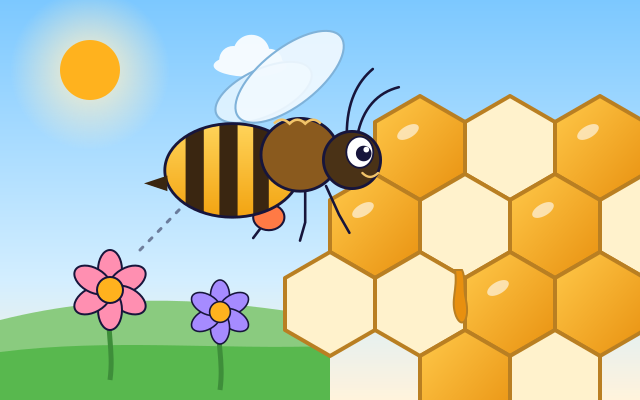
How do bees make honey?
Follow nectar from flowers to the hive. Explore how bees process it, remove water, and store the resulting honey in honeycomb cells.
#94
Animals
How do bees make honey?
Follow nectar from flowers to the hive. Explore how bees process it, remove water, and store the resulting honey in honeycomb cells.
 #95
Animals
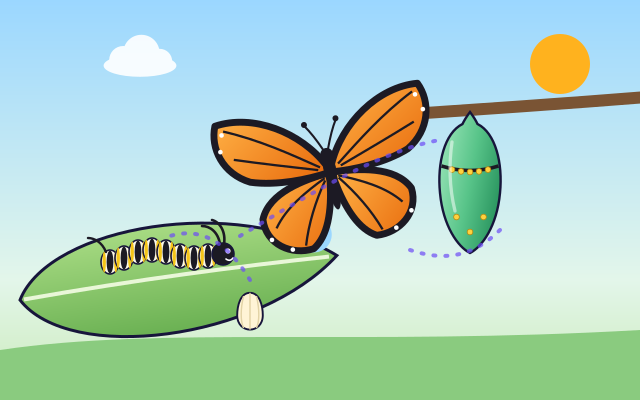
How does a caterpillar become a butterfly?
Arrange the egg, caterpillar, chrysalis, and butterfly stages. Use a time slider and close-up animations to explore the changes during metamorphosis.
#95
Animals
How does a caterpillar become a butterfly?
Arrange the egg, caterpillar, chrysalis, and butterfly stages. Use a time slider and close-up animations to explore the changes during metamorphosis.
 #96
Animals
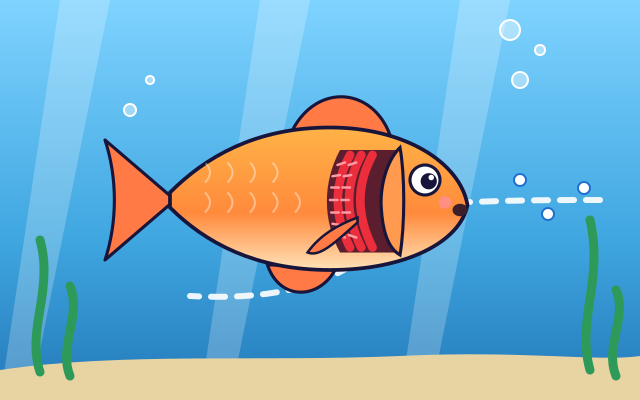
How do fish breathe underwater?
Follow water across a fish's gills and explore oxygen moving into its blood. Compare the structures and functions of gills and lungs.
#96
Animals
How do fish breathe underwater?
Follow water across a fish's gills and explore oxygen moving into its blood. Compare the structures and functions of gills and lungs.
 #97
Animals
How do bats find their way in the dark?
Send sound pulses through a dark virtual cave and interpret returning echoes. Use their timing and direction to locate obstacles and insects.
#97
Animals
How do bats find their way in the dark?
Send sound pulses through a dark virtual cave and interpret returning echoes. Use their timing and direction to locate obstacles and insects.
Keep exploring
Games to play next
- Habitat Builder 3DFind the right home for frogs, camels, polar bears and more.
- Classification ExplorerSort living things by what you can see, then follow and build yes-or-no keys.
- Forest Trails PhotosCreep up on the animals of a big forest valley and take the closest, best wildlife photos you can, without startling them.
Draw it or make it
- How to draw a cat faceDrawing lesson
- Cat FaceOrigami
Guide for grown-ups
- How to start homeschooling: a step-by-step guide for familiesA guide for parents · 7 min read
Science games by grade
Science worksheets by grade
- Preschool Science Worksheets
- Pre-K Science Worksheets
- Kindergarten Science Worksheets
- 1st Grade Science Worksheets
- 2nd Grade Science Worksheets
- 3rd Grade Science Worksheets
- 4th Grade Science Worksheets
- 5th Grade Science Worksheets
- 6th Grade Science Worksheets
- 7th Grade Science Worksheets
- 8th Grade Science Worksheets