How do bees make honey?
Bees collect watery nectar, carry it home, fan away the extra water and seal the honey in wax cells.
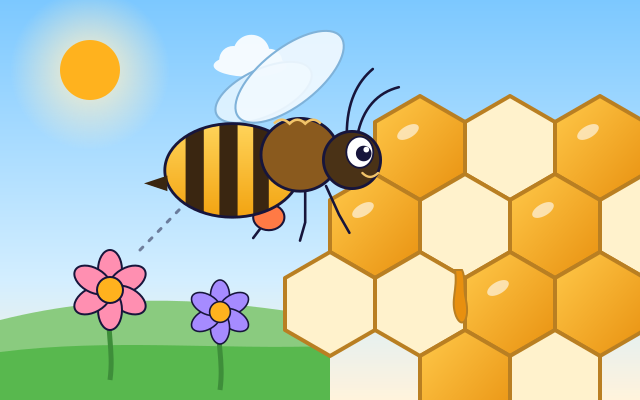
The big idea: Nectar is mostly water. Bees carry it home, add special helpers called enzymes, and fan their wings until most of the water dries away. Then they seal the thick honey in wax cells.
It's like
The interactive parts didn't load. The explanations below still work; try reloading the page.
From flower to honeycomb
- A worker bee lands on a flower and sips nectar, a sweet, watery juice, through her long tongue. She may visit around a hundred flowers on one trip.
- The nectar goes into her honey stomach, a special bag just for carrying nectar. Inside it, the bee adds enzymes that start changing the sugar.
- Back at the hive, she passes the nectar mouth to mouth to a house bee. House bees add more enzymes and spread the nectar into wax cells.
- Now the nectar is still very runny. Many bees fan their wings to blow warm air over the cells. Water evaporates, and the nectar gets thicker and thicker.
- When the honey is thick enough, bees make wax from tiny glands on their bellies. They chew it and build a lid over each cell to keep the honey clean and dry.
- Bees make honey as food for winter, when there are no flowers. They huddle in a ball to keep warm and eat their stored honey.
Inside a bee and her honeycomb
Tap each part. We cut the bee open (in a drawing!) so you can see her honey stomach.
- Tongue (proboscis). The bee's long tongue, called a proboscis, reaches deep into flowers to lap up nectar. It folds away when she flies.
- Antennae. Bees smell and touch with their antennae. They can sniff out flowers, and the smells of their own hive.
- Wings. A bee has four wings that hook together. They beat about 200 times every second, which makes the buzzing sound. Bees also use them to fan the honey dry.
- Honey stomach. The honey stomach is a stretchy bag that carries nectar home. A valve keeps the nectar separate from the food the bee digests.
- Pollen basket. Bees comb pollen from their hairy bodies into baskets on their back legs. Pollen is food for baby bees.
- Wax glands. Young worker bees make little flakes of wax from glands under their bellies. They chew the wax to build honeycomb and lids.
- Honeycomb cells. Honeycomb is made of six-sided cells. The six-sided shape fits together with no gaps and uses very little wax.
- Wax cap. When the honey is ready, bees seal the cell with a wax cap. The cap keeps the honey clean and stops it soaking up water from the air.
Dry the nectar into honey
Collect nectar, then change how hard the bees fan. Watch the water leave and the nectar thicken. Cap the cells when the honey is ready.
Experiment: What happens to the water in the nectar when more bees fan their wings?
- Send the bee for nectar so a cell is full.
- Stop the fanning and watch the water gauge.
- Then fan as fast as you can. Compare the two.
What we found: With no fanning the nectar stays runny. Fanning blows air over the cells, so water evaporates much faster and the nectar turns into thick honey.
Turn on JavaScript to try it yourself.
Honey before winter
Split your bees between collecting and fanning. Fill and cap all six cells before winter comes.
The honey factory
Honey starts as nectar, a sweet, watery juice that flowers make to attract insects. A worker bee sips it with her long tongue and stores it in her honey stomach. While she flies from flower to flower, pollen sticks to her fuzzy body, so she helps the flowers make seeds too.
Back at the hive, the forager passes the nectar to house bees. They add enzymes, which are special helpers that change the sugar, and spread the nectar into the wax cells of the honeycomb.
Nectar is mostly water, so it would spoil if the bees left it like that. Many bees stand on the comb and fan their wings to blow warm air through the hive. Day by day the water evaporates and the nectar becomes thick, sticky honey.
When the honey is ready, bees seal each cell with a lid of wax that they make from glands on their bellies. Honey is the colony's food for winter. A single worker makes only about one twelfth of a teaspoon of honey in her whole life, so every jar is the work of thousands of bees.
Key words
- Nectar
- A sweet, watery juice made by flowers.
- Enzyme
- A special helper that speeds up a change, like changing one sugar into others.
- Evaporation
- When liquid water turns into water vapor and escapes into the air.
- Honey stomach
- A bag inside a bee for carrying nectar home.
- Hygroscopic
- Able to soak up water from the air, like honey does.
Check your thinking
-
What do bees collect from flowers to make honey?
Show the answer
Nectar. Bees sip nectar from flowers and carry it home in their honey stomachs.
-
Why do bees fan their wings over the honeycomb?
Show the answer
To make water evaporate from the nectar. Moving air carries water vapor away, so the nectar gets thicker.
-
Why do bees put wax lids on the cells?
Show the answer
To keep the honey clean and dry. The cap stops the honey getting dirty or soaking up water from damp air.
-
Why are honeycomb cells six-sided?
Show the answer
They fit together with no gaps and use little wax. Hexagons fit together perfectly and save precious wax.
-
Why is honey so important to the bees themselves?
Show the answer
It is their food for winter. When there are no flowers in winter, bees live on their stored honey.
You're a Animals expert!
You watched, looked inside, tried it, solved the challenge and went deeper. Pick another question below, or switch the age at the top to see this topic another way.
More about animals
 #95
Animals
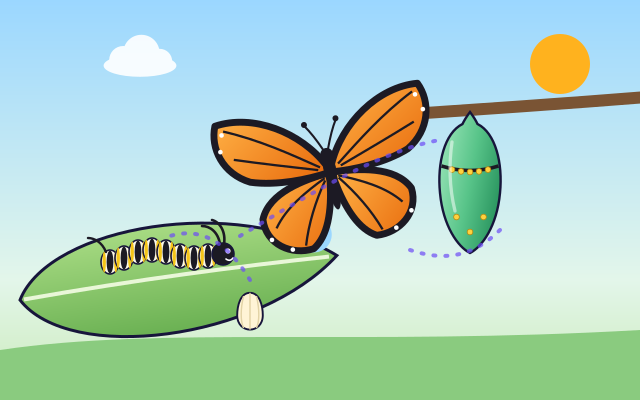
How does a caterpillar become a butterfly?
Arrange the egg, caterpillar, chrysalis, and butterfly stages. Use a time slider and close-up animations to explore the changes during metamorphosis.
#95
Animals
How does a caterpillar become a butterfly?
Arrange the egg, caterpillar, chrysalis, and butterfly stages. Use a time slider and close-up animations to explore the changes during metamorphosis.
 #96
Animals
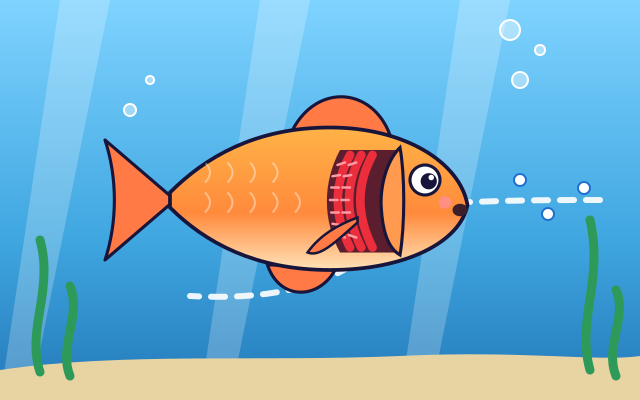
How do fish breathe underwater?
Follow water across a fish's gills and explore oxygen moving into its blood. Compare the structures and functions of gills and lungs.
#96
Animals
How do fish breathe underwater?
Follow water across a fish's gills and explore oxygen moving into its blood. Compare the structures and functions of gills and lungs.
 #97
Animals
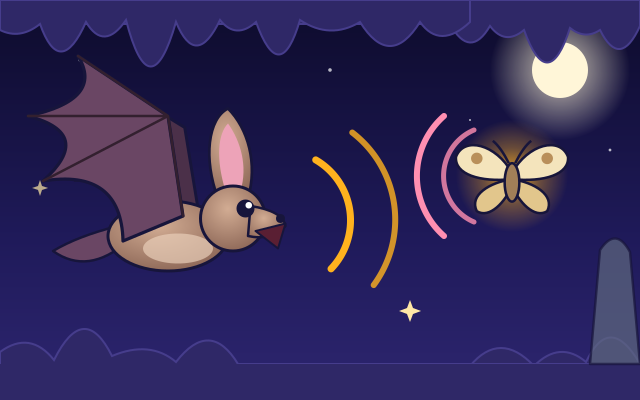
How do bats find their way in the dark?
Send sound pulses through a dark virtual cave and interpret returning echoes. Use their timing and direction to locate obstacles and insects.
#97
Animals
How do bats find their way in the dark?
Send sound pulses through a dark virtual cave and interpret returning echoes. Use their timing and direction to locate obstacles and insects.
 #98
Animals
How do spiders spin webs?
Explore silk production and build an orb web using anchor lines, spokes, and a spiral. Touch different sections and watch vibrations travel.
#98
Animals
How do spiders spin webs?
Explore silk production and build an orb web using anchor lines, spokes, and a spiral. Touch different sections and watch vibrations travel.
Keep exploring
Games to play next
- Classification ExplorerSort living things by what you can see, then follow and build yes-or-no keys.
- Habitat Builder 3DFind the right home for frogs, camels, polar bears and more.
- Forest Trails PhotosCreep up on the animals of a big forest valley and take the closest, best wildlife photos you can, without startling them.
Guide for grown-ups
- How to start homeschooling: a step-by-step guide for familiesA guide for parents · 7 min read
Science games by grade
Science worksheets by grade
- Preschool Science Worksheets
- Pre-K Science Worksheets
- Kindergarten Science Worksheets
- 1st Grade Science Worksheets
- 2nd Grade Science Worksheets
- 3rd Grade Science Worksheets
- 4th Grade Science Worksheets
- 5th Grade Science Worksheets
- 6th Grade Science Worksheets
- 7th Grade Science Worksheets
- 8th Grade Science Worksheets