How does a caterpillar become a butterfly?
Egg, caterpillar, chrysalis, butterfly: follow a monarch through the amazing change called metamorphosis.
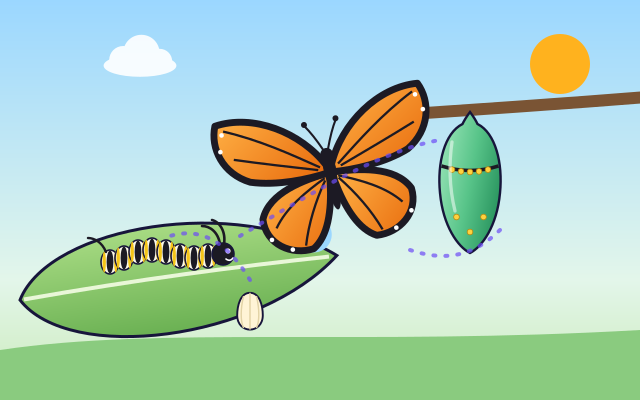
The big idea: A butterfly's life has four stages: egg, caterpillar, chrysalis and adult. The caterpillar's job is to eat and grow. Inside the chrysalis, its body is taken apart and rebuilt into a butterfly.
It's like
The interactive parts didn't load. The explanations below still work; try reloading the page.
The monarch's amazing change
- A female monarch lays a single tiny egg on a milkweed leaf. Milkweed is the only plant monarch caterpillars can eat, so she picks it carefully.
- After a few days a tiny caterpillar hatches and eats its eggshell. Then it munches milkweed leaves all day. Its skin can't stretch forever, so it sheds it to grow bigger.
- When it's fully grown, the caterpillar spins a silk pad, hangs upside down in a J shape and sheds its skin one last time. Underneath is a green chrysalis.
- Inside the chrysalis, much of the caterpillar's body breaks down into a kind of soup. Tiny groups of cells that were waiting inside grow into wings, legs and antennae.
- After about ten days the chrysalis turns clear, and you can see orange wings inside. The butterfly pushes out, pumps fluid into its crumpled wings and waits for them to harden.
- The butterfly flies off to sip nectar from flowers. When it's grown up, it will lay eggs of its own, and the life cycle starts again.
Metamorphosis, step by step
Step through the close-ups to see how a caterpillar changes.
- The egg. The egg is about the size of a pinhead. Just before it hatches, you can see the caterpillar's black head through the shell.
- Hatching. The caterpillar chews a hole in the shell and crawls out. Its first meal is usually its own eggshell.
- Molting. A caterpillar's skin can't stretch very much. So it grows a new, looser skin underneath and wriggles out of the old one. This is called molting.
- Hanging in a J. When it's fully grown, the caterpillar spins a little pad of silk, grips it with its back legs and hangs down in a J shape for about a day.
- The chrysalis forms. The caterpillar's skin splits behind its head and slides up. Underneath is a soft green chrysalis that soon hardens, decorated with gold dots.
- Rebuilding inside. Inside the chrysalis, much of the caterpillar's body breaks down. Tiny groups of cells that were waiting all along grow into wings, legs, eyes and antennae.
- Coming out. When the chrysalis turns clear you can see the orange wings inside. The shell cracks open and the butterfly climbs out, hanging on with its legs.
- Wings pump up. The new butterfly pumps fluid from its fat body into its crumpled wings so they spread out. It hangs still for a few hours while they dry and harden.
The life cycle time slider
Slide through the days. Watch the caterpillar grow and molt, and peek inside the chrysalis to see the wings forming.
Experiment: How does a caterpillar get so much bigger?
- Start at day 0 and slide forward slowly.
- Watch for the old skins left behind.
- Keep going until the butterfly comes out.
What we found: A caterpillar grows inside a skin that can only stretch a little, so it sheds it four times. Each time it comes out bigger, until it's about as long as your finger.
Turn on JavaScript to try it yourself.
The life cycle puzzle
Drag the six cards into the circle in the right order, starting from the egg. Then press Check.
The four stages of a butterfly
A butterfly's life has four very different stages. It starts as a tiny egg laid on a plant. Monarch butterflies always lay their eggs on milkweed, because that is the only food their caterpillars can eat.
The caterpillar that hatches is an eating machine. It munches leaves all day and grows fast. Its skin can only stretch a little, so it sheds its skin four times, coming out bigger each time. This is called molting.
When the caterpillar is fully grown, it hangs upside down in a J shape and sheds its skin one last time. Underneath is a chrysalis. The chrysalis looks still, but inside, the caterpillar's body is being taken apart and rebuilt. Groups of cells that were tucked away in the caterpillar grow into wings, legs, eyes and antennae.
After about ten days a butterfly climbs out. It pumps up its crumpled wings, lets them dry, and flies off to drink nectar. Later it lays eggs, and the cycle starts again. This whole change is called metamorphosis.
Key words
- Metamorphosis
- A big change in body shape as an animal grows up.
- Larva
- The young stage. For butterflies, it's the caterpillar.
- Chrysalis (pupa)
- The case where a caterpillar changes into a butterfly.
- Molting
- Shedding an old skin so the animal can grow bigger.
- Imaginal discs
- Groups of cells in a larva that grow into adult parts such as wings and legs.
Check your thinking
-
What hatches out of a butterfly egg?
Show the answer
A tiny caterpillar. The egg hatches into a tiny caterpillar, which is a butterfly larva.
-
Why does a caterpillar shed its skin?
Show the answer
Its skin can't stretch enough for it to grow bigger. A caterpillar sheds its tight skin and has a bigger, looser one underneath.
-
What happens inside a chrysalis?
Show the answer
The caterpillar's body is rebuilt into a butterfly. Much of the caterpillar's body breaks down, and groups of cells grow into wings, legs and antennae.
-
Which order is right?
Show the answer
Egg, caterpillar, chrysalis, butterfly. Egg, caterpillar, chrysalis, butterfly, and then the butterfly lays eggs again.
-
Why do monarchs lay their eggs on milkweed?
Show the answer
It's the only food monarch caterpillars can eat. Monarch caterpillars only eat milkweed, so their mothers lay eggs right on it.
You're a Animals expert!
You watched, looked inside, tried it, solved the challenge and went deeper. Pick another question below, or switch the age at the top to see this topic another way.
More about animals
 #96
Animals
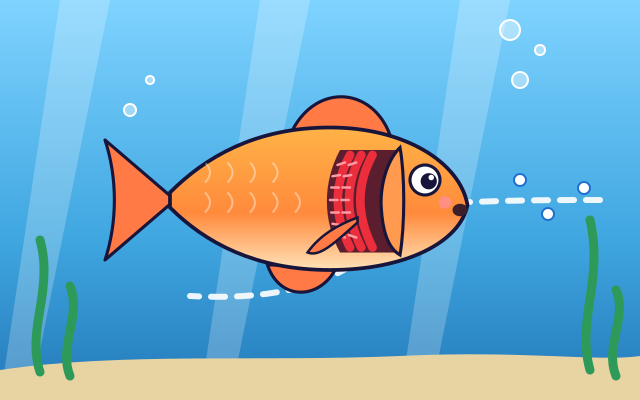
How do fish breathe underwater?
Follow water across a fish's gills and explore oxygen moving into its blood. Compare the structures and functions of gills and lungs.
#96
Animals
How do fish breathe underwater?
Follow water across a fish's gills and explore oxygen moving into its blood. Compare the structures and functions of gills and lungs.
 #97
Animals
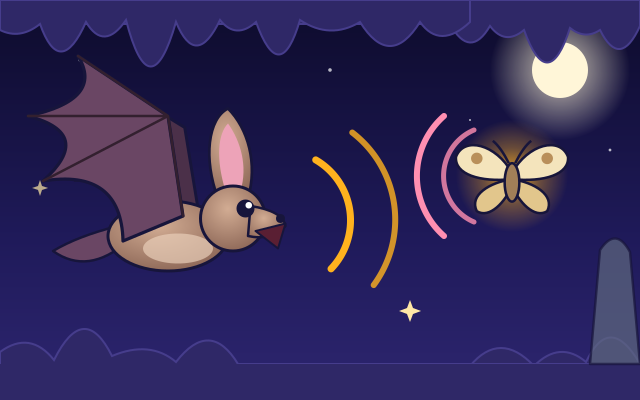
How do bats find their way in the dark?
Send sound pulses through a dark virtual cave and interpret returning echoes. Use their timing and direction to locate obstacles and insects.
#97
Animals
How do bats find their way in the dark?
Send sound pulses through a dark virtual cave and interpret returning echoes. Use their timing and direction to locate obstacles and insects.
 #98
Animals
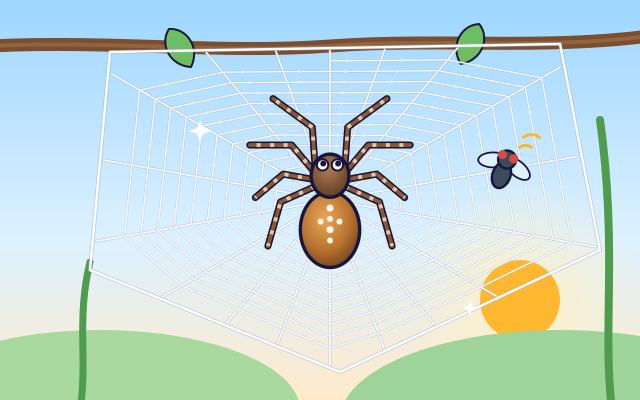
How do spiders spin webs?
Explore silk production and build an orb web using anchor lines, spokes, and a spiral. Touch different sections and watch vibrations travel.
#98
Animals
How do spiders spin webs?
Explore silk production and build an orb web using anchor lines, spokes, and a spiral. Touch different sections and watch vibrations travel.
 #100
Animals
How do coral reefs grow?
Zoom into reef-building coral polyps and watch their skeletons accumulate over time. Explore how growing reefs provide shelter for many other living things.
#100
Animals
How do coral reefs grow?
Zoom into reef-building coral polyps and watch their skeletons accumulate over time. Explore how growing reefs provide shelter for many other living things.
Keep exploring
Games to play next
- Classification ExplorerSort living things by what you can see, then follow and build yes-or-no keys.
- Habitat Builder 3DFind the right home for frogs, camels, polar bears and more.
- Forest Trails PhotosCreep up on the animals of a big forest valley and take the closest, best wildlife photos you can, without startling them.
Draw it or make it
- How to draw a butterflyDrawing lesson
- Butterfly with Shaped WingsOrigami
- Accordion ButterflyPaper craft
Guide for grown-ups
- How to start homeschooling: a step-by-step guide for familiesA guide for parents · 7 min read
Science games by grade
Science worksheets by grade
- Preschool Science Worksheets
- Pre-K Science Worksheets
- Kindergarten Science Worksheets
- 1st Grade Science Worksheets
- 2nd Grade Science Worksheets
- 3rd Grade Science Worksheets
- 4th Grade Science Worksheets
- 5th Grade Science Worksheets
- 6th Grade Science Worksheets
- 7th Grade Science Worksheets
- 8th Grade Science Worksheets