How do color filters change what we see?
A color filter does not add color. It lets some colors of light through and soaks up the rest, and that changes how things look.
The big idea: White light is a mix of colors. A red filter lets the red part through and soaks up the green and blue parts. Things can only show the colors that still reach them.
It's like a kitchen strainer: water runs through but the pasta is held back. A red filter lets red light through and holds back green and blue.

The interactive parts didn't load. The explanations below still work; try reloading the page.
What a color filter does
- Leo has a lamp, some fruit and a sheet of red plastic. He slides the red sheet in front of the lamp, and everything changes color. Did the sheet paint the light red?
- First, look at the lamp's white light. White light is really many colors mixed together. To keep it simple, think of three parts: red, green and blue.
- The red filter lets the red part through. The green and blue parts are soaked up inside the plastic. So the filter takes colors away. It does not add any.
- Take the filter away. In white light, a red apple bounces red light to your eyes and soaks up the rest. A green pear bounces green. A white mug bounces every color.
- Put the red filter back. Only red light reaches the fruit. The apple still bounces it and looks bright. But the pear gets no green light to bounce back, so it looks dark.
- Now add a green filter after the red one. The red filter passes only red, and the green filter stops red. Nothing gets through both, so everything goes dark.
Look closer at the filter
Tap each part to follow the light from the lamp, through the filter, to the things on the table.
- Lamp. The lamp makes white light: a mix of every color. A filter can only use the light the lamp gives it.
- White light. Before the filter, the red, green and blue parts of the light all travel together. Mixed, they look white.
- Red filter. The filter is clear plastic with red dye in it. The dye soaks up green and blue light and lets red light pass.
- Red light. After the filter only the red part is left. The light is now red, and dimmer than the white light was.
- White mug. A white mug bounces back every color that reaches it. Only red light reaches it now, so it looks red.
- Red apple. A red apple bounces red light and soaks up the rest. Red light is exactly what arrives, so the apple still looks bright.
- Green pear. A green pear bounces green light and soaks up red. No green light gets past the filter, so the pear has nothing to bounce and looks dark.
Filters over the lamp
Tap a filter to put it in front of the lamp. Watch which parts of the light get through, and what each object looks like. Then try two filters at once.
Experiment: You shine red light on a green pear. What will the pear look like?
- Put the red filter in front of the lamp. Look at the pear and the apple.
- Swap it for the green filter and look again.
- Put red and green in together. What is left?
What we found: In red light the pear looks dark, because it bounces green light and there is none. The apple stays bright. With red and green filters together, no light gets through at all: each one stops what the other lets pass.
Turn on JavaScript to try it yourself.
Spy decoder
Each spy card hides a picture under colored scribbles. Choose the filter that makes the scribbles vanish, then press Look. Decode three cards.
How filters change what we see
White light, such as sunlight or lamp light, is many colors mixed together. A good way to picture it is as three parts: a red part, a green part and a blue part. When all three reach your eyes together, you see white.
A color filter is a clear material with dye in it. A red filter lets the red part of the light pass and soaks up the green and blue parts. The filter does not paint the light. It only takes some of it away, the way a strainer holds back the pasta and lets the water through. That is why light is always a little dimmer after a filter.
Things have colors because of the light they bounce back. A red apple bounces red light and soaks up the rest. A green pear bounces green. A white mug bounces everything. So in red light the mug and the apple both look red, but the pear looks dark, because no green light reaches it.
Two filters in a row pass only what gets through both. A red filter followed by a green one passes nothing. Spy decoders use this idea: red scribbles look just as bright as white paper through a red filter, so they seem to vanish, while a pale blue picture underneath turns dark and stands out. The strainer picture is a good one, but a real filter is not full of holes: the dye soaks up light of some colors all through the plastic.
Key words
- Filter
- A clear colored sheet that lets some colors of light through and soaks up the rest.
- Transmit
- To let light pass through.
- Absorb
- To soak up light. The light's energy turns into a little warmth.
- Reflect
- To bounce light back. The colors a thing reflects are the colors you see.
- Subtractive mixing
- Making colors by taking parts of the light away, as filters, inks and paints do.
- Gel
- A thin colored filter sheet used on stage lights.
Check your thinking
-
What does a red filter do to white light?
Show the answer
It lets the red part through and soaks up the rest. A filter only takes light away. The red part passes, and the green and blue parts are soaked up.
-
Why does a green pear look dark in red light?
Show the answer
It bounces green light, and no green light is reaching it. A thing can only show colors that reach it. The pear soaks up red and has no green to bounce back.
-
You look at a white mug through a blue filter. What color does it look?
Show the answer
Blue. White things bounce back every color. Only blue light gets through the filter to your eye, so the mug looks blue.
-
A cyan filter and a magenta filter are stacked in front of a white lamp. What color is the light that gets through?
Show the answer
Blue. Cyan passes green and blue. Magenta passes red and blue. Blue is the only band that passes both.
-
A red filter and a green filter are stacked. How much light gets through?
Show the answer
Almost none: each stops what the other lets through. The red filter passes only red, and the green filter soaks up red. Nothing passes both.
-
A spy card has red scribbles over a pale blue picture. Which filter makes the picture show up?
Show the answer
A red filter. Through red, the red scribbles look as bright as the paper and vanish. The blue picture has no red to bounce, so it turns dark and stands out.
You're a Light & sound expert!
You watched, looked inside, tried it, solved the challenge and went deeper. Pick another question below, or switch the age at the top to see this topic another way.
More about light & sound
 #435
Light & sound
How do glow-in-the-dark materials work?
Charge a model material with light and follow its delayed light emission.
#435
Light & sound
How do glow-in-the-dark materials work?
Charge a model material with light and follow its delayed light emission.
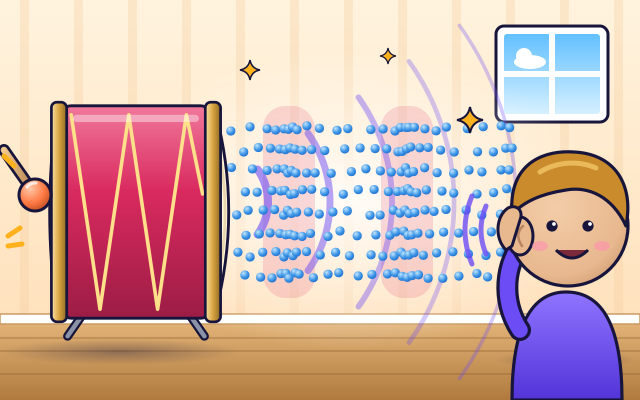 #436
Light & sound
How does sound travel?
Follow vibrations through air, water, and solids using animated particles.
#436
Light & sound
How does sound travel?
Follow vibrations through air, water, and solids using animated particles.
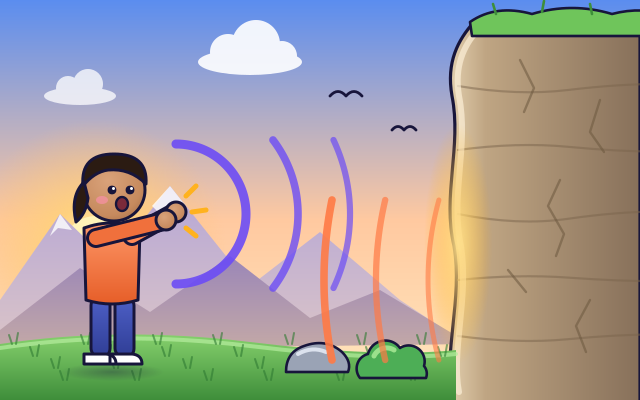 #437
Light & sound
How do echoes happen?
Send sound toward different surfaces and compare the returning sound and delay.
#437
Light & sound
How do echoes happen?
Send sound toward different surfaces and compare the returning sound and delay.
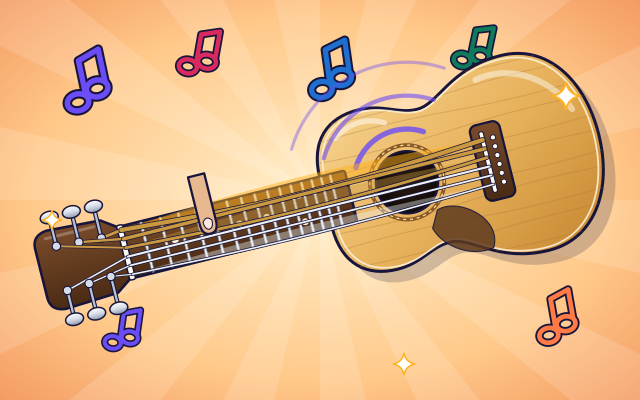 #438
Light & sound
How do guitar strings create different notes?
Change string length, tension, and thickness and compare vibrations and pitch.
#438
Light & sound
How do guitar strings create different notes?
Change string length, tension, and thickness and compare vibrations and pitch.
Keep exploring
Games to play next
- Mirror MazeBend a beam of light with mirrors to light up every crystal — in the right order.
- Shadow SculptorStack cubes under three lamps until every shadow matches the outline.
- Listen and FindOlly whispers a clue or plays a sound. Can you find it in the picture?
Guide for grown-ups
- How to start homeschooling: a step-by-step guide for familiesA guide for parents · 7 min read
Science games by grade
Science worksheets by grade
- Preschool Science Worksheets
- Pre-K Science Worksheets
- Kindergarten Science Worksheets
- 1st Grade Science Worksheets
- 2nd Grade Science Worksheets
- 3rd Grade Science Worksheets
- 4th Grade Science Worksheets
- 5th Grade Science Worksheets
- 6th Grade Science Worksheets
- 7th Grade Science Worksheets
- 8th Grade Science Worksheets