How do glow-in-the-dark materials work?
Glow-in-the-dark materials store energy from light and let it out slowly, as a soft glow that fades through the night.
The big idea: Light gives the material energy. The material holds on to that energy and lets it out again a little at a time, as its own soft light. When the stored energy runs out, the glow stops.
It's like a sponge under a tap: it soaks up water fast, then drips for a long time after the tap is turned off. Fewer drips come as it empties.
The interactive parts didn't load. The explanations below still work; try reloading the page.
How glow stars work
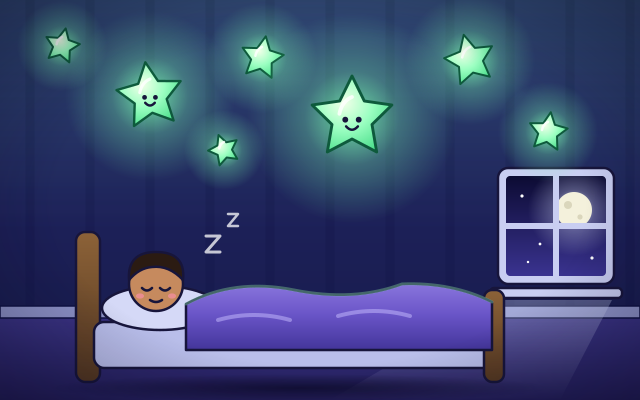
- It is bedtime in Zoe's room. When the lamp is on, the plastic stars on her wall look pale. When the lamp goes off, they glow green. Where does that light come from?
- Zoom into the star. It is full of a special powder. When light hits it, the light's energy lifts tiny particles called electrons up to a higher level, like balls thrown onto a high shelf.
- In most materials the electrons would drop straight back down. In a glow material, many of them fall into traps, like balls caught in cups, and they stay there holding their energy.
- Now the lamp is off. Every so often a jiggle of warmth knocks an electron out of its trap. It falls back down, and its energy comes out as a tiny flash of green light.
- At first many electrons are escaping, so the stars are bright. As the traps empty, fewer flashes come each second. The glow fades fast at first, then more and more slowly.
- In the morning, daylight lifts the electrons back into the traps, and the stars are ready for another night. Blue and violet light fill them fastest. Red light cannot fill them at all.
Look inside a glow star
Tap each part of the star and of the close-up model. This is a simplified model.
- Glow star. The star is plastic mixed with a glow powder called a phosphor. The powder is safe to touch and is not radioactive. It simply stores light.
- Light coming in. Light arrives in tiny packets of energy. Packets of blue and violet light carry more energy than packets of red light.
- Electrons, resting. These are electrons, tiny particles inside every atom. Here they rest on the lowest level, with no extra energy.
- High level. An electron that soaks up a packet of light jumps to this higher level. It now holds the light's energy.
- Traps. Traps are what make a glow material special. An excited electron drops into a trap and stays there, sometimes for hours, still holding its energy.
- Glow going out. When an electron escapes its trap and falls back down, its energy comes out as a flash of green light. Millions of tiny flashes make the glow you see.
Charge it, then watch it fade
Let the lamp charge the star, then switch the lamp off and watch the glow. Press the clock button to let time pass. Try a red lamp too.
Experiment: You charge the star and switch off the lamp. How does the glow change over the next ten minutes?
- Leave the lamp on until the star's energy is nearly full.
- Switch the lamp off. Press Record straight away.
- Press the clock button to wait, and record the glow again each time.
What we found: The glow is brightest just after the lamp goes off, when the traps are full and many electrons are escaping. It fades quickly at first and then more and more slowly. A red lamp does not charge the star at all: its light carries too little energy.
Turn on JavaScript to try it yourself.
Stars until story time ends
Each tap shines the flashlight on a star for 30 seconds. The battery has 11 taps. All five stars must still glow when the story ends, 10 minutes after lights out.
How glow-in-the-dark works
A glow-in-the-dark star does not make light out of nothing. It stores energy from light that shone on it earlier, a bit like a sponge soaking up water. The plastic is mixed with a special powder called a phosphor, which does the storing.
Everything is made of atoms, and atoms have tiny particles called electrons. When light hits the phosphor, its energy lifts electrons to a higher level. In most materials they would drop straight back. In a phosphor, many of them fall into traps and get stuck there, still holding their energy.
A trapped electron needs a little nudge to get out. The ordinary jiggling of warm atoms gives that nudge now and then. When an electron escapes and falls back down, its energy comes out as a tiny flash of light. Millions of flashes every second make the soft green glow.
At first the traps are full and many electrons escape, so the glow is bright. As the traps empty, the glow fades, fast at first and then slowly. By morning it is very faint. A few minutes of daylight fills the traps again. The sponge picture breaks down in one way: a sponge drips out the same water it soaked up, but the star gives back green light whatever color went in, because a little energy is lost as warmth.
Key words
- Phosphorescence
- Glowing that carries on after the light has been switched off.
- Phosphor
- A material that soaks up energy and gives it out again as light.
- Electron
- A tiny particle found in every atom. Electrons can take in and give out energy.
- Trap
- A place in the material where an electron gets stuck for a while, holding its energy.
- Photon
- A tiny packet of light energy.
- Fluorescence
- Glowing that stops almost the instant the light is switched off.
Check your thinking
-
Where does the energy for a glow star's light come from?
Show the answer
From light that shone on it earlier. The star stores energy from light and lets it out again slowly.
-
How does the glow change during the night?
Show the answer
It fades quickly at first, then more slowly. When the traps are full, many electrons escape each second. As they empty, fewer escape, so the glow gets dimmer and dimmer.
-
Which light is best for charging a glow star quickly?
Show the answer
Blue or violet light. Packets of blue and violet light carry the most energy, enough to lift electrons into the traps.
-
You charge two identical glow stars, then put one in a warm place and one in a cold place. What happens?
Show the answer
The warm one glows brighter but runs out sooner. Thermal motion frees trapped electrons. More warmth means more escapes each second: a brighter glow that uses up the store faster.
-
A glow star and a white sock are both under a lamp. The lamp goes off. Why does only the star glow?
Show the answer
The star's powder has traps that hold energy; the sock has none. In ordinary things the lifted electrons drop straight back, so the light stops at once. Traps in the glow powder hold them back for a long time.
-
Your glow star has faded. How do you get it glowing again?
Show the answer
Hold it in bright light for a few minutes. Bright light lifts the electrons back into the traps, ready to glow again.
You're a Light & sound expert!
You watched, looked inside, tried it, solved the challenge and went deeper. Pick another question below, or switch the age at the top to see this topic another way.
More about light & sound
 #436
Light & sound
How does sound travel?
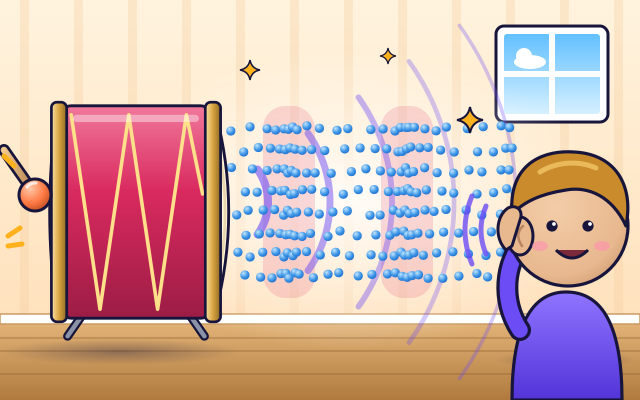
Follow vibrations through air, water, and solids using animated particles.
#436
Light & sound
How does sound travel?
Follow vibrations through air, water, and solids using animated particles.
 #437
Light & sound
How do echoes happen?
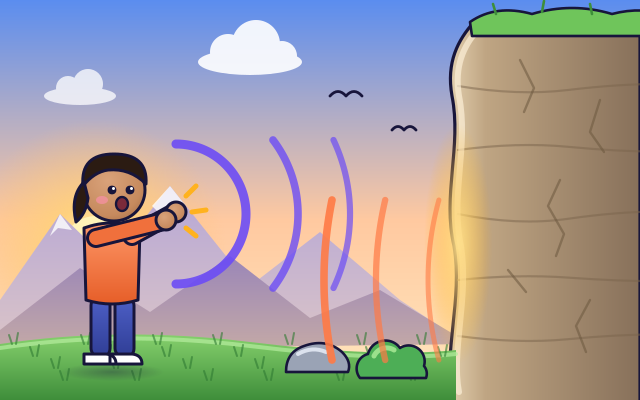
Send sound toward different surfaces and compare the returning sound and delay.
#437
Light & sound
How do echoes happen?
Send sound toward different surfaces and compare the returning sound and delay.
 #438
Light & sound
How do guitar strings create different notes?
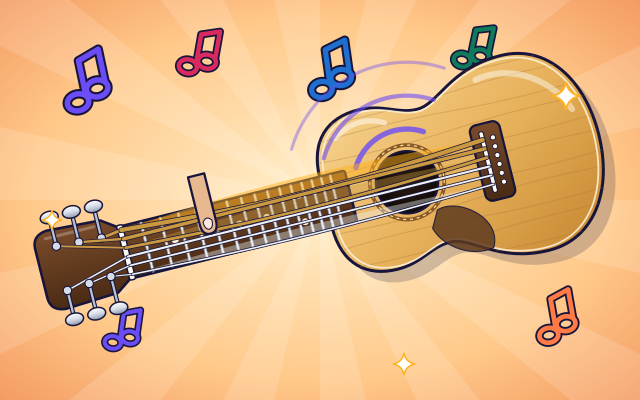
Change string length, tension, and thickness and compare vibrations and pitch.
#438
Light & sound
How do guitar strings create different notes?
Change string length, tension, and thickness and compare vibrations and pitch.
 #439
Light & sound
How does a piano make music?
Follow a key press through a hammer, string, damper, and soundboard.
#439
Light & sound
How does a piano make music?
Follow a key press through a hammer, string, damper, and soundboard.
Keep exploring
Games to play next
- Mirror MazeBend a beam of light with mirrors to light up every crystal — in the right order.
- Shadow SculptorStack cubes under three lamps until every shadow matches the outline.
- Listen and FindOlly whispers a clue or plays a sound. Can you find it in the picture?
Guide for grown-ups
- How to start homeschooling: a step-by-step guide for familiesA guide for parents · 7 min read
Science games by grade
Science worksheets by grade
- Preschool Science Worksheets
- Pre-K Science Worksheets
- Kindergarten Science Worksheets
- 1st Grade Science Worksheets
- 2nd Grade Science Worksheets
- 3rd Grade Science Worksheets
- 4th Grade Science Worksheets
- 5th Grade Science Worksheets
- 6th Grade Science Worksheets
- 7th Grade Science Worksheets
- 8th Grade Science Worksheets