How do guitar strings create different notes?
Six strings can play hundreds of notes. Change a string's length, tightness and thickness, and hear how its shaking changes the note.
The big idea: A plucked string shakes back and forth, and the speed of that shaking sets the note. Make the string shorter, tighter or thinner and it shakes faster, so the note gets higher.
It's like a ruler twanged on the edge of a table. A long piece hanging over flaps slowly and sounds low. A short piece buzzes fast and high.
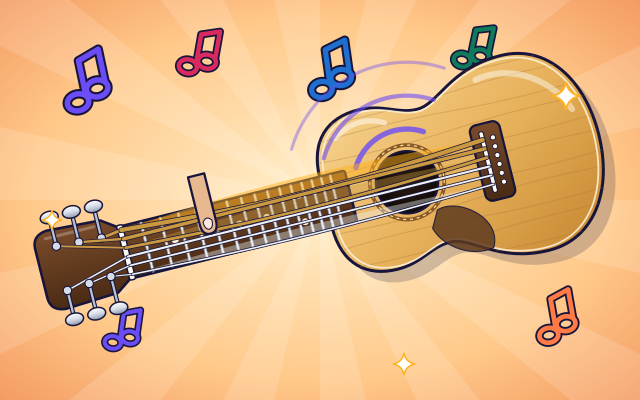
The interactive parts didn't load. The explanations below still work; try reloading the page.
Six strings, so many notes
- Leo strums his guitar. It has just six strings, yet he can play high notes, low notes and everything in between. How can six strings make so many different notes?
- Pull a string to one side and let go. It springs back, shoots past the middle and swings back again, hundreds of times each second. That shaking is called vibration, and it is what you hear.
- Press a string against one of the metal bars, called frets. Now only the part between your finger and the bridge can shake. A shorter piece swings faster, so the note is higher.
- Each string wraps around a tuning peg. Turning the peg pulls the string tighter. A tighter string snaps back faster, so it shakes faster and sounds higher. This is how a guitar is tuned.
- The strings are not all the same. The thick ones are heavy, so they are slow to get moving and they shake slowly, making low notes. The thin ones are light, shake quickly and make high notes.
- A string by itself is thin and moves very little air, so it is quiet. The bridge passes its shaking to the guitar's thin wooden top. That big surface pushes a lot of air, and the sound pours out.
Look closely at a guitar
Tap each part of the guitar. Watch what it does to the strings and the sound.
- Strings. The six strings are stretched tight along the guitar. The thick ones play low notes and the thin ones play high notes. Pluck one and it shakes too fast to see clearly.
- Tuning pegs. Each string winds around a peg. Turn the peg one way to tighten the string and raise its note. Turn it the other way to loosen the string and lower it.
- Nut. The nut is a small bar with six grooves. It holds the strings in place and marks one end of the part that can shake.
- Frets. Frets are thin metal bars across the neck. Press a string just behind a fret, and the fret becomes the new end of the string. Each fret closer to the body makes the note one step higher.
- Bridge. The other end of every string is held at the bridge. When a string shakes, it tugs on the bridge, and the bridge passes that shaking into the wooden top of the guitar.
- Soundboard. The top of the guitar is a thin sheet of wood called the soundboard. The bridge makes it shake, and because it is so wide it pushes much more air than a skinny string can.
- Sound hole. The body is a hollow box full of air. That air shakes along with the wood, and the round hole lets its sound out. It makes the low notes fuller.
String lab: length, tightness, thickness
Pluck the string. Then change one thing at a time: press a fret to shorten it, turn the peg to tighten it, or pick a thicker string. Watch the slow-motion view and listen.
Experiment: You press the string down at a fret, so the shaking part is shorter. What happens to the note?
- Pluck the open string and listen.
- Tap the neck near the body to press a fret there. Pluck again.
- Now try the peg (tighter and looser), and a thicker or thinner string.
What we found: A shorter shaking part swings faster, so the note is higher. Tightening the string also makes it faster and higher. A thicker, heavier string is slower and lower. Players use all three: thick and thin strings, pegs for tuning and frets for playing.
Turn on JavaScript to try it yourself.
Match the note
Listen to the target note and find it on the note line. Use the string, the frets and the peg to match it, then check. Match four notes.
How strings make notes
When you pluck a guitar string, you pull it to one side and let go. The string is stretched tight, so it springs back, flies past the middle and swings out the other way. It does this again and again, very fast. This shaking is called vibration. The string pushes the air, and the air carries the sound to your ears.
How high or low a note sounds is called its pitch. Pitch depends on how fast the string shakes. Fast shaking gives a high note. Slow shaking gives a low note. The lowest guitar string shakes about 82 times every second. The highest one shakes about 330 times every second.
Three things change how fast a string shakes. A shorter string shakes faster, which is why pressing a fret raises the note. A tighter string shakes faster, which is why turning a peg tunes it. A thinner, lighter string shakes faster, which is why a guitar has thick strings for low notes and thin strings for high ones.
A string by itself is very quiet, because it is too thin to push much air. The guitar's bridge passes the shaking to the thin wooden top, and the hollow body joins in. Our ruler comparison only goes so far: a ruler is stiff and is held at one end, but a string is floppy, is held at both ends and needs to be pulled tight before it can sing.
Key words
- Vibration
- A fast shaking back and forth.
- Pitch
- How high or low a note sounds.
- Frequency
- How many times something shakes each second.
- Tension
- How tightly a string is pulled.
- Fret
- A thin metal bar across the neck. Pressing a string behind it shortens the part that can vibrate.
- Octave
- A jump to the same note, but higher. Halving the string's length raises a note by one octave.
- Soundboard
- The thin wooden top of the guitar. It vibrates with the strings and makes the sound louder.
Check your thinking
-
Which string makes the highest note?
Show the answer
A short, thin, tight string. Shorter, thinner and tighter all make a string shake faster, and faster shaking means a higher note.
-
Why does pressing a string against a fret make the note higher?
Show the answer
The part that can shake is shorter, so it shakes faster. Only the part between the fret and the bridge can vibrate. A shorter piece swings back and forth more quickly.
-
A guitar string sounds too low. How does the player fix it?
Show the answer
Turn the tuning peg to tighten the string. A tighter string snaps back faster, so it shakes faster and sounds higher. Loosening it or using a thicker string would lower the note.
-
Why are the low strings on a guitar thicker than the high strings?
Show the answer
Thick strings are heavier, so they shake more slowly. A heavy string takes longer to swing back and forth. Slow shaking makes a low note.
-
A string stretched between two nails is very quiet. Why is a guitar so much louder?
Show the answer
The string shakes the thin wooden top, which pushes much more air. A thin string slips through the air. The wide soundboard pushes a lot of air at once, so the sound is louder.
You're a Light & sound expert!
You watched, looked inside, tried it, solved the challenge and went deeper. Pick another question below, or switch the age at the top to see this topic another way.
More about light & sound
 #439
Light & sound
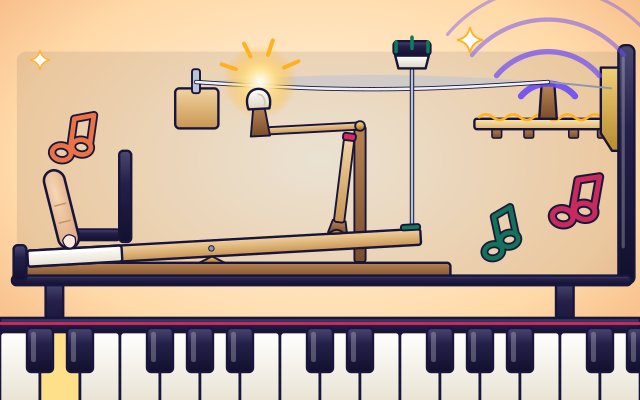
How does a piano make music?
Follow a key press through a hammer, string, damper, and soundboard.
#439
Light & sound
How does a piano make music?
Follow a key press through a hammer, string, damper, and soundboard.
 #440
Light & sound
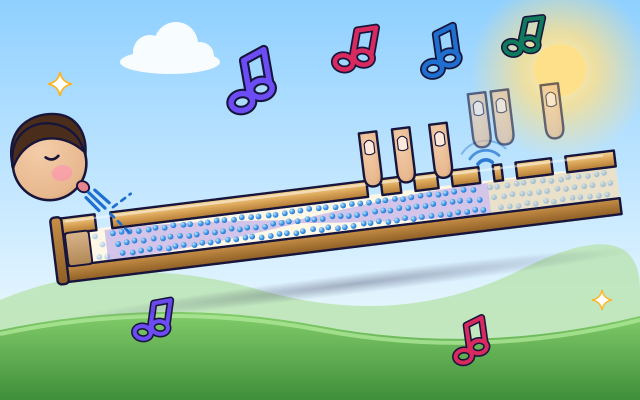
How do flutes produce different notes?
Open and close holes and explore changing vibrations in an air column.
#440
Light & sound
How do flutes produce different notes?
Open and close holes and explore changing vibrations in an air column.
 #441
Light & sound
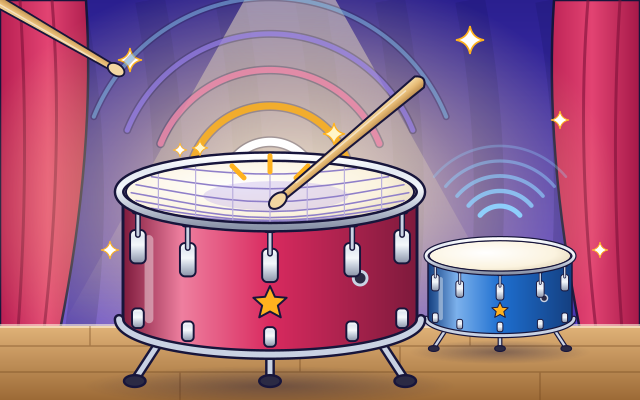
How do drums make different sounds?
Change membrane tension and drum size and compare vibration patterns.
#441
Light & sound
How do drums make different sounds?
Change membrane tension and drum size and compare vibration patterns.
 #442
Light & sound
How does soundproofing reduce noise?
Compare absorption, barriers, and gaps around a model noisy room.
#442
Light & sound
How does soundproofing reduce noise?
Compare absorption, barriers, and gaps around a model noisy room.
Keep exploring
Games to play next
- Listen and FindOlly whispers a clue or plays a sound. Can you find it in the picture?
- Mirror MazeBend a beam of light with mirrors to light up every crystal — in the right order.
- Shadow SculptorStack cubes under three lamps until every shadow matches the outline.
Guide for grown-ups
- How to start homeschooling: a step-by-step guide for familiesA guide for parents · 7 min read
Science games by grade
Science worksheets by grade
- Preschool Science Worksheets
- Pre-K Science Worksheets
- Kindergarten Science Worksheets
- 1st Grade Science Worksheets
- 2nd Grade Science Worksheets
- 3rd Grade Science Worksheets
- 4th Grade Science Worksheets
- 5th Grade Science Worksheets
- 6th Grade Science Worksheets
- 7th Grade Science Worksheets
- 8th Grade Science Worksheets