How do coral reefs grow?
Tiny animals called polyps build a reef out of limestone, layer by layer, and it becomes a home for thousands of sea creatures.
The big idea: Coral polyps build cups of limestone and keep adding layers. Tiny algae inside them make food from sunlight, which gives them the energy to build. Over many years the stone grows into a reef that shelters many animals.
It's like
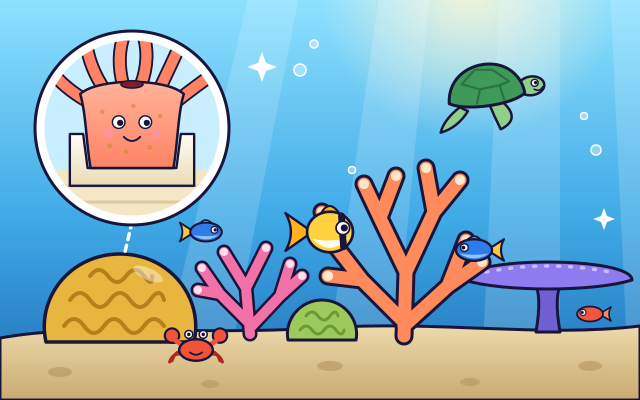
The interactive parts didn't load. The explanations below still work; try reloading the page.
From one polyp to a reef
- A coral starts life as a tiny swimming baby called a larva. It is smaller than a grain of rice, and it drifts with the sea, looking for hard rock.
- The larva glues itself to the rock and changes shape. It becomes a polyp: a soft tube with a mouth on top and a ring of tentacles.
- The polyp takes minerals from seawater and builds a cup of hard limestone under its soft body. It keeps adding thin layers, so the cup slowly gets taller.
- Tiny algae live inside the polyp's skin. They use sunlight to make sugar and share it with the coral. In return, the coral gives them a safe home.
- The polyp grows a bud that becomes a new polyp right beside it. Each one builds its own cup. Soon hundreds of joined polyps make one coral colony.
- Coral grows slowly. Branching corals can add about the length of your finger in a year. Boulder corals add only about the width of your fingernail. After many years, the colonies join into a reef.
- All those branches, caves and ledges make hiding places. Fish, crabs, shrimp, eels and turtles move in. The bigger the reef grows, the more kinds of animals it can shelter.
Look inside a coral polyp
This is one polyp, magnified many times. Tap each part to see what it does.
- Tentacles. A ring of soft tentacles reaches into the water. At night they stretch out to catch tiny drifting animals called plankton and pass them to the mouth.
- Stinging cells. Each tentacle is covered with tiny stinging cells. When a little animal brushes past, the cells fire tiny threads that hold it, a bit like sticky darts.
- Mouth. The mouth sits in the middle of the tentacles. It is the polyp's only opening: food goes in, and leftovers come back out the same way.
- Stomach. Inside the soft body is a stomach shaped like a bag. Here the caught food is broken down so the polyp can use it.
- Tiny algae. Millions of tiny algae live inside the polyp's skin. They make sugar from sunlight and share it. They also give the coral its golden-brown color.
- Connecting tissue. A thin layer of living tissue stretches over the stone and joins each polyp to its neighbors. They use it to share food, so the whole colony works as a team.
- Limestone cup. Each polyp sits in a cup of limestone that it built itself. When danger comes, it pulls its soft body down inside the cup to hide.
- Old skeleton. Below the cup is older limestone that the polyp built in earlier years. The polyp keeps lifting itself up and sealing off the space below, so the stone grows and the animal always lives on top.
Reef time-lapse
Move the years slider to grow the reef. Then change the sunlight and the water temperature. What makes coral grow fast, and when does it stop?
Experiment: What happens to coral growth if the reef is in deeper, dimmer water?
- Keep the water temperature at Just right.
- Set the sunlight to Sunny shallows and slide the years forward. Watch the reef and the stone bands in the zoom circle.
- Now slide the sunlight toward Deep and dim. Compare the reef and the bands.
What we found: Coral grows fastest in bright, shallow water. Its tiny algae need sunlight to make sugar, and that sugar powers the building of limestone. In deep, dim water there is less sugar, so the bands of new stone are thin, the reef stays small and fewer animals find shelter.
Turn on JavaScript to try it yourself.
Build a busy reef
Plant 3 baby corals on the reef slope, then press Grow to run 20 years. Shelter at least 6 kinds of animals.
How a reef is built
A coral reef looks like a garden of colorful rocks, but it is built by animals. Each coral is a colony of tiny, soft animals called polyps. A polyp is a little tube with a mouth on top and a ring of stinging tentacles, like a tiny upside-down jellyfish. Most are smaller than a pea.
Every polyp builds a hard cup of limestone underneath itself, using minerals from seawater. It keeps adding thin layers, lifting itself higher. It also makes copies of itself, called buds, so one polyp becomes thousands that are all joined together. The stone they leave behind is the reef.
Polyps have helpers. Tiny algae live inside their skin and use sunlight to make sugar, which they share. That is why reef corals grow only in clear, sunlit, warm water. It is slow work: a boulder coral grows about as much in a year as your fingernail is wide, so a big reef can be thousands of years old.
All the branches, caves and ledges make a reef a perfect place to hide, feed and raise young. About a quarter of all the kinds of animals in the ocean depend on reefs. Reefs need care, though. When the water gets too warm, corals can lose their algae and turn white, which is called bleaching. They can recover if the water cools again in time. People help by keeping the ocean clean, slowing climate change, and never touching or breaking coral.
Key words
- Polyp
- One tiny coral animal: a soft tube with a mouth and tentacles.
- Colony
- Many joined polyps that grew from one polyp and live together as one coral.
- Limestone
- The hard, chalky stone that corals build their cups and skeletons from.
- Zooxanthellae
- Tiny algae that live inside coral and make sugar from sunlight.
- Budding
- Growing a new polyp from the side of an old one.
- Bleaching
- When a stressed coral loses its algae and turns white.
- Calcification
- Building a calcium carbonate skeleton from minerals dissolved in seawater.
Check your thinking
-
What builds the hard stone of a coral reef?
Show the answer
Tiny animals called polyps. Each polyp builds a limestone cup. Millions of cups make the reef.
-
Why do reef corals need sunlight?
Show the answer
Algae inside them use it to make sugar. The algae in a polyp's skin make sugar from sunlight and share it with the coral.
-
Why do so many animals live on coral reefs?
Show the answer
Reefs have many places to hide, feed and raise young. Branches, caves and ledges give shelter and food to many kinds of animals.
-
What is the coral's cup made of?
Show the answer
Hard stone. The polyp builds a cup of hard stone and sits safely inside.
-
Which coral shape grows fastest?
Show the answer
Branching coral. Branching corals can add about a finger's length in a year. Boulder corals add only about a fingernail's width.
-
What happens when coral bleaches?
Show the answer
It loses its tiny algae and turns white. Water that is too warm stresses the coral, and its algae leave. It can recover if the water cools in time.
-
Why does coral growth slow with depth, even in clear water?
Show the answer
Water absorbs light, so the algae photosynthesize less. Light fades roughly exponentially with depth, which cuts the sugar supply that powers calcification.
You're a Animals expert!
You watched, looked inside, tried it, solved the challenge and went deeper. Pick another question below, or switch the age at the top to see this topic another way.
More about animals
 #201
Animals
How do a cat's whiskers work?
Explore how whiskers detect contact and nearby air movement around a virtual cat.
#201
Animals
How do a cat's whiskers work?
Explore how whiskers detect contact and nearby air movement around a virtual cat.
 #202
Animals
How does panting help dogs cool down?
Follow airflow and compare evaporation under different simulated conditions.
#202
Animals
How does panting help dogs cool down?
Follow airflow and compare evaporation under different simulated conditions.
 #203
Animals
How do pets learn commands and routines?
Teach a virtual pet actions using clear cues and consistent positive rewards.
#203
Animals
How do pets learn commands and routines?
Teach a virtual pet actions using clear cues and consistent positive rewards.
 #204
Animals
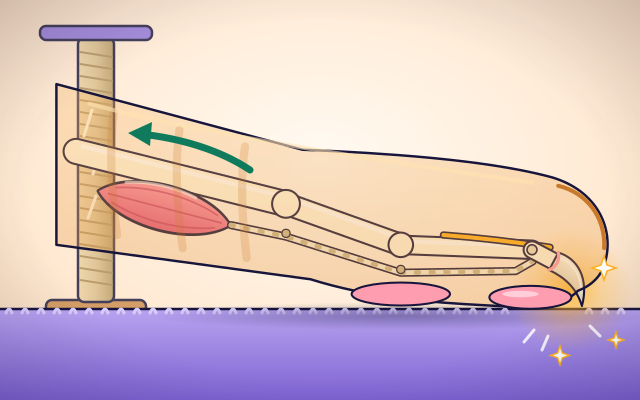
How do cats extend and retract their claws?
Operate the muscles and tendons inside a transparent paw.
#204
Animals
How do cats extend and retract their claws?
Operate the muscles and tendons inside a transparent paw.
Keep exploring
Games to play next
- Deep Sea ExplorationLight the blue, meet ocean wildlife and discover hidden treasures.
- Habitat Builder 3DFind the right home for frogs, camels, polar bears and more.
- Classification ExplorerSort living things by what you can see, then follow and build yes-or-no keys.
Draw it or make it
- How to draw an underwater coral reefDrawing lesson
- How to draw an octopusDrawing lesson
Guide for grown-ups
- How to start homeschooling: a step-by-step guide for familiesA guide for parents · 7 min read
Science games by grade
Science worksheets by grade
- Preschool Science Worksheets
- Pre-K Science Worksheets
- Kindergarten Science Worksheets
- 1st Grade Science Worksheets
- 2nd Grade Science Worksheets
- 3rd Grade Science Worksheets
- 4th Grade Science Worksheets
- 5th Grade Science Worksheets
- 6th Grade Science Worksheets
- 7th Grade Science Worksheets
- 8th Grade Science Worksheets