How does panting help dogs cool down?
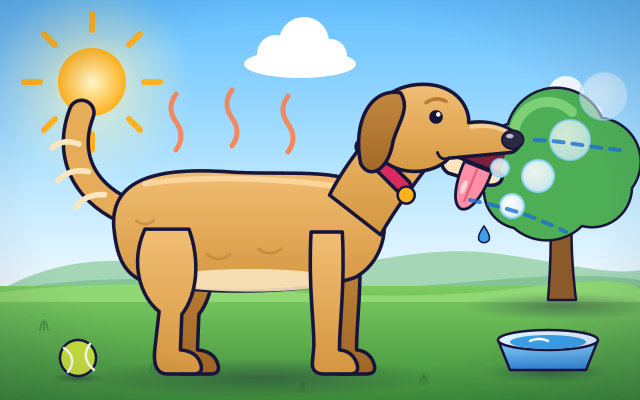
Dogs cannot sweat all over like you. They pant instead: fast breaths dry the wet tongue and carry heat away.
The big idea: Water needs heat to turn into vapor. When a dog pants, water dries from its tongue and nose, takes heat from the blood there, and the cooler blood cools the whole dog.
It's like stepping out of a swimming pool on a breezy day: the water drying off your skin takes heat with it, so you shiver.
The interactive parts didn't load. The explanations below still work; try reloading the page.
Why dogs pant
- After a game of fetch in the sun, the dog is hot. It stops, opens its mouth and breathes very fast with its tongue hanging out. This is panting. Why does it do that?
- When you are hot, you sweat all over, and the sweat cools you as it dries. A dog is covered in fur and has sweat glands only in its paw pads. That is not nearly enough.
- The wet surfaces are inside! Air rushes in through the damp nose and out across the wet tongue, again and again, up to ten times faster than normal breathing.
- Look closely at the tongue. The moving air turns the water on it into vapor. Water needs heat to do that, and it takes the heat from the warm tongue.
- The tongue is full of tiny blood tubes. Warm blood flows in, gives up its heat, and flows back to the body cooler. Bit by bit, the whole dog cools down.
- On a muggy day the air is already full of water, so the tongue dries slowly and panting works badly. That is when a dog most needs shade, fresh water and a rest.
Look inside a panting dog
Tap each part of the dog to see how it helps with cooling. The round window shows the tongue very close up.
- Wet nose. Air rushes in through the nose. Inside, it passes over damp, curly surfaces, and water dries from them, which cools the blood there.
- Tongue. The tongue is big, wet and full of blood. When the dog is hot, the tongue hangs out and even gets wider, so there is more wet surface for the air to dry.
- Windpipe and lungs. Panting breaths are quick and small. Most of the air only goes in and out of the nose, mouth and windpipe, where the cooling happens, not deep into the lungs.
- Wet surface. A thin layer of water covers the tongue. Moving air turns it into vapor, and that change uses up heat from the tongue.
- Blood vessels. Tiny blood tubes run just under the wet surface. Warm blood comes in, loses heat and goes back to the body cooler.
- Paw pads. Dogs do have sweat glands, but only in their paw pads. On a hot day a dog can leave damp paw prints, but this cools it only a tiny bit.
- Fur coat. Fur traps air. It keeps a dog warm in winter and also keeps some of the sun's heat off its skin in summer. But it stops sweat from working, so the dog must pant.
- Body thermostat. A part of the brain works like a thermostat. When it senses the blood is too warm, it switches panting on. When the dog is cool again, it switches panting off.
Dry day or muggy day?
Tap the ball to play fetch and heat the dog up. Change how damp the air is, and watch the vapor leaving the tongue and the thermometer.
Experiment: On which kind of day does panting cool a dog faster?
- Slide the air to dry. Tap the ball, then watch how fast the dog cools.
- Slide the air to muggy. Tap the ball again.
- Compare the vapor from the tongue and the time on the clock.
What we found: Panting works best in dry air. Dry air has plenty of room for more water vapor, so the tongue dries quickly and heat leaves fast. Muggy air is already full of water, so the tongue stays wet and the dog stays hot for much longer.
Turn on JavaScript to try it yourself.
Muggy day cool-down
It is a muggy day and the dog is too hot. Choose shade and moving air, start the clock, and give water when it is needed. Cool the dog before 45 minutes are up.
How panting cools a dog
When you run around, your muscles make heat. Your body gets rid of it by sweating: water comes out of your skin, and as it dries it takes heat away. A dog cannot do that. Its fur gets in the way, and its only sweat glands are in its paw pads.
So a dog uses the wet places it does have: its tongue, its mouth and the inside of its nose. By breathing very fast, it blows lots of air across them. The air turns the water into vapor, and that needs heat. The heat comes out of the blood flowing through the tongue and nose, and the cooler blood then travels around the body.
How well this works depends on the air. Dry air soaks up water quickly, so a dog cools fast. A breeze helps too, because it carries the damp air away. But on a muggy day the air is already full of water. The tongue stays wet, very little dries off, and the dog stays hot.
Panting uses up a lot of water, so a panting dog needs to drink. On hot days dogs need shade, fresh water and rest, and walks are best in the cool of the morning or evening. A dog must never be left in a parked car, because the air inside gets hot very quickly. If a dog pants very hard and seems weak or wobbly, tell a grown-up right away.
Key words
- Panting
- Very fast, small breaths with the mouth open, used for cooling.
- Evaporation
- When liquid water turns into water vapor, a gas in the air.
- Humidity
- How much water vapor is in the air. Muggy air has a lot.
- Latent heat
- The energy a liquid takes in to become a gas without getting hotter.
- Thermostat
- A control that switches cooling or heating on and off to hold a steady temperature.
Check your thinking
-
Why do dogs pant when they are hot?
Show the answer
Water drying from the tongue and nose takes heat away. Turning water into vapor uses heat. The heat comes from the dog's warm blood.
-
Why can't a dog cool itself by sweating like you do?
Show the answer
It has fur, and sweat glands only in its paw pads. Fur covers the skin, and the paw pads are far too small to cool a whole dog.
-
On which day does panting work worst?
Show the answer
A hot, muggy, still day. Muggy air is already full of water, and still air does not carry the damp air away. Very little can dry off the tongue.
-
About how much heat leaves a dog when 3 grams of water evaporate from its tongue?
Show the answer
About 7,200 joules. Each gram absorbs about 2,400 joules, so 3 grams take 3 × 2,400 = 7,200 joules.
-
Why must a panting dog have water to drink?
Show the answer
Panting uses up water, and a dry tongue cannot cool. The cooling comes from water drying off. No water means no cooling.
You're a Animals expert!
You watched, looked inside, tried it, solved the challenge and went deeper. Pick another question below, or switch the age at the top to see this topic another way.
More about animals
 #203
Animals
How do pets learn commands and routines?
Teach a virtual pet actions using clear cues and consistent positive rewards.
#203
Animals
How do pets learn commands and routines?
Teach a virtual pet actions using clear cues and consistent positive rewards.
 #204
Animals
How do cats extend and retract their claws?
Operate the muscles and tendons inside a transparent paw.
#204
Animals
How do cats extend and retract their claws?
Operate the muscles and tendons inside a transparent paw.
 #205
Animals
How does an aquarium stay clean and healthy?
Balance feeding, filtration, oxygen, and helpful bacteria in a virtual aquarium.
#205
Animals
How does an aquarium stay clean and healthy?
Balance feeding, filtration, oxygen, and helpful bacteria in a virtual aquarium.
 #206
Animals
How do dogs communicate without words?
Compare posture, expressions, sounds, and context to explore different signals.
#206
Animals
How do dogs communicate without words?
Compare posture, expressions, sounds, and context to explore different signals.
Keep exploring
Games to play next
- SheepdogGuide the flock together and close the gate on a perfect day.
- Habitat Builder 3DFind the right home for frogs, camels, polar bears and more.
- Classification ExplorerSort living things by what you can see, then follow and build yes-or-no keys.
Draw it or make it
- How to draw a standing dogDrawing lesson
- Dog FaceOrigami
Guide for grown-ups
- How to start homeschooling: a step-by-step guide for familiesA guide for parents · 7 min read
Science games by grade
Science worksheets by grade
- Preschool Science Worksheets
- Pre-K Science Worksheets
- Kindergarten Science Worksheets
- 1st Grade Science Worksheets
- 2nd Grade Science Worksheets
- 3rd Grade Science Worksheets
- 4th Grade Science Worksheets
- 5th Grade Science Worksheets
- 6th Grade Science Worksheets
- 7th Grade Science Worksheets
- 8th Grade Science Worksheets