How do pets learn commands and routines?
Pets do not know our words. They learn by linking a clear signal, an action and a reward that comes right away.
The big idea: An animal repeats what works. If sitting is followed, right away and every time, by something good, the pet learns to sit when it hears the cue.
It's like the hot-and-cold game: every "warmer!" tells you at once that you are on the right track, so you quickly find the prize.
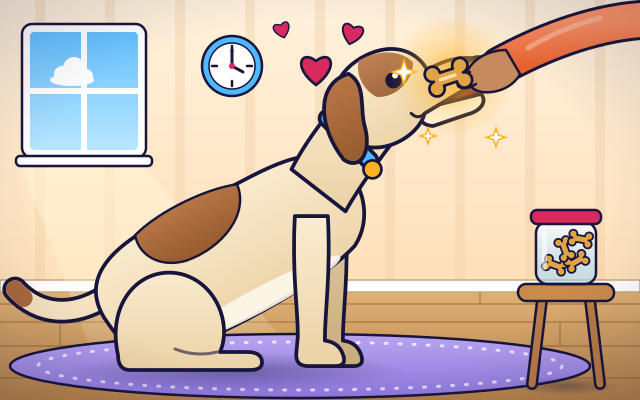
The interactive parts didn't load. The explanations below still work; try reloading the page.
How a puppy learns a cue
- Maya says "Sit!" but Pip the puppy just tilts his head. Pets are not born knowing our words. To Pip, "sit" is only a sound. So how can he learn what it means?
- Maya holds a treat just above Pip's nose and moves it back a little. As his nose follows the treat up, his bottom goes down. He is sitting, without being pushed at all.
- The moment Pip's bottom touches the floor, Maya says "Yes!" and gives him the treat. It has to be quick, within a second or two, so Pip knows the treat was for sitting.
- They practice a few times, in short, fun sessions. Every quick reward makes the link in Pip's brain a little stronger: sitting leads to good things.
- Now Maya says "Sit!" just before Pip sits, the same word every time. Soon the word alone is enough. Pip has learned that this sound means sitting will pay off.
- Pets learn routines the same way. The leash comes out, then a walk follows, every day. Soon Pip waits by the door as soon as he sees the leash. Clear, kind and the same each time: that is how pets learn.
Look inside a training moment
One sit takes only a few seconds, but a lot is going on. Tap each piece of the lesson.
- The cue. The cue is the signal: one short word and one hand sign. It must be the same every time. "Sit" today and "sit down, come on" tomorrow would be two different sounds to a dog.
- The action. The action is what the pet does. Start with something easy for it to get right, and build up harder tricks in small steps.
- The marker. A marker is a quick sound, like "Yes!" or a click, made at the exact moment the pet gets it right. It tells the pet which action earned the treat.
- The reward. The reward is anything the pet really wants: a tiny treat, praise, a cuddle or a game. Small treats are best, so the pet stays keen and does not get full.
- Timing. Timing matters most of all. The reward should come within a second or two. Wait too long, and the pet links the treat to whatever it did last, like standing up again.
- The link in the brain. Each quick reward strengthens a link in the pet's brain between the cue, the action and the good result. With practice the link gets so strong that the pet responds almost at once.
- Routine. Pets notice patterns. The leash means a walk, the food cupboard means dinner. Regular routines help a pet feel safe, because it can tell what will happen next.
Does timing matter?
Tap "Sit!" and reward Pip the moment he sits. Then use the fast practice buttons to compare treats given right away with treats given late.
Experiment: When should the treat come so that the pup learns fastest?
- Press "Right away" to run 5 practice sits. Look at the link bar.
- Press "Start over", then press "5 seconds late".
- Compare how much the link grew each time.
What we found: The treat has to come right away. After five quick rewards the link is strong. After five late rewards it has hardly grown, because by then the pup is doing something else and cannot tell what the treat was for.
Turn on JavaScript to try it yourself.
A new trick: Paw!
Teach Pip "Paw!" He will try different things. Reward only the lifted paw, and do it quickly, before your treats run out.
How pets learn
Animals learn from what happens next. If doing something leads to a good result, they do it more. If it leads to nothing, they do it less. Trainers use this by making sure the action they want is followed by something the pet loves. This is called positive reinforcement.
A lesson has three parts. First comes the cue: a short word or hand sign. Then comes the action, such as sitting. Last comes the reward, which must arrive right away. Many trainers add a marker, a quick "Yes!" or a click, at the exact moment the pet gets it right.
Being the same every time matters as much as being quick. If "sit" sometimes means sit and sometimes nothing happens, or if each person in the family uses a different word, the pet cannot work out the pattern. Short, cheerful practice sessions of a few minutes work best.
Good trainers never shout at or hurt an animal. Punishment does not explain what to do instead. It makes pets scared and less willing to try. If a pet gets it wrong, the answer is to make the task easier, wait, and reward the next good try. This works for dogs, cats, rabbits, parrots and even fish.
Key words
- Cue
- The signal, a word or hand sign, that tells a pet what to do.
- Positive reinforcement
- Giving something good after an action so that it happens more often.
- Marker
- A quick sound, such as "Yes!" or a click, that marks the exact moment the animal gets it right.
- Shaping
- Teaching a hard action by rewarding small steps toward it.
- Routine
- Things that happen in the same order at the same times, so a pet can tell what comes next.
Check your thinking
-
When is the best moment to give the reward?
Show the answer
The moment the pet does the action. A quick reward gets linked to the right action. A late one gets linked to whatever the pet did next.
-
Your dog spins instead of sitting. What is the best thing to do?
Show the answer
Give no treat, wait, and calmly ask again. No reward means the spin fades away by itself. Telling off only scares the dog, and a treat would teach it to spin.
-
Why should the whole family use the same word for "sit"?
Show the answer
One clear cue is much easier to learn than several. A pet learns a pattern. If the sound keeps changing, there is no pattern to find.
-
A dog starts wagging its tail whenever it hears the food cupboard open. Which kind of learning is this?
Show the answer
Classical conditioning. The sound reliably predicts food, so the dog responds to the sound itself, as Pavlov's dogs did.
-
Why do trainers use tiny treats and short lessons?
Show the answer
So the pet stays keen and does not get full or tired. A keen pet learns well. A full or tired pet stops caring about the reward.
You're a Animals expert!
You watched, looked inside, tried it, solved the challenge and went deeper. Pick another question below, or switch the age at the top to see this topic another way.
More about animals
 #204
Animals
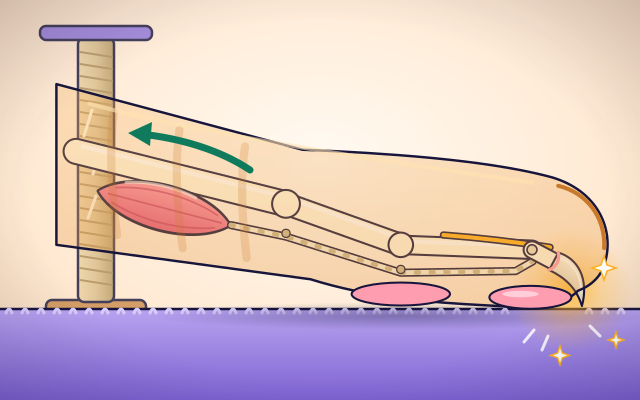
How do cats extend and retract their claws?
Operate the muscles and tendons inside a transparent paw.
#204
Animals
How do cats extend and retract their claws?
Operate the muscles and tendons inside a transparent paw.
 #205
Animals
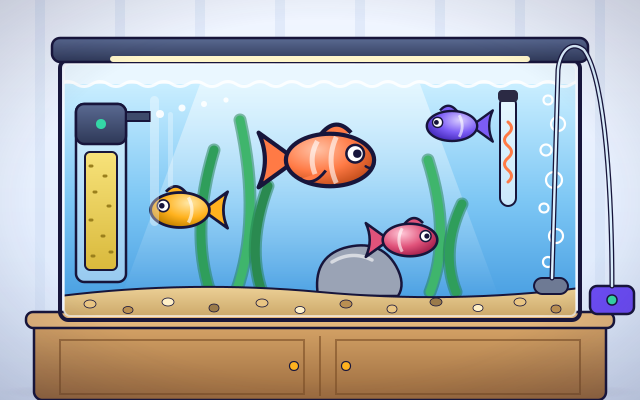
How does an aquarium stay clean and healthy?
Balance feeding, filtration, oxygen, and helpful bacteria in a virtual aquarium.
#205
Animals
How does an aquarium stay clean and healthy?
Balance feeding, filtration, oxygen, and helpful bacteria in a virtual aquarium.
 #206
Animals
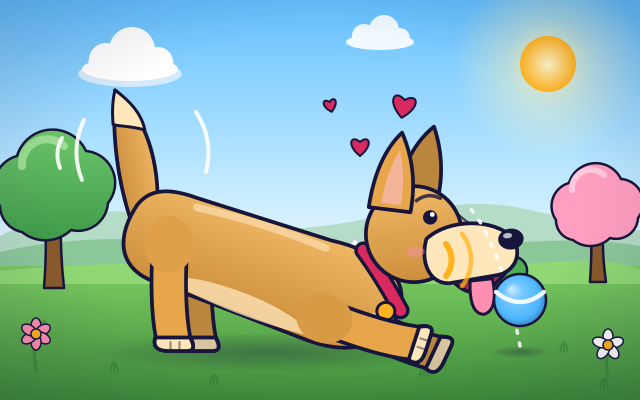
How do dogs communicate without words?
Compare posture, expressions, sounds, and context to explore different signals.
#206
Animals
How do dogs communicate without words?
Compare posture, expressions, sounds, and context to explore different signals.
 #207
Animals
How do mosquitoes develop and find food?
Follow their life cycle and compare how adult females and males obtain food.
#207
Animals
How do mosquitoes develop and find food?
Follow their life cycle and compare how adult females and males obtain food.
Keep exploring
Games to play next
- SheepdogGuide the flock together and close the gate on a perfect day.
- Habitat Builder 3DFind the right home for frogs, camels, polar bears and more.
- Classification ExplorerSort living things by what you can see, then follow and build yes-or-no keys.
Draw it or make it
- How to draw a puppy faceDrawing lesson
- Dog FaceOrigami
Guide for grown-ups
- How to start homeschooling: a step-by-step guide for familiesA guide for parents · 7 min read
Science games by grade
Science worksheets by grade
- Preschool Science Worksheets
- Pre-K Science Worksheets
- Kindergarten Science Worksheets
- 1st Grade Science Worksheets
- 2nd Grade Science Worksheets
- 3rd Grade Science Worksheets
- 4th Grade Science Worksheets
- 5th Grade Science Worksheets
- 6th Grade Science Worksheets
- 7th Grade Science Worksheets
- 8th Grade Science Worksheets