What happens to food after we eat it?
Follow a bite from your mouth to your intestines and see how food is broken into tiny pieces your blood can carry.
The big idea: Teeth, muscles, acid and special helpers called enzymes break food into tiny pieces called nutrients. Nutrients pass through the wall of your small intestine into your blood, which carries them all around your body.
It's like
The interactive parts didn't load. The explanations below still work; try reloading the page.
The journey of a bite
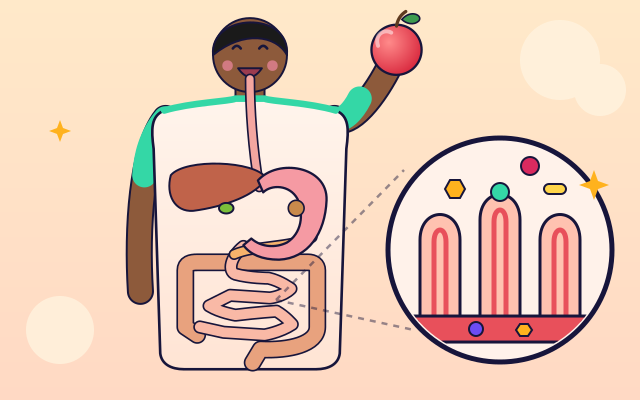
- Digestion starts in your mouth. Your teeth chop and grind the food, and saliva makes it soft and slippery. Saliva even starts breaking down starch.
- When you swallow, the food goes down a tube called the esophagus. Rings of muscle squeeze behind it, pushing it down to your stomach, even if you are upside down!
- Your stomach is a stretchy, muscly bag. It churns the food with strong acid and enzymes for a few hours until it becomes a thick soup called chyme.
- The small intestine is a twisty tube several times longer than you are tall. Juices from the pancreas and bile from the liver help break the food into tiny pieces called nutrients.
- The wall of the small intestine is covered in tiny fingers called villi. Nutrients pass through them into your blood, which carries them to every part of your body.
- Whatever is left moves into the large intestine. It soaks up water, and friendly bacteria live there. The leftovers your body can't use leave when you go to the toilet.
Step by step through the digestive system
Step through each part of the digestive system. The close-up shows what happens to the food there.
- Mouth. Your teeth bite, chop and grind food into small pieces. Your tongue rolls it into a ball, and saliva makes it soft and starts digesting starch.
- Esophagus. The esophagus is a muscly tube from your throat to your stomach. Squeezing waves push the food down in a few seconds.
- Stomach. The stomach churns food with acid and enzymes for a few hours. It turns the food into a thick, soupy mix called chyme.
- Liver and pancreas. The liver makes bile, which breaks fat into tiny drops. The pancreas makes juices full of enzymes. Both flow into the start of the small intestine.
- Small intestine. The small intestine is where most digestion happens. Enzymes cut food into tiny nutrients: sugars, building blocks for growing, and fats.
- Villi. Villi are tiny finger shapes lining the small intestine. Nutrients pass through their thin walls into the blood, which carries them to your whole body.
- Large intestine. The large intestine is wider but shorter. It soaks up water and is home to friendly bacteria. The leftovers leave your body when you go to the toilet.
The nutrient lab
This is a close-up of your small intestine. Pick a food, change the enzymes and chewing, and send a bite. Which pieces can get through the wall into the blood?
Experiment: Which food pieces can pass through the intestine wall into the blood?
- Slide the enzymes to zero and send a bite. Watch what happens.
- Now turn the enzymes up and send another bite.
- Which pieces went into the blood?
What we found: Only tiny pieces can pass through the wall. Enzymes cut big food pieces into tiny nutrients, and those slip through the villi into the blood. Big pieces just slide on by.
Turn on JavaScript to try it yourself.
Enzyme helper
Pick the right cutter for each food chain and tap the chain to cut it. Get 15 nutrients into the blood, and don't let 4 chains slip past!
How your body digests food
Food is made of big pieces that your body can't use straight away. Digestion breaks them down into tiny pieces called nutrients. Some breaking is done by squeezing and grinding: your teeth chew, and your stomach and intestines squish and mix. Some is done by chemicals: acid in your stomach and special helpers called enzymes.
Each enzyme has one job. One kind cuts starchy foods like bread into sugars. Another cuts proteins, from foods like eggs, beans and chicken, into building blocks your body uses to grow. Another cuts fats. Bile from your liver helps by breaking fat into tiny drops, like dish soap breaking up grease.
Most of the action happens in the small intestine. Its wall is covered in millions of tiny fingers called villi. Nutrients slip through the villi into your blood, and your blood carries them to every cell for energy and growth.
The large intestine takes back water. Fiber from fruit and vegetables can't be digested by you, but it keeps things moving and feeds the friendly bacteria living there. The leftovers leave your body when you go to the toilet.
Key words
- Enzyme
- A helper molecule that cuts big food pieces into small ones.
- Nutrient
- A small, useful piece of food that your body can absorb and use for energy, growth or repair.
- Villi
- Tiny finger-like bumps lining the small intestine that absorb nutrients.
- Bile
- A green liquid made by the liver that breaks fat into tiny drops.
- Peristalsis
- Waves of muscle squeezing that push food along the digestive tract.
Check your thinking
-
Where does most digestion and absorption happen?
Show the answer
The small intestine. Enzymes finish the job in the small intestine, and its villi absorb the nutrients.
-
What does the stomach do?
Show the answer
Churns food with acid into a soupy mix. The stomach squeezes and mixes food with acid and enzymes, making chyme.
-
What do the tiny fingers called villi do?
Show the answer
Take nutrients into the blood. Villi have thin walls full of tiny blood vessels, so nutrients pass straight into the blood.
-
Which enzyme breaks down starch into sugars?
Show the answer
Amylase. Amylase in saliva and pancreatic juice breaks starch into sugars. Lipase works on fats; pepsin on proteins.
-
What does the large intestine take back from the leftovers?
Show the answer
Water. The large intestine soaks up water from the leftovers before they leave the body.
You're a Human body expert!
You watched, looked inside, tried it, solved the challenge and went deeper. Pick another question below, or switch the age at the top to see this topic another way.
More about human body
 #87
Human body
How do bones, muscles, and joints help us move?
Activate muscles around a skeleton's joints to bend an arm, walk, or kick. Compare joint types and discover how muscles work together.
#87
Human body
How do bones, muscles, and joints help us move?
Activate muscles around a skeleton's joints to bend an arm, walk, or kick. Compare joint types and discover how muscles work together.
 #88
Human body
How do our eyes see?
Follow light through the pupil and lens to the retina, then trace signals toward the brain. Adjust focus for nearby and distant objects.
#88
Human body
How do our eyes see?
Follow light through the pupil and lens to the retina, then trace signals toward the brain. Adjust focus for nearby and distant objects.
 #89
Human body
How do our ears hear?
Follow sound through the ear canal, eardrum, tiny bones, and inner ear. Compare how different pitches create different patterns of vibration.
#89
Human body
How do our ears hear?
Follow sound through the ear canal, eardrum, tiny bones, and inner ear. Compare how different pitches create different patterns of vibration.
 #90
Human body
How does the brain send messages around the body?
Follow simplified signals through nerves and the spinal cord. Touch a virtual fingertip or choose an action and watch messages travel.
#90
Human body
How does the brain send messages around the body?
Follow simplified signals through nerves and the spinal cord. Touch a virtual fingertip or choose an action and watch messages travel.
Keep exploring
Games to play next
- Body ExplorerTap, match and label your way around the amazing human body.
- Science QuizzesOlly's Science Quiz Show: plants, animals, the body, weather, space and more, for every grade.
- Label LabPut the right labels on beautiful science diagrams, from bean plants to heart chambers.
Guide for grown-ups
- How to start homeschooling: a step-by-step guide for familiesA guide for parents · 7 min read
Science games by grade
Science worksheets by grade
- Preschool Science Worksheets
- Pre-K Science Worksheets
- Kindergarten Science Worksheets
- 1st Grade Science Worksheets
- 2nd Grade Science Worksheets
- 3rd Grade Science Worksheets
- 4th Grade Science Worksheets
- 5th Grade Science Worksheets
- 6th Grade Science Worksheets
- 7th Grade Science Worksheets
- 8th Grade Science Worksheets