How do our ears hear?
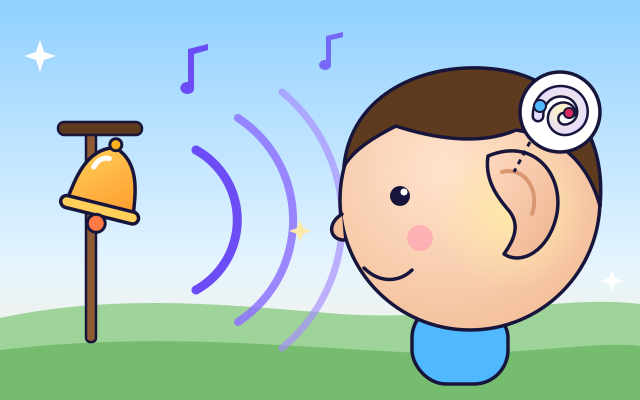
Follow a sound from the air into your ear: a drum, three tiny bones and a snail full of fluid turn wiggles into messages for your brain.
The big idea: Sound is air that vibrates. Your eardrum and three tiny bones pass the vibration to your cochlea, where tiny hair cells turn it into messages for your brain. High and low sounds shake different places in the cochlea.
It's like
The interactive parts didn't load. The explanations below still work; try reloading the page.
The journey of a sound
- When a bell rings, it shakes back and forth. It pushes and pulls the air around it, and those wiggles spread out in every direction. That is sound!
- The curvy outer ear catches sound like a funnel and sends it down the ear canal, a short tunnel into your head.
- At the end of the ear canal is the eardrum, a thin skin stretched tight like a drum. Sound makes it vibrate back and forth.
- Three tiny bones called the hammer, the anvil and the stirrup pass the vibration along. The stirrup is the smallest bone in your whole body!
- The stirrup pushes on the cochlea, a snail shell full of fluid. A wave runs along a ribbon inside it. High sounds shake it near the start, and low sounds shake it near the tip.
- Hair cells in the cochlea bend and send electrical messages along the hearing nerve to your brain. Your brain puts it all together: that's a bell!
Inside the ear
Tap each part of the ear. Watch it move when you find it!
- Outer ear. The outer ear, or pinna, is made of bendy cartilage. Its curves catch sound and steer it into the ear canal.
- Ear canal. The ear canal is a short tunnel that carries sound to the eardrum. It makes earwax, which traps dust and keeps the canal clean.
- Eardrum. The eardrum is a very thin skin stretched across the end of the ear canal. It vibrates when sound waves hit it, fast for high sounds and slower for low sounds.
- Three tiny bones. The hammer, anvil and stirrup are the three smallest bones in your body. They pass the eardrum's vibration to the inner ear and make it stronger.
- Cochlea. The cochlea is shaped like a snail shell and filled with fluid. Inside it, a long ribbon vibrates in different places for different pitches: high sounds near the start, low sounds near the tip.
- Hair cells. Thousands of hair cells sit on the ribbon in the cochlea. When the ribbon shakes, their tiny hairs bend, and they send a message to the nerve.
- Hearing nerve. The hearing nerve (auditory nerve) carries the messages from the hair cells to your brain, where they become the sounds you hear.
- Balance loops. Next to the cochlea are three loops filled with fluid. They aren't for hearing: they sense when your head turns, which helps you balance. Spin around and the fluid keeps swirling, which is why you feel dizzy!
- Ear-to-throat tube. The Eustachian tube connects the middle ear to the back of your throat. When you yawn or swallow, it opens and lets air in or out, so the pressure on both sides of your eardrum stays the same. Pop!
Pitch explorer: where does each sound go?
Slide the pitch from low to high. Watch the waves, the eardrum and the unrolled cochlea. Press Play sound to hear a gentle tone.
Experiment: Where in the cochlea do high-pitched sounds make the biggest wiggle?
- Slide the pitch all the way to low. Where does the ribbon wiggle most?
- Now slide it all the way to high. Where is the wiggle now?
- Watch the waves too: are they close together or far apart?
What we found: High sounds make the ribbon wiggle most near the start of the cochlea, where it is narrow and stiff. Low sounds travel all the way to the tip, where it is wide and floppy. High sounds also have waves packed close together; low sounds have waves spread far apart.
Turn on JavaScript to try it yourself.
Sound sorter
Each sound shakes one part of the cochlea's ribbon the most. Tap the right part for 5 sounds.
How your ear hears
Every sound starts with something vibrating: a guitar string, a drum or the vocal cords in your throat. The vibration pushes and pulls on the air, making waves of squeezed and stretched air that spread out. When those waves reach you, your outer ear catches them and sends them down the ear canal.
At the end of the canal, the waves make your eardrum vibrate. Three tiny bones, the hammer, the anvil and the stirrup, pass the vibration along and make it stronger. The stirrup pushes on a little window into the cochlea, a snail-shaped tube filled with fluid.
Inside the cochlea is a long ribbon covered with hair cells. The ribbon is narrow and stiff at the start and wide and floppy at the tip. High sounds shake the start the most, and low sounds shake the tip. The hair cells that bend send messages along the hearing nerve, and your brain works out what the sound is.
Pitch is how many vibrations happen each second. A high whistle vibrates thousands of times a second, while a low drum might vibrate less than a hundred times. Very loud sounds can hurt your hair cells, and they don't grow back, so protect your ears from loud noise.
Key words
- Pitch
- How high or low a sound is. It depends on how fast the vibration is.
- Frequency
- The number of vibrations per second, measured in hertz (Hz).
- Eardrum
- A thin skin at the end of the ear canal that vibrates when sound hits it.
- Cochlea
- The snail-shaped, fluid-filled part of the inner ear that turns vibrations into nerve messages.
- Hair cells
- Tiny cells with hairs on top that bend when the cochlea vibrates and send messages to the brain.
- Decibel
- A unit for how loud a sound is.
Check your thinking
-
What has to happen to make a sound?
Show the answer
Something vibrates. Every sound starts with a vibration that shakes the air.
-
Which part of the ear vibrates first when sound arrives?
Show the answer
The eardrum. The eardrum vibrates first, then passes the vibration to the three tiny bones.
-
Where in the cochlea do high sounds make the biggest wiggle?
Show the answer
Near the start (the base). The start of the ribbon is narrow and stiff, so it shakes best for fast, high vibrations.
-
A big drum makes a low sound. What does that tell you about its vibration?
Show the answer
It vibrates slowly. Low sounds come from slow vibrations, with fewer wiggles each second.
-
Why should you protect your ears from very loud sounds?
Show the answer
Loud sounds can damage hair cells, and they don't grow back. Hair cells bent too hard can be damaged for good, so cover your ears near very loud noises.
-
Why do you feel dizzy after spinning around?
Show the answer
Fluid in the balance loops keeps swirling after you stop. The fluid keeps moving for a moment, so your brain thinks you are still spinning.
You're a Human body expert!
You watched, looked inside, tried it, solved the challenge and went deeper. Pick another question below, or switch the age at the top to see this topic another way.
More about human body
 #90
Human body
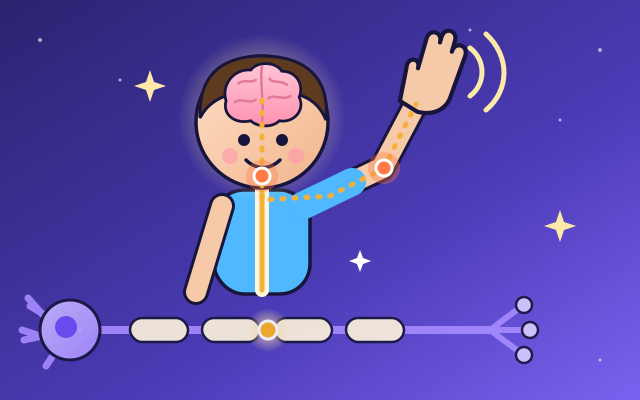
How does the brain send messages around the body?
Follow simplified signals through nerves and the spinal cord. Touch a virtual fingertip or choose an action and watch messages travel.
#90
Human body
How does the brain send messages around the body?
Follow simplified signals through nerves and the spinal cord. Touch a virtual fingertip or choose an action and watch messages travel.
 #91
Human body
How does the immune system protect us?
Explore protective barriers and different immune cells. Follow a simplified response to an invading microbe and learn how the body coordinates its defenses.
#91
Human body
How does the immune system protect us?
Explore protective barriers and different immune cells. Follow a simplified response to an invading microbe and learn how the body coordinates its defenses.
 #92
Human body
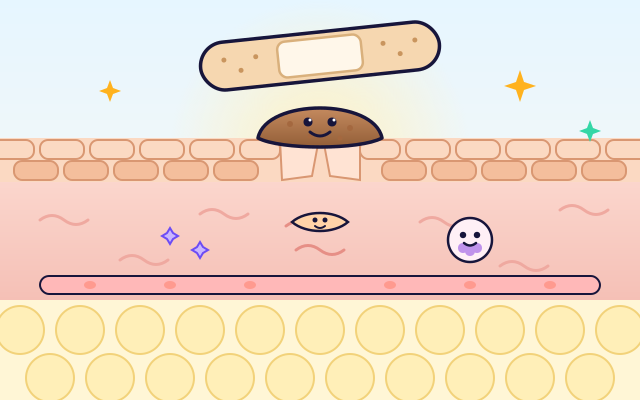
How does a small cut heal?
Use a non-graphic time slider to watch clotting, cleanup, new tissue growth, and repair. Arrange the healing stages in the correct sequence.
#92
Human body
How does a small cut heal?
Use a non-graphic time slider to watch clotting, cleanup, new tissue growth, and repair. Arrange the healing stages in the correct sequence.
 #251
Human body
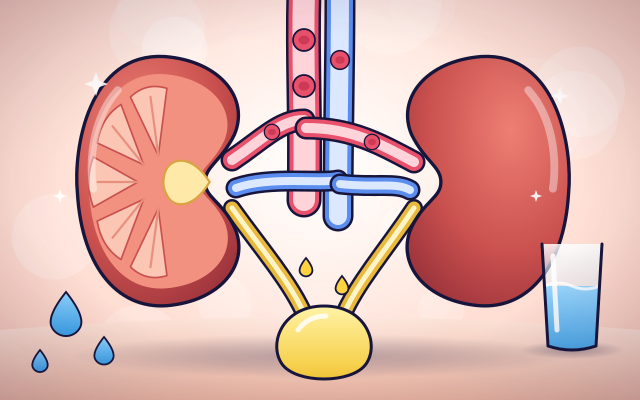
How do kidneys filter blood?
Follow a simplified kidney filter and sort substances retained or removed in urine.
#251
Human body
How do kidneys filter blood?
Follow a simplified kidney filter and sort substances retained or removed in urine.
Keep exploring
Games to play next
- Body ExplorerTap, match and label your way around the amazing human body.
- Label LabPut the right labels on beautiful science diagrams, from bean plants to heart chambers.
- Science QuizzesOlly's Science Quiz Show: plants, animals, the body, weather, space and more, for every grade.
Guide for grown-ups
- How to start homeschooling: a step-by-step guide for familiesA guide for parents · 7 min read
Science games by grade
Science worksheets by grade
- Preschool Science Worksheets
- Pre-K Science Worksheets
- Kindergarten Science Worksheets
- 1st Grade Science Worksheets
- 2nd Grade Science Worksheets
- 3rd Grade Science Worksheets
- 4th Grade Science Worksheets
- 5th Grade Science Worksheets
- 6th Grade Science Worksheets
- 7th Grade Science Worksheets
- 8th Grade Science Worksheets