How do our eyes see?
Light travels through your pupil and lens to the back of your eye, and your brain turns it into the world you see.
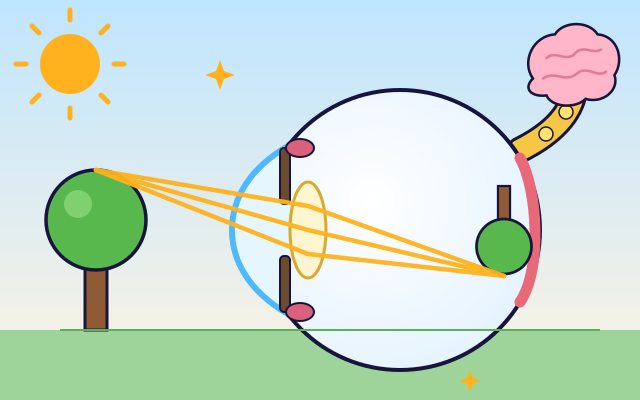
The big idea: Light bounces off things and into your eyes through the pupil. The lens bends the light to make a sharp picture on the retina at the back of the eye. The picture is upside down! Your brain flips it the right way.
It's like
The interactive parts didn't load. The explanations below still work; try reloading the page.
The journey of light into your eye
- You can only see things when light bounces off them and travels into your eyes. In the dark there is no light to bounce, so you can't see.
- Light enters through the pupil, the black hole in the middle of your eye. The colored iris around it is a muscle that makes the pupil smaller in bright light and bigger in dim light.
- The clear front of the eye, the cornea, and the lens behind the pupil bend the light. They bring it together into a sharp picture on the retina at the back of the eye.
- Light from the top of the tree crosses over and lands at the bottom of the retina, and light from the bottom lands at the top. So the picture in your eye is upside down!
- The retina is covered in light-sensing cells called rods and cones. They send messages along the optic nerve to your brain, which flips the picture and works out what you are seeing.
- To see something close, tiny muscles let your lens get fatter and rounder, which bends light more. For faraway things, the lens is pulled thinner. This is called focusing.
Inside your eye
Tap each part of the eye. Follow the light from the front to the back, then to the brain.
- Cornea. The cornea is the clear, curved window at the front of your eye. It does most of the light bending.
- Iris. The iris is the colored ring. It is a muscle that makes the pupil bigger or smaller to let in the right amount of light.
- Pupil. The pupil is a hole in the middle of the iris. It looks black because the light that goes in doesn't come back out.
- Lens. The lens is clear and bendy. It changes shape to focus: fatter for things close by, thinner for things far away.
- Focusing muscles. A ring of tiny muscles around the lens, the ciliary muscles, changes its shape so you can focus near and far.
- Clear jelly. Most of your eyeball is filled with a clear jelly that keeps it round and lets light pass through to the back.
- Retina. The retina lines the back of your eye. The picture lands here, upside down, and millions of light-sensing cells catch it.
- Rods and cones. Rods help you see in dim light. Cones help you see colors and tiny details. There are three kinds of cones: for red, green and blue light.
- Optic nerve. The optic nerve is like a cable. It carries signals from the retina to your brain, which turns them into the picture you see.
Focus near and far
Move the object near and far, then change the lens to focus the light on the retina. Watch the upside-down picture, and the signals racing to the brain when it's sharp.
Experiment: To see something close up clearly, what does your lens do?
- Put the object far away and focus until the picture is sharp.
- Bring the object close. Is it still sharp?
- Change the lens until it is sharp again. Did the lens get fatter or thinner?
What we found: Closer things need more bending, so the lens gets fatter and rounder. For faraway things the lens gets thinner. The picture on the retina is always upside down, and your brain flips it.
Turn on JavaScript to try it yourself.
Focus quest
Things keep appearing near and far. Focus on each one until it's sharp and hold it. Focus all five before the time runs out!
How we see
You see things because light bounces off them and travels into your eyes. Light comes in through the cornea, the clear front window, and then through the pupil, the dark hole in the middle of your colored iris. In bright light the iris makes the pupil small, and in the dark it opens wide to let in more light.
Behind the pupil is the lens. Together with the cornea, it bends the light so that it makes a sharp picture on the retina at the back of your eye. To look at something close, tiny muscles let the lens get fatter. To look far away, the lens is pulled thinner.
The picture on the retina is upside down, because the light rays cross as they go through the lens. The retina has millions of cells called rods and cones that turn light into signals. Those signals travel along the optic nerve to your brain, which flips the picture and tells you what you're looking at.
Some people's eyes are a little too long or too short, so pictures land slightly in front of or behind the retina and look blurry. Glasses or contact lenses add a little extra bending in just the right way to fix it.
Key words
- Pupil
- The hole in the middle of the iris that lets light into the eye.
- Lens
- A clear, bendy part of the eye that focuses light.
- Retina
- The light-sensitive layer at the back of the eye where the image forms.
- Refraction
- The bending of light as it passes from one material into another.
- Accommodation
- When your lens changes shape to focus on near or far things.
- Optic nerve
- The nerve that carries signals from the retina to the brain.
Check your thinking
-
Which part of the eye lets light in?
Show the answer
The pupil. Light goes in through the pupil, the hole in the middle of the iris.
-
Which way up is the picture on your retina?
Show the answer
Upside down. The light rays cross in the eye, so the picture is upside down. Your brain flips it.
-
What does your lens do when you look at something close?
Show the answer
Gets fatter and rounder. A fatter lens bends light more, which close things need.
-
An object is 0.25 m away. About how much extra focusing power must the eye add, compared with a very distant object?
Show the answer
4 diopters. Extra power ≈ 1 ÷ distance = 1 ÷ 0.25 m = 4 diopters.
-
Which cells help you see colors?
Show the answer
Cones. Cones detect color and detail; rods work best in dim light.
You're a Human body expert!
You watched, looked inside, tried it, solved the challenge and went deeper. Pick another question below, or switch the age at the top to see this topic another way.
More about human body
 #89
Human body
How do our ears hear?
Follow sound through the ear canal, eardrum, tiny bones, and inner ear. Compare how different pitches create different patterns of vibration.
#89
Human body
How do our ears hear?
Follow sound through the ear canal, eardrum, tiny bones, and inner ear. Compare how different pitches create different patterns of vibration.
 #90
Human body
How does the brain send messages around the body?
Follow simplified signals through nerves and the spinal cord. Touch a virtual fingertip or choose an action and watch messages travel.
#90
Human body
How does the brain send messages around the body?
Follow simplified signals through nerves and the spinal cord. Touch a virtual fingertip or choose an action and watch messages travel.
 #91
Human body
How does the immune system protect us?
Explore protective barriers and different immune cells. Follow a simplified response to an invading microbe and learn how the body coordinates its defenses.
#91
Human body
How does the immune system protect us?
Explore protective barriers and different immune cells. Follow a simplified response to an invading microbe and learn how the body coordinates its defenses.
 #92
Human body
How does a small cut heal?
Use a non-graphic time slider to watch clotting, cleanup, new tissue growth, and repair. Arrange the healing stages in the correct sequence.
#92
Human body
How does a small cut heal?
Use a non-graphic time slider to watch clotting, cleanup, new tissue growth, and repair. Arrange the healing stages in the correct sequence.
Keep exploring
Games to play next
- Body ExplorerTap, match and label your way around the amazing human body.
- Label LabPut the right labels on beautiful science diagrams, from bean plants to heart chambers.
- Science QuizzesOlly's Science Quiz Show: plants, animals, the body, weather, space and more, for every grade.
Draw it or make it
- How to draw a realistic eyeDrawing lesson
Guide for grown-ups
- How to start homeschooling: a step-by-step guide for familiesA guide for parents · 7 min read
Science games by grade
Science worksheets by grade
- Preschool Science Worksheets
- Pre-K Science Worksheets
- Kindergarten Science Worksheets
- 1st Grade Science Worksheets
- 2nd Grade Science Worksheets
- 3rd Grade Science Worksheets
- 4th Grade Science Worksheets
- 5th Grade Science Worksheets
- 6th Grade Science Worksheets
- 7th Grade Science Worksheets
- 8th Grade Science Worksheets