How do door closers shut doors gently?
The box on top of a door hides a spring that shuts the door and oil that slows it down, so it closes with a click, not a bang.
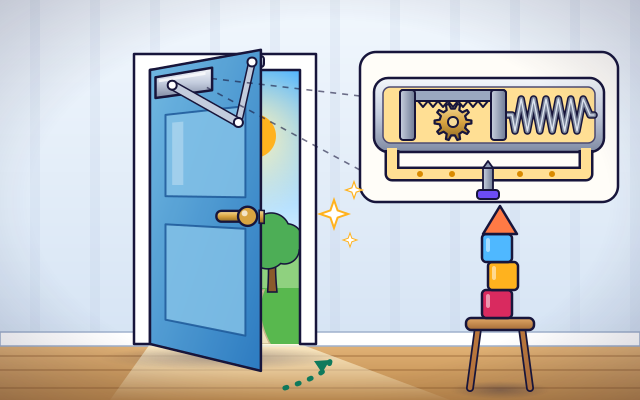
The big idea: Opening the door squeezes a spring. The spring pushes the door shut again, but oil has to squeeze through a tiny hole first, and that slows the door down.
It's like pushing the plunger of a syringe full of water: the smaller the hole, the slower the plunger moves, however hard you push.
The interactive parts didn't load. The explanations below still work; try reloading the page.
The box that tames a door
- A gust of wind swings the door shut with a bang, and Zoe's block tower tumbles. A slamming door is noisy and can hurt fingers. How can a door shut itself gently?
- At the top of the door is a metal box called a door closer. A folding arm joins it to the door frame. When Zoe opens the door, the arm turns a shaft inside the box.
- Let's look inside. The turning shaft has gear teeth that slide a piston along. The piston squashes a strong spring. The squashed spring now holds energy, ready to push back.
- Let go, and the spring pushes the piston back to close the door. But the box is full of oil. The oil has to squeeze through a tiny hole to get out of the piston's way, so the door closes slowly.
- A screw sets the size of the hole. Screw it in and the hole gets smaller, so the oil flows slowly and the door closes slowly. Screw it out and the door speeds up.
- With the screw set just right, the door glides shut and the latch clicks. The spring did the closing, and the oil made it gentle. The block tower does not even wobble.
Look inside a door closer
The picture on the right shows the box cut open. Tap each part.
- Arm. The folding arm joins the closer to the door frame. When the door swings, the arm turns the shaft in the box.
- Gear and rack. The shaft carries a round gear called a pinion. Its teeth fit into a row of teeth, the rack, on the piston. Turning the gear slides the piston.
- Piston. The piston is a metal block that slides inside the box. It squashes the spring when the door opens, and it pushes the oil when the door closes.
- Spring. The strong coil spring is the closer's engine. You squash it when you open the door. It pushes back to shut the door.
- Oil. The box is filled with oil. When the piston moves, the oil must flow out of its way. Because oil is thick and the hole is tiny, it can only move slowly.
- Valve screw. The valve screw sets how big the oil hole is. A small turn changes the closing speed a lot.
- Closer body. The body is a strong metal box, sealed tight so the oil cannot leak out.
- Door latch. The latch is the springy bolt in the edge of the door. The door must arrive with a little speed to push the latch in so it can click into the frame.
Tune the door closer
Drag the door open and let go, or press the button. Change the spring and the valve screw. Can you make it slam? Can you make it close gently?
Experiment: You make the oil hole bigger by unscrewing the valve. What happens to the door?
- Set the valve to a small opening and press Open and let go.
- Now set the valve to its biggest opening and try again.
- Watch the speed dial and the block tower each time.
What we found: A bigger hole lets the oil escape easily, so the spring can push the door shut quickly, and with a big enough hole it slams. A small hole makes the oil squeeze through slowly, so the door glides shut.
Turn on JavaScript to try it yourself.
Gentle, but not too slow
Set the spring and the valve so the door clicks shut in 3 to 6 seconds without slamming.
A spring to close, oil to slow
Some doors need to shut by themselves: to keep heat in, to keep a building safe if there is a fire, or just to stop a draft. A spring alone could do that, but a spring pushes hardest when the door is wide open and would whip the door shut with a bang. A door closer adds something to slow it down.
When you push the door open, an arm turns a gear inside the closer. The gear slides a piston, and the piston squashes a spring. Your push is now stored in the squashed spring. When you let go, the spring pushes the piston back, and the door starts to close.
But the closer is full of oil. To move, the piston has to push oil out of its way, through a very small hole. Oil is thick and cannot rush through a small hole. If the spring pushes harder, the oil pushes back harder too. So the door moves at a slow, steady speed instead of getting faster and faster.
A screw changes the size of the hole. A bigger hole means a faster door, and a smaller hole means a slower one. The best setting is slow enough to be gentle, but fast enough at the very end to push the latch in with a click. Our bath toy comparison breaks down in one way: water in a bath can go anywhere, but the closer's oil is trapped and has only one tiny way out.
Key words
- Spring
- A coil of metal that pushes back when you squash it. It stores the energy of your push.
- Piston
- A block that slides inside a tube and pushes on a spring or a fluid.
- Damper
- Something that slows a movement down, usually by pushing a thick liquid through a small hole.
- Valve
- A part that makes an opening bigger or smaller to control how fast a fluid flows.
- Torque
- A turning push, like the push that swings a door on its hinges.
Check your thinking
-
What pushes the door shut after you let go?
Show the answer
The squashed spring. Opening the door squashes the spring, and the spring pushes back.
-
Why does the door close slowly instead of slamming?
Show the answer
Oil has to squeeze through a tiny hole. The piston cannot move until the oil gets out of its way, and the small hole lets it out only slowly.
-
A door closes too fast and slams. What should the grown-up do to the valve screw?
Show the answer
Make the oil hole smaller. A smaller hole slows the oil, and that slows the door.
-
The door glides nearly shut but stops just before it clicks. What does it need?
Show the answer
A bit more push at the end: more spring or a slightly bigger hole. The latch needs a little speed to push in. More spring or less slowing gives it that.
-
Where does the spring's stored energy end up after a gentle close?
Show the answer
As heat in the oil. Forcing oil through the valve turns the energy into a small amount of heat, bit by bit, instead of one loud impact.
You're a Buildings & city systems expert!
You watched, looked inside, tried it, solved the challenge and went deeper. Pick another question below, or switch the age at the top to see this topic another way.
More about buildings & city systems
 #198
Buildings & city systems
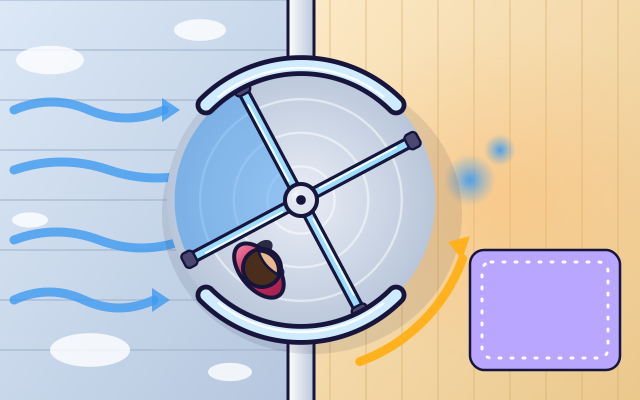
How do revolving doors help control airflow?
Compare air movement through rotating compartments with an ordinary open doorway.
#198
Buildings & city systems
How do revolving doors help control airflow?
Compare air movement through rotating compartments with an ordinary open doorway.
 #199
Buildings & city systems
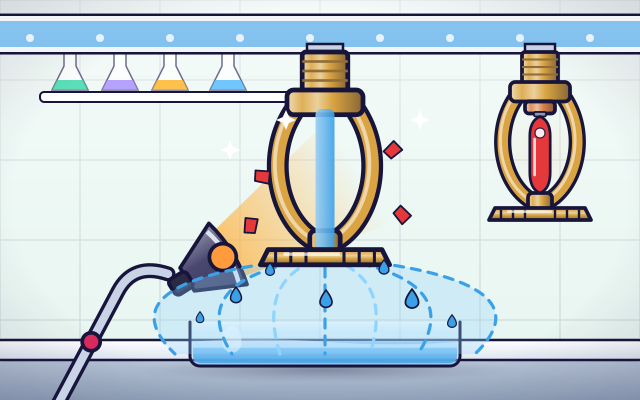
How do automatic fire sprinklers release water?
Warm a model sprinkler's heat-sensitive element and watch that individual sprinkler open.
#199
Buildings & city systems
How do automatic fire sprinklers release water?
Warm a model sprinkler's heat-sensitive element and watch that individual sprinkler open.
 #351
Buildings & city systems
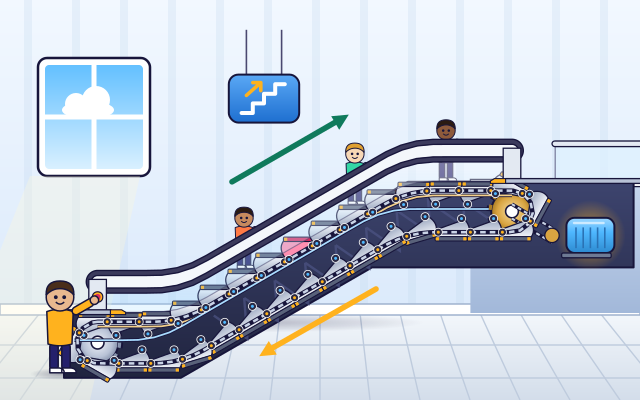
How do escalators move their steps?
Look beneath the surface and follow linked steps circulating around the mechanism.
#351
Buildings & city systems
How do escalators move their steps?
Look beneath the surface and follow linked steps circulating around the mechanism.
 #352
Buildings & city systems
How does airport luggage reach the correct plane?
Scan baggage tags and guide bags through conveyors, sorting points, and loading areas.
#352
Buildings & city systems
How does airport luggage reach the correct plane?
Scan baggage tags and guide bags through conveyors, sorting points, and loading areas.
Keep exploring
Games to play next
- Bridge LabBuild a bridge from beams, brace it with triangles, and stay on budget.
- Area ArchitectDesign rooms that hit the area and perimeter on the blueprint.
- Route PlannerFind the shortest way around town, dodge closed roads, and measure trips with a scale bar.
Guide for grown-ups
- How to start homeschooling: a step-by-step guide for familiesA guide for parents · 7 min read
Science games by grade
Science worksheets by grade
- Preschool Science Worksheets
- Pre-K Science Worksheets
- Kindergarten Science Worksheets
- 1st Grade Science Worksheets
- 2nd Grade Science Worksheets
- 3rd Grade Science Worksheets
- 4th Grade Science Worksheets
- 5th Grade Science Worksheets
- 6th Grade Science Worksheets
- 7th Grade Science Worksheets
- 8th Grade Science Worksheets