How do automatic fire sprinklers release water?
Each sprinkler is a tap held shut by a small glass bulb. Heat breaks the bulb, and only that sprinkler opens.
The big idea: A sprinkler pipe is always full of water. A small glass bulb filled with liquid holds each sprinkler shut. When the air around one bulb gets very hot, the liquid swells and breaks the glass, and that sprinkler alone sprays water.
It's like a garden hose with your thumb over the end: the water is already pushing, and it sprays the moment your thumb lets go.
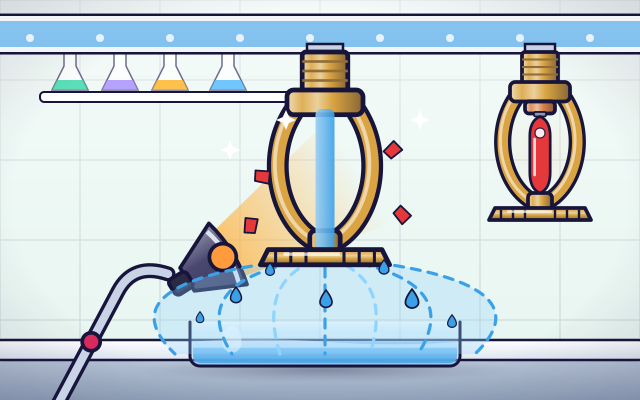
The interactive parts didn't load. The explanations below still work; try reloading the page.
How one sprinkler opens
- Look up in a school, a shop or a library and you may see sprinklers on the ceiling. They wait quietly for years. The pipe behind them is always full of water.
- This is a model sprinkler in a test lab. A small plug blocks the water. A glass bulb, no bigger than a bean, holds that plug in place.
- A heat lamp warms the air around the bulb. The liquid inside swells as it heats. Watch the bubble shrink. The liquid is running out of room!
- At about 68 degrees Celsius, the glass cannot hold any more. Pop! The bulb shatters. With nothing to hold it, the plug is pushed out by the water.
- Water shoots down onto a metal plate with teeth, called the deflector. It breaks the stream into a wide umbrella of drops that soaks everything below.
- Only the sprinkler that got hot has opened. The others are still cool, so they stay shut and dry. Firefighters turn the water off at a valve when it is safe.
Look inside a sprinkler head
Tap each part of the sprinkler. Watch what it does when you find it.
- Water pipe. The pipe above the ceiling is always full of water, pushing down on every sprinkler. No pump has to start and nobody has to turn a tap.
- Frame. The frame is the metal body. It screws into the pipe, and its two arms reach down to hold the bulb and the deflector.
- Plug. The plug is a small metal cap with a seal. It blocks the hole where the water wants to come out, like a cork in a bottle.
- Glass bulb. The glass bulb is strong enough to hold the plug for many years. But it is made to shatter when it reaches one exact temperature.
- Liquid and bubble. The bulb is filled with liquid, with one small bubble of air. Heat makes the liquid swell. When the bubble is squeezed away, the glass breaks.
- Deflector. The deflector is a metal plate with teeth, like a flower. Water hits it and splashes out sideways into a wide circle of drops.
Which sprinklers open?
This is a test bench with model sprinklers. Move the heat lamp under one and switch it on. Which sprinklers open?
Experiment: If you warm only the middle sprinkler, which ones will open?
- Put the lamp under the middle sprinkler.
- Switch the lamp on and watch the bubble in the bulb.
- When the water sprays, look at the other two sprinklers.
What we found: Only the sprinkler under the lamp opened. Its bulb got hot enough to break, so its plug dropped out. The other bulbs stayed cool, so those sprinklers stayed shut and dry.
Turn on JavaScript to try it yourself.
Sprinkler test day
Pick a bulb for each place. No bulb may pop on a normal hot day, but each must open quickly in the heat test.
How a sprinkler knows when to open
A fire sprinkler is one of the simplest safety machines ever made. It has no battery, no wires and no computer. Each sprinkler head is a tap that is held shut by a small glass bulb. The pipe behind it is already full of water, pushing to get out.
The bulb is filled with a colored liquid and one tiny bubble. Almost everything grows a little when it gets hot, and this liquid grows a lot. As the air around the bulb heats up, the liquid swells and squeezes the bubble away. Then there is no room left. At a chosen temperature, often 68 degrees Celsius, the glass shatters.
With the bulb gone, nothing holds the plug. The water pushes it out, hits the deflector and spreads into a wide spray. Our picture of a thumb over a hose is a good one, but a sprinkler is different in one way: it cannot close again. It keeps spraying until someone turns off a valve.
Here is something many people get wrong. In films, every sprinkler in a building goes off at once. Real sprinklers do not work like that. Each one opens only when its own bulb gets hot, so water goes only where it is needed. Smoke from burnt toast does not set them off either. Sprinklers are there to keep people safe, so never touch one or hang anything from it.
Key words
- Sprinkler head
- The part on the ceiling that opens and sprays water when it gets hot.
- Glass bulb
- The small liquid-filled bulb that holds a sprinkler shut and breaks when it gets hot.
- Thermal expansion
- The way things grow a little bigger when they get hotter.
- Deflector
- The toothed metal plate that breaks the water into a wide spray.
- Rated temperature
- The temperature at which a sprinkler's bulb is made to break, shown by the color of its liquid.
- Pressure
- How hard the water pushes on the inside of the pipe and on the plug.
Check your thinking
-
What keeps a sprinkler shut for years?
Show the answer
A small glass bulb holding a plug in place. The bulb props the plug in the outlet until heat breaks the glass.
-
Why does the glass bulb break when it gets hot?
Show the answer
The liquid inside swells until there is no room left. Heat makes the liquid expand. Once the bubble is squeezed away, the liquid breaks the glass.
-
One sprinkler gets hot. What do the others do?
Show the answer
They stay shut, because their bulbs are still cool. Each sprinkler opens only when its own bulb breaks, so cool ones stay shut.
-
What does the deflector do?
Show the answer
It spreads the water into a wide spray. Water hits the toothed plate and splashes outward like an umbrella.
-
A sprinkler is needed just under a glass roof where the air can reach 60 degrees Celsius on a sunny day. Which bulb is the best choice?
Show the answer
68 degrees: above the normal maximum, and no higher than needed. A 57 degree bulb would break on an ordinary sunny day. A 141 degree bulb would be far too slow. The lowest rating above the normal maximum gives a fast response without false openings.
You're a Buildings & city systems expert!
You watched, looked inside, tried it, solved the challenge and went deeper. Pick another question below, or switch the age at the top to see this topic another way.
More about buildings & city systems
 #351
Buildings & city systems
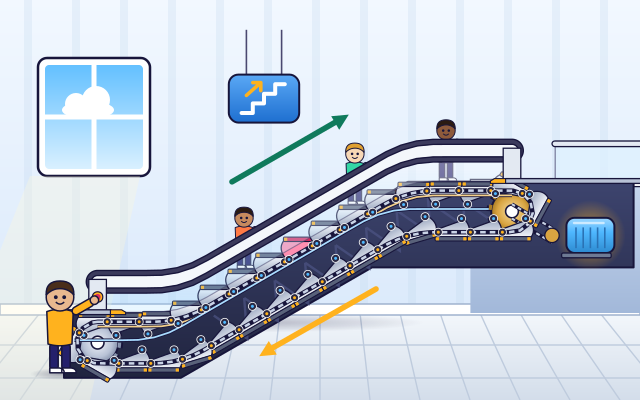
How do escalators move their steps?
Look beneath the surface and follow linked steps circulating around the mechanism.
#351
Buildings & city systems
How do escalators move their steps?
Look beneath the surface and follow linked steps circulating around the mechanism.
 #352
Buildings & city systems
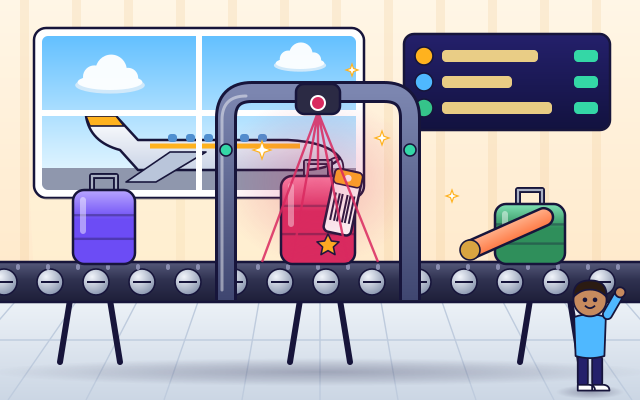
How does airport luggage reach the correct plane?
Scan baggage tags and guide bags through conveyors, sorting points, and loading areas.
#352
Buildings & city systems
How does airport luggage reach the correct plane?
Scan baggage tags and guide bags through conveyors, sorting points, and loading areas.
 #353
Buildings & city systems
How do shipping ports move containers?
Transfer containers between ships, storage yards, trains, and trucks.
#353
Buildings & city systems
How do shipping ports move containers?
Transfer containers between ships, storage yards, trains, and trucks.
 #354
Buildings & city systems
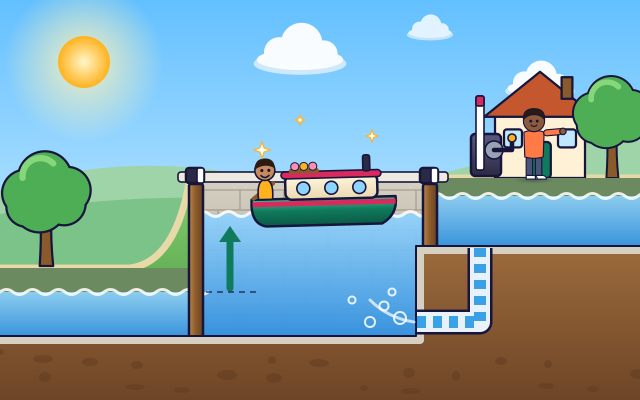
How do canal locks raise and lower boats?
Operate gates and change chamber water levels to move boats between elevations.
#354
Buildings & city systems
How do canal locks raise and lower boats?
Operate gates and change chamber water levels to move boats between elevations.
Keep exploring
Games to play next
- River MysterySomething changed the river. Sample sites with a limited budget, follow the evidence and find where the change begins.
- Bridge LabBuild a bridge from beams, brace it with triangles, and stay on budget.
- Area ArchitectDesign rooms that hit the area and perimeter on the blueprint.
Guide for grown-ups
- How to start homeschooling: a step-by-step guide for familiesA guide for parents · 7 min read
Science games by grade
Science worksheets by grade
- Preschool Science Worksheets
- Pre-K Science Worksheets
- Kindergarten Science Worksheets
- 1st Grade Science Worksheets
- 2nd Grade Science Worksheets
- 3rd Grade Science Worksheets
- 4th Grade Science Worksheets
- 5th Grade Science Worksheets
- 6th Grade Science Worksheets
- 7th Grade Science Worksheets
- 8th Grade Science Worksheets