How do droughts develop?
A drought builds slowly. Follow the water as the rain stays away: first the soil dries, then the stream, then the reservoir.
The big idea: A drought happens when much less rain falls than usual for a long time. Water keeps leaving, to the air, to plants and to people, but little comes in. The soil dries first, then streams shrink, and stored water falls last.
It's like a bathtub with the plug slightly open and the tap nearly off. More water leaves than comes in, so the level sinks a little every day.
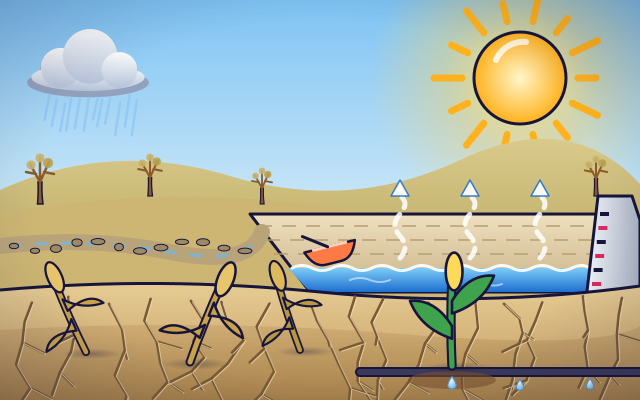
The interactive parts didn't load. The explanations below still work; try reloading the page.
How a drought builds
- In a normal year, rain falls most months. It soaks into the soil, feeds the stream and keeps the reservoir behind the dam full.
- Then the rain stays away. Not for a day or a week, but month after month. A long time with much less rain than normal is called a drought.
- Even with no rain, water keeps leaving. The sun evaporates it from the soil and the reservoir, and plants give off water through their leaves.
- The soil dries out first, within a few weeks. It turns pale and cracks, and the crops droop because their roots cannot find water.
- Dry soil has no water left to feed the stream, so it shrinks to a trickle. Last of all, the reservoir falls, because more water leaves it than flows in.
- People make the stored water last. Farmers switch to drip hoses that put water right at the roots. Families turn off sprinklers, and leaking pipes are mended.
- At last the rain returns. The soil soaks it up first and the plants recover. The stream runs again, and month by month the reservoir refills.
The valley's water
Tap each part of the valley. Some bring water in, some hold it and some take it away.
- Rain clouds. Rain is how the valley gets its water. In a drought, far less rain falls than usual, for months at a time.
- Sun and heat. The sun's heat turns water into vapor that floats away. The hotter and windier it is, the faster the land dries.
- Soil moisture. Soil holds rainwater in the tiny spaces between its grains. Plants live on this water. With no rain, it is used up in a few weeks.
- Crops. Plants pull water up through their roots and give it off from their leaves. When the soil dries, they wilt, and the harvest is smaller.
- Stream. Between rainstorms, a stream is fed by water seeping slowly out of the ground. When the ground dries out, the stream shrinks.
- Reservoir. A reservoir stores water from wet times for dry times. It falls slowly in a drought, and the pale ring on its banks shows how far.
- Dam. The dam holds back the stream to make the reservoir. Marks on it show the water level, so people know how much is left.
- Home and pipes. A pipe brings reservoir water to homes. Sprinklers and leaks use a lot of it. Saving water at home leaves more in the reservoir.
Follow a dry spell
Start the dry months and follow the colored strip. Watch the soil, the stream and the reservoir. What happens when the rain comes back?
Experiment: The rain stops for many months. What runs short of water first?
- Press Start the dry months.
- Watch the soil and the crops in the first two months.
- Keep watching the stream, then the reservoir, until the rain returns.
What we found: The soil dried first, in about a month, and the crops drooped. Then the stream shrank. The reservoir fell last and slowly, because it is so big. When the rain came back, they recovered in the same order.
Turn on JavaScript to try it yourself.
Make the reservoir last
Ten dry months are coming. Change how the valley uses water so the reservoir stays above the red line and the crops stay alive. Then start the dry months.
How droughts develop
A drought is a long time with much less rain than is normal for a place. It is not the same as a few sunny days. A drought builds up slowly over weeks and months, and it can be hard to say exactly when it begins.
All the time, water is leaving the land. The sun evaporates it from soil, streams and lakes. Plants draw it up through their roots and give it off from their leaves. People use it too. Usually rain puts back what is lost. In a drought, more water leaves than arrives, like a bathtub with the plug slightly open and the tap almost off.
The water runs short in stages. The soil dries first, within a few weeks, and crops and gardens begin to wilt. Next, streams shrink, because between rainstorms they are fed by water seeping out of the ground. Last of all, the water stored in reservoirs and deep underground goes down. These big stores fall slowly, and they refill slowly too.
People cannot make it rain, but they can make stored water last. Farmers use drip hoses that put water right at the roots. Towns mend leaking pipes and ask everyone to use less, especially outdoors. Weather scientists watch rainfall and soil moisture, so they can warn early that a drought is building.
Key words
- Drought
- A long time with much less rain than is normal for a place.
- Evaporation
- Liquid water turning into vapor and rising into the air.
- Transpiration
- Plants giving off water from their leaves.
- Soil moisture
- The water held in the spaces between grains of soil, where plant roots can reach it.
- Reservoir
- A lake made to store water, often behind a dam.
- Water budget
- Counting the water that comes in and the water that goes out.
Check your thinking
-
What is a drought?
Show the answer
A long time with much less rain than normal. A drought is about months, not days, and about what is normal for that place.
-
When the rain stops for months, what runs short of water first?
Show the answer
The soil. Soil holds a small amount of water, and plants and the sun use it up in weeks. Big stores last much longer.
-
Why does very hot weather make a drought worse?
Show the answer
More water evaporates from soil, plants and lakes. Heat speeds up evaporation, so the little water that is left disappears faster.
-
Which of these saves the most water in a dry spell?
Show the answer
Watering crops with a drip hose at the roots. A drip hose puts water right where roots can take it, so little of it evaporates.
-
The rain comes back after a long drought. What takes the longest to recover?
Show the answer
The reservoir. The reservoir is a huge store. It empties slowly and fills slowly.
-
A reservoir holds 600 megaliters. Each month 10 flow in, 50 are used and 5 evaporate. After how many months will it be down to 240 megaliters?
Show the answer
8 months. The net loss is 50 + 5 − 10 = 45 megaliters a month. The reservoir must lose 600 − 240 = 360, and 360 ÷ 45 = 8 months.
You're a Earth & weather expert!
You watched, looked inside, tried it, solved the challenge and went deeper. Pick another question below, or switch the age at the top to see this topic another way.
More about earth & weather
 #459
Earth & weather
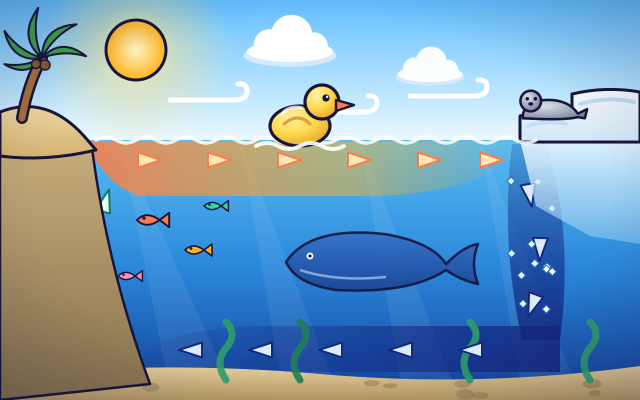
How do ocean currents move water?
Explore wind, temperature, salinity, and Earth's rotation in a simplified ocean model.
#459
Earth & weather
How do ocean currents move water?
Explore wind, temperature, salinity, and Earth's rotation in a simplified ocean model.
 #460
Earth & weather
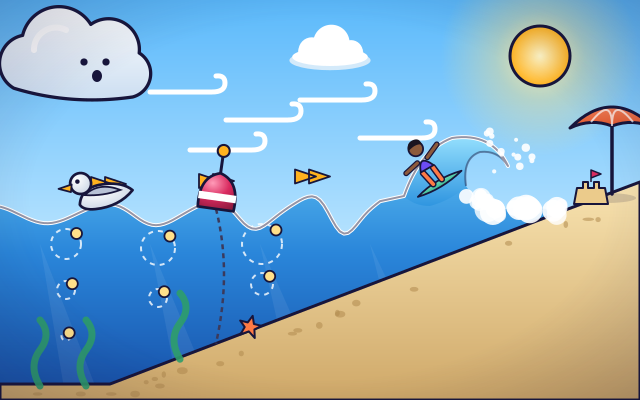
How do ocean waves form and reach the shore?
Add wind and follow wave energy toward shallower water.
#460
Earth & weather
How do ocean waves form and reach the shore?
Add wind and follow wave energy toward shallower water.
 #461
Earth & weather
How do tsunamis form?
Displace a model seafloor and follow waves across deep and shallow water.
#461
Earth & weather
How do tsunamis form?
Displace a model seafloor and follow waves across deep and shallow water.
 #462
Earth & weather
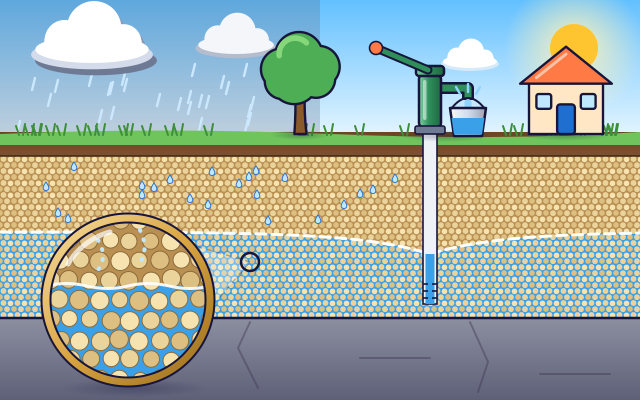
How do aquifers store groundwater?
Send water through soil and rock layers and explore storage and movement underground.
#462
Earth & weather
How do aquifers store groundwater?
Send water through soil and rock layers and explore storage and movement underground.
Keep exploring
Games to play next
- River MysterySomething changed the river. Sample sites with a limited budget, follow the evidence and find where the change begins.
- Weather LabPredict the weather in a box, then run a fair test to find out why.
- Landform ExplorerMountains, valleys, peninsulas and deltas — learn the shapes of the land and find them on Earth.
Guide for grown-ups
- How to start homeschooling: a step-by-step guide for familiesA guide for parents · 7 min read
Science games by grade
Science worksheets by grade
- Preschool Science Worksheets
- Pre-K Science Worksheets
- Kindergarten Science Worksheets
- 1st Grade Science Worksheets
- 2nd Grade Science Worksheets
- 3rd Grade Science Worksheets
- 4th Grade Science Worksheets
- 5th Grade Science Worksheets
- 6th Grade Science Worksheets
- 7th Grade Science Worksheets
- 8th Grade Science Worksheets