How do tsunamis form?
A sudden jump of the seafloor lifts the sea above it and sends long waves racing across the ocean.
The big idea: A tsunami is the whole sea, top to bottom, being pushed. It is fast and low in deep water, then slow and tall near the coast.
It's like pushing up the bottom of a paddling pool with your hand: the bump of water you make runs across the pool and sloshes up the far side.
The interactive parts didn't load. The explanations below still work; try reloading the page.
From a jump in the seafloor to the shore
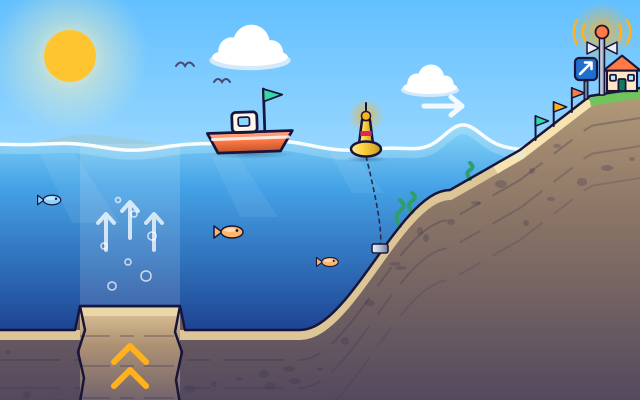
- This is a model sea, cut open so you can look inside. The seafloor lies far below the boat. What could make a giant wave here?
- Deep down, the rock snaps along a crack called a fault. A huge block of seafloor jumps up and lifts all the water above it, right to the surface.
- The bump cannot stay up. It spreads out as long, low waves that cross the deep ocean as fast as a jet plane. A boat out here barely feels them.
- Near land the seafloor rises. The front of the wave reaches shallow water first and slows down. The back catches up, so the wave bunches up and grows taller.
- At the coast a tsunami does not curl like a surfing wave. The sea rises quickly and floods up the beach, then drains back. More waves can follow.
- Far out at sea, a buoy feels the wave pass and sends a warning by satellite. Sirens sound long before the wave arrives, and people walk calmly to high ground.
Look inside a model sea
Tap each part of the sea, from the deep ocean to the hill. Watch what happens there.
- Fault. A fault is a crack where two huge slabs of rock press together. When they slip, a block of seafloor can jump up in seconds.
- Lifted water. The jumping seafloor lifts all the water above it, from the bottom to the top. That is far more water than wind can move.
- Deep ocean. In deep water a tsunami is as fast as a jet plane, but less than a meter high. A boat would hardly feel it pass.
- Slope. Here the seafloor climbs toward the land. The water gets shallower, so the front of the wave slows down first.
- Shallow shelf. On the shallow shelf the wave is much slower, about as fast as a car in town. The water bunches up and the wave grows tall.
- Beach. The sea floods up the beach like a very fast tide. The flags show how high the water climbs. Then it drains back out.
- Warning buoy. A sensor on the seafloor feels a tsunami pass overhead. Its buoy sends the news to a satellite, and warnings go out.
- High ground. The warning tower flashes and signs point uphill. High ground is the safe place, and you stay there until grown-ups say it is safe.
Model sea: deep water and shallow water
Lift the seafloor and follow the wave. Then try the shallow sea. Which wave gets to the beach first?
Experiment: In which sea does the wave reach the beach first?
- Tap Deep sea and watch the wave cross. Read the crossing time.
- Tap Shallow sea and watch again.
- Compare the two crossing times.
What we found: The wave in the deep sea wins. A tsunami pushes the whole depth of the sea, and deep water carries that push along faster. In shallow water the same wave slows down and grows taller.
Turn on JavaScript to try it yourself.
Place the warning buoy
Move the buoy to where it will give at least 140 minutes of warning. Then shake the seafloor to test it.
Why a tsunami is not an ordinary wave
The waves you see at the beach are made by wind. Wind only stirs the top of the sea, so those waves are short and come every few seconds. A tsunami is different. It starts when something shoves the sea from below: usually a block of seafloor that jumps during an undersea earthquake. All the water above it, from the bottom to the top, is lifted at once.
That lifted bump spreads out as waves that are very long and very low. In the deep ocean they travel as fast as a jet plane, because deep water carries the push along quickly. A tsunami can cross a whole ocean in less than a day, and sailors far from land may not even notice it pass under their ship.
Near the coast the sea gets shallow, and shallow water slows the wave down. The front slows first while the back is still hurrying, so the water bunches up and the wave grows taller. When it arrives, it is like a tide that comes in far too fast, and more waves can follow for hours.
People have learned how to stay safe. Sensors on the seafloor feel a tsunami pass and send a warning by satellite. If you hear a tsunami warning, feel strong shaking near the sea, or see the sea pull back suddenly, walk to high ground with your grown-ups straight away, and stay there until you are told it is safe. Our model sea is squashed to fit the screen: a real ocean is far wider than it is deep.
Key words
- Tsunami
- A set of long waves made when a lot of sea is pushed suddenly. The word is Japanese for 'harbor wave'.
- Fault
- A crack in the Earth's crust where blocks of rock can slip past each other.
- Wavelength
- The distance from the top of one wave to the top of the next.
- Shoaling
- The way a wave slows down and grows taller as the water gets shallow.
- Run-up
- The highest point on the land that the water reaches.
- Shallow-water wave
- A wave so long that it moves the water all the way down to the seafloor.
Check your thinking
-
What usually starts a tsunami?
Show the answer
A block of seafloor suddenly moves and lifts the sea above it. A moving seafloor lifts all the water above it. Wind makes ordinary waves, and the moon makes tides.
-
Where does a tsunami travel fastest?
Show the answer
Over the deep ocean. The deeper the water, the faster the wave. It slows down as the sea gets shallow.
-
Why does a tsunami grow taller near the coast?
Show the answer
The front slows in shallow water and the back catches up. Shallow water slows the front first, so the wave bunches up into a shorter, taller shape.
-
A wave is 1 m high over 4,000 m of water. Using Green's law, about how high is it over 250 m of water?
Show the answer
About 2 m. Height grows as depth to the power of minus one quarter. The depth is 16 times smaller, and the fourth root of 16 is 2.
-
You are at the beach and the sea suddenly pulls far back. What should you do?
Show the answer
Go to high ground right away with your grown-ups. The sea pulling back can mean a tsunami is coming. High ground is the safe place.
-
Why might a boat far out at sea not notice a tsunami?
Show the answer
Out there the wave is very low and very long. In deep water the wave is under a meter high and hundreds of kilometers long, so the boat rises and falls very gently.
You're a Earth & weather expert!
You watched, looked inside, tried it, solved the challenge and went deeper. Pick another question below, or switch the age at the top to see this topic another way.
More about earth & weather
 #462
Earth & weather
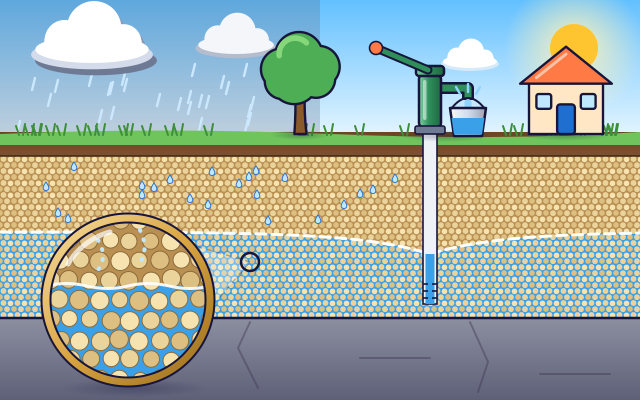
How do aquifers store groundwater?
Send water through soil and rock layers and explore storage and movement underground.
#462
Earth & weather
How do aquifers store groundwater?
Send water through soil and rock layers and explore storage and movement underground.
 #463
Earth & weather
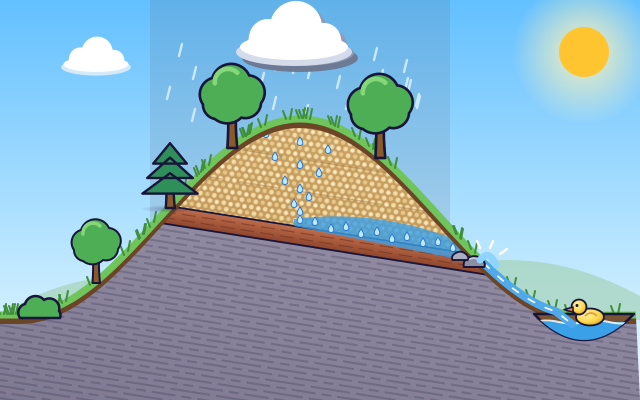
How do natural springs bring water to the surface?
Follow groundwater until rock layers and terrain direct it above ground.
#463
Earth & weather
How do natural springs bring water to the surface?
Follow groundwater until rock layers and terrain direct it above ground.
 #464
Earth & weather
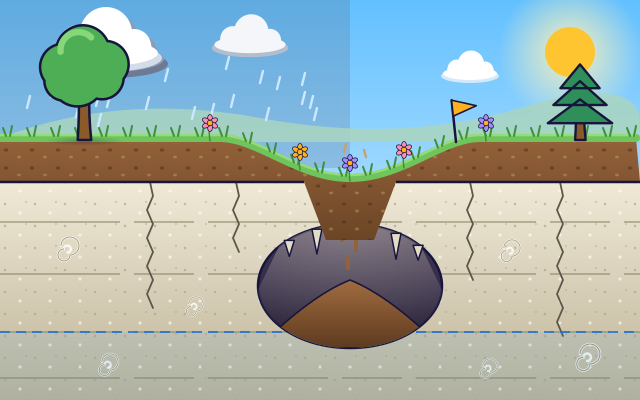
How do sinkholes form?
Explore dissolving rock and underground cavities beneath a model landscape.
#464
Earth & weather
How do sinkholes form?
Explore dissolving rock and underground cavities beneath a model landscape.
 #465
Earth & weather
How do landslides happen?
Change slope, water content, and vegetation and compare ground stability.
#465
Earth & weather
How do landslides happen?
Change slope, water content, and vegetation and compare ground stability.
Keep exploring
Games to play next
- Landform ExplorerMountains, valleys, peninsulas and deltas — learn the shapes of the land and find them on Earth.
- Globe ExplorerSpin a real 3D globe, flip to the flat map, and find continents, oceans and countries.
- Weather LabPredict the weather in a box, then run a fair test to find out why.
Guide for grown-ups
- How to start homeschooling: a step-by-step guide for familiesA guide for parents · 7 min read
Science games by grade
Science worksheets by grade
- Preschool Science Worksheets
- Pre-K Science Worksheets
- Kindergarten Science Worksheets
- 1st Grade Science Worksheets
- 2nd Grade Science Worksheets
- 3rd Grade Science Worksheets
- 4th Grade Science Worksheets
- 5th Grade Science Worksheets
- 6th Grade Science Worksheets
- 7th Grade Science Worksheets
- 8th Grade Science Worksheets