How do ocean waves form and reach the shore?
Wind far out at sea makes waves. See how they travel to the beach, grow taller in shallow water and break.
The big idea: Wind blowing over the sea makes waves. A wave carries energy forward, while the water itself only moves in circles. In shallow water the wave slows down, grows taller and finally breaks.
It's like shaking one end of a jump rope. The bump travels all the way along, but each bit of rope only moves up and down and stays where it is.
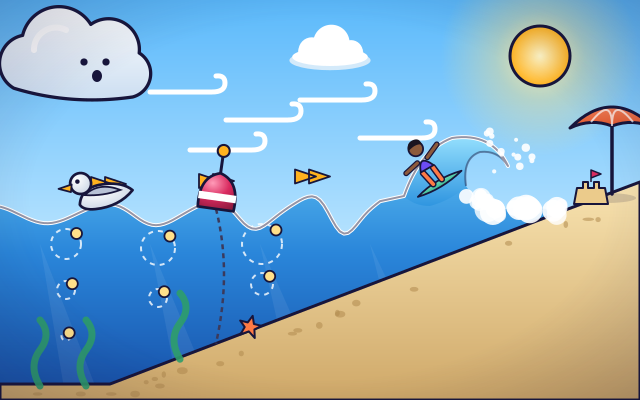
The interactive parts didn't load. The explanations below still work; try reloading the page.
From wind to surf
- At the beach, waves arrive one after another, all day and all night. They were made far away, out on the open sea. Let us follow one from the start.
- Far out at sea, wind rubs against the water and pushes up ripples. If the wind keeps blowing, the ripples grow into waves. Stronger wind makes bigger waves.
- Watch the gull as a wave passes. It rises, moves forward, sinks and moves back. The water under it is going round in circles, and it ends up where it began.
- So what is travelling? Not the water: the buoy stays behind. The wave carries energy, the push that the wind gave it, across the sea toward the land.
- Near the land the sea gets shallow, and the wave starts to drag on the bottom. It slows down. The waves behind catch up, so they squeeze together and grow taller.
- At last the wave is too tall and steep for the shallow water. Its top races ahead of its bottom, tips over and crashes down in foam. The wave has broken.
Inside a wave's journey
Tap each part to see what it does as the waves travel to the beach.
- Wind. Wind is where a wave's energy comes from. The harder and longer it blows, the bigger the waves grow.
- Crest and trough. The highest part of a wave is its crest and the lowest part is its trough. The wave's height is measured from trough to crest.
- Wavelength. The distance from one crest to the next is the wavelength. The time between crests passing the same spot is called the period.
- Circling water. These yellow drops show how the water moves: round in circles. The circles are biggest at the top and get smaller deeper down.
- Buoy. A buoy floats on the sea and is tied to the bottom. As waves pass, it bobs round in a small circle. Some buoys measure the waves and send the numbers to shore.
- Sloping seabed. Near the land the seabed slopes upward, so the water gets shallower. The shallow bottom slows the waves and makes them bunch up and grow.
- Breaking wave. When a wave gets too tall for the shallow water, its top falls forward. Bigger waves break farther out, in deeper water.
- Beach. After breaking, the water rushes up the sand and slides back. Waves move sand around all the time, building beaches and wearing them away.
Add wind, follow the wave
Add wind and follow the orange arrows of wave energy to the shore. Watch the gull, the buoy and the yellow drops. Then change the seabed.
Experiment: A gull is floating far from the beach. A big wave passes under it. What happens to the gull?
- Slide the wind up to Strong and keep your eye on the gull and the buoy.
- Follow the orange arrows on the wave tops. Where do they go?
- Slide the wind back to Calm and watch the waves die away.
What we found: The gull and the buoy went round in small circles and stayed in the same place, while the orange arrows of energy travelled on to the shore. More wind made bigger waves, and they broke farther from the beach.
Turn on JavaScript to try it yourself.
Break between the flags
Surf school is between the two red flags. Choose the wind so the waves break between the flags. Then press Send the waves.
How waves form and break
Most ocean waves are made by wind. When wind blows across the sea it rubs on the water and pushes up ripples. If the wind is strong, blows for a long time and has a long stretch of open water to blow over, the ripples grow into big waves.
A wave looks as if the water is rushing toward you, but it is not. Watch a floating bird or a buoy: as each wave passes, it rises, moves forward a little, sinks and moves back again. The water travels in circles and stays in the same place. What moves across the sea is energy, like the bump that runs along a rope when you shake one end.
Out in deep water a wave can travel for days without changing much. Near the land the sea gets shallow, and the bottom of the wave begins to drag on the seabed. The wave slows down, the waves behind catch up, and they all squeeze closer together and grow taller.
In the end the wave is too tall and steep to hold together. Its top moves faster than its bottom, so it tips forward and crashes down. That is a breaking wave. Bigger waves break farther from the shore, in deeper water. Waves are great fun, and powerful too, so always swim where a grown-up or a lifeguard says it is safe.
Key words
- Crest
- The highest part of a wave. The lowest part is the trough.
- Wavelength
- The distance from one crest to the next.
- Period
- The time between one crest and the next passing the same place.
- Fetch
- How far the wind blows across open water.
- Swell
- Smooth, regular waves that have travelled away from the wind that made them.
- Shoaling
- A wave slowing down and growing taller as the water gets shallow.
Check your thinking
-
What makes most of the waves on the sea?
Show the answer
Wind blowing over the water. Wind rubs against the sea and pushes up ripples that grow into waves.
-
A ball floats far from shore. A wave passes under it. Where does the ball end up?
Show the answer
In about the same place. The water only goes round in circles. The wave's energy moves on, but the water and the ball stay behind.
-
Why do waves grow taller as they come close to the beach?
Show the answer
The shallow bottom slows them, so they bunch up and rise. Dragging on the bottom slows the front of the wave train. The waves squeeze together and get taller.
-
A big wave and a small wave head for the same beach. Which breaks farther from the shore?
Show the answer
The big wave. A wave breaks when it is too tall for the depth. A bigger wave reaches that point sooner, in deeper water.
-
Which of these makes the biggest waves?
Show the answer
A strong wind blowing for a long time over a wide sea. Waves need strong wind, plenty of time and a long stretch of water to grow big.
-
Waves pass a pier every 10 seconds in deep water. Using wavelength = 1.56 × period², about how long is each wave?
Show the answer
About 156 meters. The period squared is 100, and 1.56 × 100 = 156 meters.
You're a Earth & weather expert!
You watched, looked inside, tried it, solved the challenge and went deeper. Pick another question below, or switch the age at the top to see this topic another way.
More about earth & weather
 #461
Earth & weather
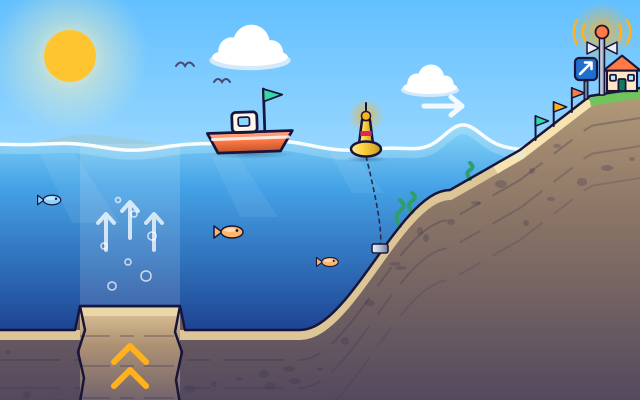
How do tsunamis form?
Displace a model seafloor and follow waves across deep and shallow water.
#461
Earth & weather
How do tsunamis form?
Displace a model seafloor and follow waves across deep and shallow water.
 #462
Earth & weather
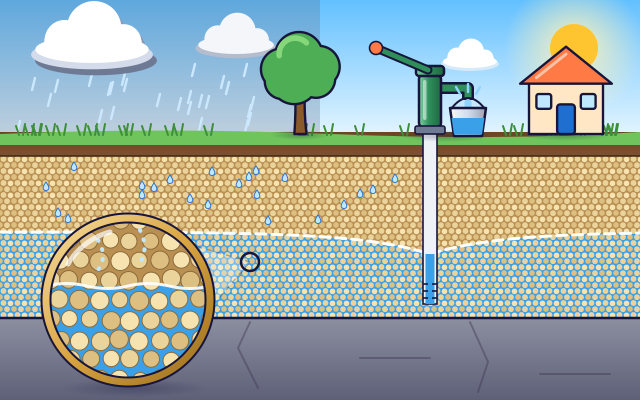
How do aquifers store groundwater?
Send water through soil and rock layers and explore storage and movement underground.
#462
Earth & weather
How do aquifers store groundwater?
Send water through soil and rock layers and explore storage and movement underground.
 #463
Earth & weather
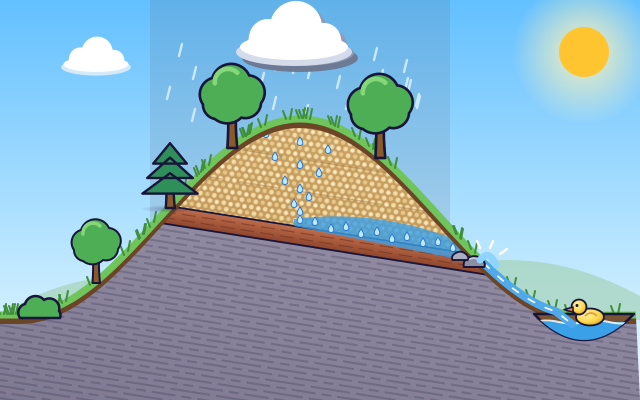
How do natural springs bring water to the surface?
Follow groundwater until rock layers and terrain direct it above ground.
#463
Earth & weather
How do natural springs bring water to the surface?
Follow groundwater until rock layers and terrain direct it above ground.
 #464
Earth & weather
How do sinkholes form?
Explore dissolving rock and underground cavities beneath a model landscape.
#464
Earth & weather
How do sinkholes form?
Explore dissolving rock and underground cavities beneath a model landscape.
Keep exploring
Games to play next
- Globe ExplorerSpin a real 3D globe, flip to the flat map, and find continents, oceans and countries.
- Weather LabPredict the weather in a box, then run a fair test to find out why.
- Landform ExplorerMountains, valleys, peninsulas and deltas — learn the shapes of the land and find them on Earth.
Guide for grown-ups
- How to start homeschooling: a step-by-step guide for familiesA guide for parents · 7 min read
Science games by grade
Science worksheets by grade
- Preschool Science Worksheets
- Pre-K Science Worksheets
- Kindergarten Science Worksheets
- 1st Grade Science Worksheets
- 2nd Grade Science Worksheets
- 3rd Grade Science Worksheets
- 4th Grade Science Worksheets
- 5th Grade Science Worksheets
- 6th Grade Science Worksheets
- 7th Grade Science Worksheets
- 8th Grade Science Worksheets