How do ducks keep their feathers water-resistant?
Duck feathers zip together into a tight, oiled coat. Water cannot get through, so it rolls into beads and slides off.
The big idea: Each feather is made of thin branches that hook together like a zipper. The duck preens to zip up gaps and spread oil, so water beads up instead of soaking in.
It's like a zipped-up raincoat over a fluffy sweater. The outer feathers keep the water out, and the soft down underneath keeps the duck warm.
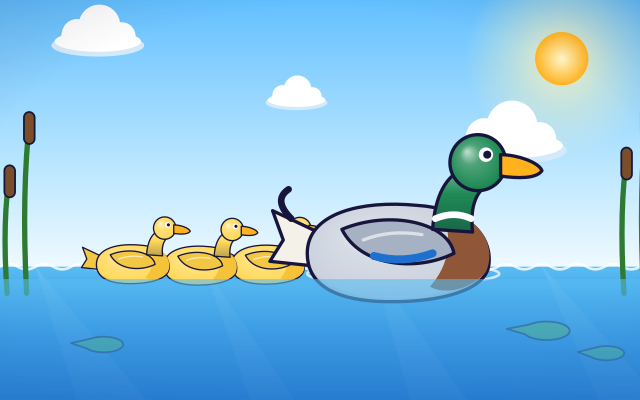
The interactive parts didn't load. The explanations below still work; try reloading the page.
Why ducks do not get soggy
- A duck spends all day in the water. It dives, splashes and paddles, but when it comes up, its feathers are not soaked. How does it stay dry?
- Look closely at the duck's back. The water does not soak in. It pulls itself into round beads that roll away, like rain on a freshly waxed car.
- A feather has a stiff middle shaft with hundreds of branches called barbs. Each barb has even tinier branches with hooks. The hooks grab the next barb, zipping the feather into one smooth sheet.
- Feathers come unzipped, so the duck preens. It picks up oil from a gland near its tail and draws each feather through its beak. That zips the gaps shut and spreads the oil.
- The smooth outer feathers overlap like roof tiles. Underneath is fluffy down. It has no hooks, so it stays loose and traps air. The air keeps the duck warm and helps it float.
- One good shake and the last beads fly off. Zipped feathers, a little oil and a layer of fluffy down: that is how a duck stays dry and warm in the water.
Look closely at a feather
Tap each part of the feather, the magnifying glass and the duck.
- The shaft. The shaft is the stiff rod down the middle of the feather. It is hollow at the bottom, which makes it light and strong.
- The barbs. Hundreds of thin branches called barbs grow from each side of the shaft. Zipped together, they make the smooth, flat part of the feather.
- The tiny hooks. Each barb has even smaller branches called barbules. Some have tiny hooks that grab the barbules of the next barb. This is the feather's zipper.
- A drop of water. A drop sits on top of the zipped feather like a ball. The gaps between the barbs are much too small for it to squeeze through.
- The preen gland. At the base of the tail is a gland that makes oil. The duck rubs its beak on it, then strokes the oil over its feathers to keep them in good shape.
- A down feather. Down feathers grow under the smooth ones. They have no hooks, so they stay loose and fluffy. They trap air, and the air keeps the duck warm.
Preen a feather and test it
Tap the cloud to rain on the feather. Then slide the beak along the feather to preen it, and test again. Try the paper towel too.
Experiment: What happens when it rains on a feather with gaps, before the duck has preened it?
- Tap the cloud and watch the drops near the gaps.
- Slide the beak along the whole feather to zip the gaps shut.
- Tap the cloud again. Then choose the paper towel and compare.
What we found: Water slips through any gap where the barbs have come unzipped, and wets the down below. When the feather is preened, every drop beads up and rolls off. A paper towel has no zipper at all: it soaks the water up.
Turn on JavaScript to try it yourself.
Preen before the storm
Rain is coming. Fetch oil from the gland near the tail, then stroke each feather with the beak to oil it and zip every gap.
The secret of the zipped feather
A duck's outer feathers work like a raincoat. Each feather has a stiff shaft in the middle. From the shaft grow hundreds of thin branches called barbs, and from each barb grow even tinier branches called barbules. Some barbules have little hooks that grab the barbules next door. All those hooks zip the feather into one smooth sheet.
The gaps left in the sheet are very, very small. A drop of water is held together by its own stretchy skin, called surface tension, and it cannot squeeze through such tiny gaps. So the water sits on top in round beads and rolls away.
Feathers do not stay perfect. They get ruffled, and the zipper comes undone. That is why ducks preen for hours every day. A duck rubs its beak on an oil gland near its tail, then pulls each feather through its beak. This zips the barbs back together and spreads a thin coat of oil that keeps the feather bendy and strong.
Under the raincoat is a sweater: a layer of fluffy down. Down has no hooks, so it stays loose and holds lots of air. The air keeps the duck warm and helps it float like a cork. The raincoat comparison is not perfect, though. A raincoat is one solid sheet, but a duck's coat is thousands of separate feathers that it has to look after every day. Soap and spilled oil can ruin the coat, which is why people work hard to keep ponds and seas clean.
Key words
- Barb
- One of the thin branches that grow from the shaft of a feather.
- Barbule
- A tiny branch on a barb. Some barbules have hooks that zip the feather together.
- Preening
- When a bird cleans, oils and zips up its feathers with its beak.
- Preen gland
- A gland at the base of a bird's tail that makes oil for the feathers.
- Surface tension
- The stretchy skin on water that pulls a drop into a round bead.
- Down
- Soft, fluffy feathers without hooks that trap air and keep a bird warm.
Check your thinking
-
What does water do on a preened duck feather?
Show the answer
It forms beads and rolls off. The zipped barbs leave gaps too small for water to get through, so it beads up and rolls away.
-
What does preening do?
Show the answer
It zips the barbs back together and spreads oil. Pulling a feather through the beak hooks the barbs together again and coats it with oil.
-
Why is the fluffy down under the outer feathers useful?
Show the answer
It traps air that keeps the duck warm. Down holds lots of air, and still air is like a warm blanket. It also helps the duck float.
-
A feather has a gap where the barbs came unzipped. What happens in the rain?
Show the answer
Water gets through the gap and wets the down. A gap is big enough for water to pass through, so the down underneath gets wet and cold.
-
Why is detergent in the water dangerous for a duck?
Show the answer
It lowers the surface tension, so water spreads into the feathers and reaches the skin. A wetting agent lets water spread through the mesh instead of beading. The soaked bird loses warmth and buoyancy.
-
Which does more of the waterproofing: the feather's structure or the preen oil?
Show the answer
The hooked structure. The oil mainly keeps that structure in good condition. Research suggests the mesh of barbs and barbules does most of the work, and the oil keeps the feather supple so the mesh stays intact.
You're a Animals expert!
You watched, looked inside, tried it, solved the challenge and went deeper. Pick another question below, or switch the age at the top to see this topic another way.
More about animals
 #216
Animals
How do squirrels store and find food?
Hide virtual nuts and explore how changing landmarks affect finding them again.
#216
Animals
How do squirrels store and find food?
Hide virtual nuts and explore how changing landmarks affect finding them again.
 #217
Animals
How does hibernation help animals survive winter?
Follow changes in activity, temperature, and energy use during a simulated winter.
#217
Animals
How does hibernation help animals survive winter?
Follow changes in activity, temperature, and energy use during a simulated winter.
 #218
Animals
How do snails build their shells?
Follow calcium into a growing shell using a simplified growth model.
#218
Animals
How do snails build their shells?
Follow calcium into a growing shell using a simplified growth model.
 #219
Animals
How does animal fur keep warmth in?
Compare coats and explore how trapped air affects heat loss.
#219
Animals
How does animal fur keep warmth in?
Compare coats and explore how trapped air affects heat loss.
Keep exploring
Games to play next
- Habitat Builder 3DFind the right home for frogs, camels, polar bears and more.
- Classification ExplorerSort living things by what you can see, then follow and build yes-or-no keys.
- Forest Trails PhotosCreep up on the animals of a big forest valley and take the closest, best wildlife photos you can, without startling them.
Guide for grown-ups
- How to start homeschooling: a step-by-step guide for familiesA guide for parents · 7 min read
Science games by grade
Science worksheets by grade
- Preschool Science Worksheets
- Pre-K Science Worksheets
- Kindergarten Science Worksheets
- 1st Grade Science Worksheets
- 2nd Grade Science Worksheets
- 3rd Grade Science Worksheets
- 4th Grade Science Worksheets
- 5th Grade Science Worksheets
- 6th Grade Science Worksheets
- 7th Grade Science Worksheets
- 8th Grade Science Worksheets