How do squirrels store and find food?
A squirrel buries nuts one by one all autumn, then uses a map in its head and a sharp nose to dig them up in winter.
The big idea: A squirrel buries each nut in its own hole and remembers the spot by the landmarks around it. Up close, its nose does the rest.
It's like a treasure hunt you set up yourself: many small treasures, each remembered by what stands next to it, such as two steps from the big rock.
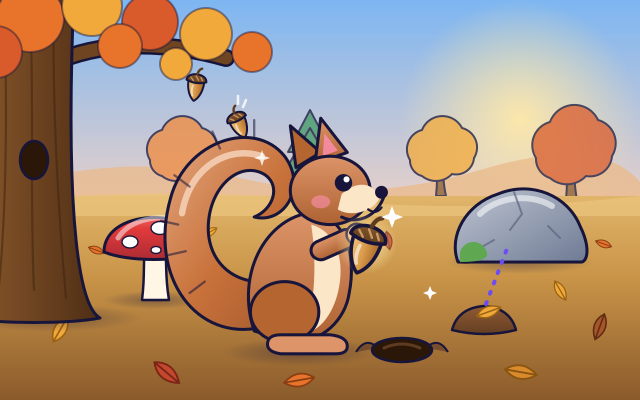
The interactive parts didn't load. The explanations below still work; try reloading the page.
Bury now, eat later
- In autumn the oak drops far more acorns than a squirrel can eat. But in winter the branches will be bare. So the squirrel saves food now for later.
- The squirrel digs a small hole with its front paws, pushes one nut in, and presses soil over it. Then it rakes leaves on top so the spot looks untouched.
- The squirrel does not make one big pile. It spreads its nuts over many separate holes. If a blue jay finds one, it gets one nut, not the whole winter store.
- Before it leaves, the squirrel looks at what stands nearby: a rock, a stump, a mushroom. It remembers the nut as a place among those landmarks, like a map in its head.
- In winter, snow covers everything. The landmarks still stick up, so the squirrel runs to the right area. Then it sniffs for the nut and digs straight down to it.
- The squirrel never finds every nut. A forgotten acorn is already planted at just the right depth, so in spring it sprouts. Squirrels plant many new oak trees without meaning to.
Look inside a squirrel's hiding place
Tap each part of the scene, above and below the ground.
- Front paws. The squirrel turns each nut in its paws to check it, then uses the same paws to dig a hole and press the soil back down.
- The buried nut. Each hole holds just one nut, buried about as deep as your finger is long. A hiding place for food is called a cache.
- Soil and leaf cover. The squirrel presses the soil flat and rakes leaves over it. Now the spot looks just like the ground around it.
- Landmarks. Landmarks are things that stay put, such as a rock, a stump or a tree trunk. The squirrel remembers how far the nut is from each one.
- Memory map. The squirrel's brain builds a map of its hiding places. It can remember a great many spots for weeks or even months.
- Nose. When the squirrel is close, its nose picks up the smell of the nut through the soil, and even through snow. Then it knows exactly where to dig.
- A watching thief. Jays and other squirrels steal nuts. If a squirrel is being watched, it may pretend to bury a nut, then carry it away and hide it somewhere else.
- A forgotten nut. A nut that is never dug up can sprout. It sends a root down and a shoot up, and it may become a new tree far from its parent.
Landmark test: can the squirrel find its nuts?
Bury up to three nuts by tapping the leafy spots. Then choose what changes before the squirrel comes back. Does it still dig in the right place?
Experiment: A nut is buried next to the rock. What will the squirrel do if the rock is moved before it comes back?
- Tap a leafy spot beside the rock to bury a nut there.
- Choose "Nothing changes" and watch where the squirrel digs.
- Now choose "The rock moves" and watch again.
What we found: With the landmarks in place, the squirrel goes straight to its nuts. When the rock moves, the squirrel digs beside the rock's new place and finds nothing there. It was using the rock to remember the spot. Nuts beside other landmarks are still found.
Turn on JavaScript to try it yourself.
Find your nuts in the snow
Bury three nuts. After the snow falls, dig them all up. You only have five digs, so use the landmarks to remember.
How squirrels store and find food
Tree squirrels stay awake all winter, so they need food when the trees are bare. In autumn there are far more nuts than they can eat. A squirrel solves both problems at once: it buries the extra nuts and comes back for them later. A hiding place for food is called a cache.
A gray squirrel buries each nut in its own small hole. This is called scatter hoarding. It is a lot of work, but it is safe. If a jay or another squirrel finds one hole, it gets only one nut. A big pile would be lost all at once.
How does the squirrel find the right spots again? It remembers them. It notices the landmarks around each nut, such as a rock, a stump or a tree trunk, and keeps a map of them in its head. The map brings it close. Then its nose takes over and smells the nut through the soil or the snow.
The squirrel does not find every nut. Some are stolen and some are forgotten. A forgotten acorn is already planted, so it can grow into a new oak. That is why people sometimes call squirrels the gardeners of the forest.
Key words
- Cache
- A hiding place for food that an animal saves for later.
- Scatter hoarding
- Hiding food in many small, separate places instead of one big pile.
- Landmark
- Something that stays in one place and helps you know where you are, such as a rock or a tree.
- Spatial memory
- Remembering where things are.
- Pilfering
- Stealing food from another animal's cache.
- Seed dispersal
- Carrying seeds away from the parent plant so they can grow somewhere new.
Check your thinking
-
Why do squirrels bury nuts in autumn?
Show the answer
To have food in winter, when the trees are bare. Autumn has too many nuts and winter has almost none. Burying moves food from one season to the other.
-
How does a squirrel get close to a buried nut again?
Show the answer
It remembers the landmarks around the spot. The squirrel keeps a map of landmarks in its head. Its nose helps only when it is already close.
-
A nut is buried beside a rock. Someone moves the rock. Where does the squirrel dig first?
Show the answer
Beside the rock's new place. The squirrel remembered "next to the rock". When the rock moves, that memory points to the wrong place.
-
Why is it safer to bury nuts in many separate holes than in one big pile?
Show the answer
A thief that finds one hole gets only one nut. Spreading the nuts out means one unlucky find cannot cost the squirrel its whole winter store.
-
What can happen to an acorn that is never dug up?
Show the answer
It can sprout and grow into a new oak tree. An acorn is a seed, and the squirrel has planted it at a good depth. Forgotten nuts become new trees.
-
In the model, smell finds a nut only when the dig lands close to it. Which change makes an empty hole more likely?
Show the answer
Waiting many more days in dry soil. Time blurs the remembered position, and dry soil shortens the range of smell, so the dig is more likely to land outside it.
You're a Animals expert!
You watched, looked inside, tried it, solved the challenge and went deeper. Pick another question below, or switch the age at the top to see this topic another way.
More about animals
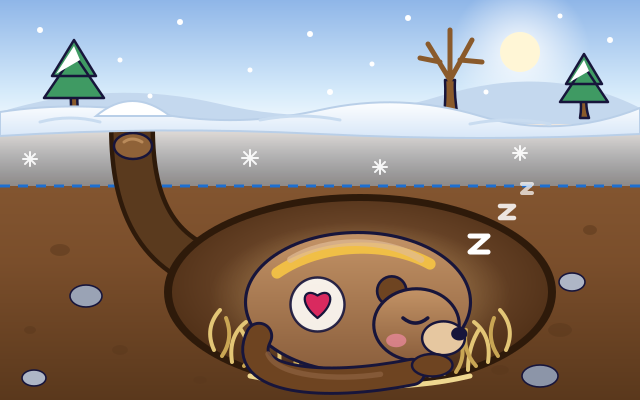 #217
Animals
How does hibernation help animals survive winter?
Follow changes in activity, temperature, and energy use during a simulated winter.
#217
Animals
How does hibernation help animals survive winter?
Follow changes in activity, temperature, and energy use during a simulated winter.
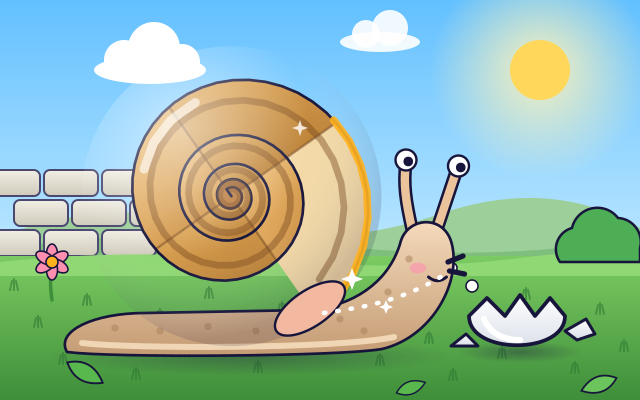 #218
Animals
How do snails build their shells?
Follow calcium into a growing shell using a simplified growth model.
#218
Animals
How do snails build their shells?
Follow calcium into a growing shell using a simplified growth model.
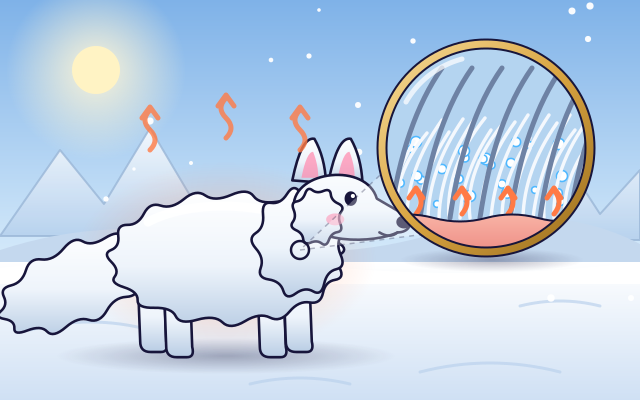 #219
Animals
How does animal fur keep warmth in?
Compare coats and explore how trapped air affects heat loss.
#219
Animals
How does animal fur keep warmth in?
Compare coats and explore how trapped air affects heat loss.
 #220
Animals
How do cows digest grass?
Follow grass through a ruminant digestive system, including cud-chewing and microbial fermentation.
#220
Animals
How do cows digest grass?
Follow grass through a ruminant digestive system, including cud-chewing and microbial fermentation.
Keep exploring
Games to play next
- Forest Trails PhotosCreep up on the animals of a big forest valley and take the closest, best wildlife photos you can, without startling them.
- Habitat Builder 3DFind the right home for frogs, camels, polar bears and more.
- Classification ExplorerSort living things by what you can see, then follow and build yes-or-no keys.
Guide for grown-ups
- How to start homeschooling: a step-by-step guide for familiesA guide for parents · 7 min read
Science games by grade
Science worksheets by grade
- Preschool Science Worksheets
- Pre-K Science Worksheets
- Kindergarten Science Worksheets
- 1st Grade Science Worksheets
- 2nd Grade Science Worksheets
- 3rd Grade Science Worksheets
- 4th Grade Science Worksheets
- 5th Grade Science Worksheets
- 6th Grade Science Worksheets
- 7th Grade Science Worksheets
- 8th Grade Science Worksheets