How do snails build their shells?
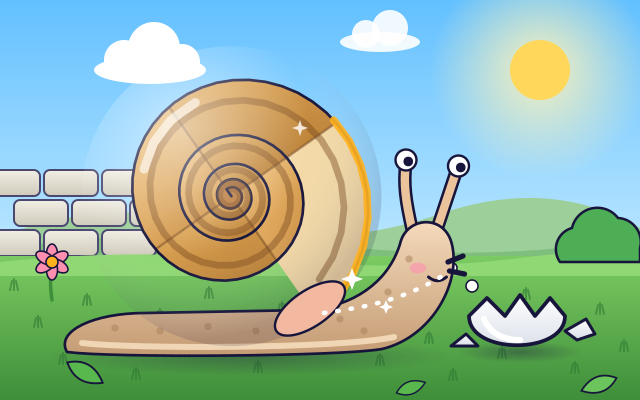
A snail eats chalky food, and a soft skin called the mantle turns it into new shell, one thin strip at a time.
The big idea: A snail takes calcium from its food. Its mantle lays that calcium down as new shell along the edge of the opening, so the shell grows in a spiral.
It's like building a brick wall that curls round and round: you only ever add new bricks at the open end, and the old part stays just as it was.
The interactive parts didn't load. The explanations below still work; try reloading the page.
How a shell gets bigger
- A baby snail hatches with a tiny shell already on its back. It never swaps that shell for a bigger one. Instead, the shell grows as the snail grows. But how?
- Shell is made mostly from calcium. The snail gets it by scraping at chalky things with its rough tongue: bits of limestone, old shells, eggshell and the soil itself.
- In the gut the calcium is taken into the snail's body. Its blood carries the calcium to a soft skin that lines the inside of the shell. That skin is called the mantle.
- At the edge of the opening, the mantle first makes a thin, tough skin. Then it fills in hard calcium crystals behind it. Strip by strip, the edge of the shell moves forward.
- New shell is only added at the opening, and each new part is a little wider than the part before. That is why the shell curls into a spiral that gets wider with every turn.
- The finished shell is a strong home. The snail pulls itself inside to stay safe and to keep from drying out. If the shell cracks, the mantle patches it from the inside.
Look inside a snail and its shell
Tap each part to follow calcium from the mouth to the shell.
- Rasping tongue. The snail's tongue, called the radula, is covered in rows of tiny teeth. It scrapes food and chalky bits into the mouth.
- Gut and calcium store. Most of the snail's gut sits coiled up inside the shell. It takes calcium out of the food and passes it into the blood. Some is saved for later.
- Mantle. The mantle is a soft skin that lines the inside of the shell. It takes calcium from the blood and turns it into hard shell.
- Growing edge. The edge of the opening is where the shell grows. The newest strip is thin and pale. It hardens and thickens over the next days.
- Shell layers. The shell wall has layers. Outside is a thin, tough skin that carries the color. Under it are hard layers of calcium crystals, stacked in different directions.
- Whorls and growth lines. Each full turn of the shell is a whorl, and each is wider than the last. Fine growth lines mark where the edge used to be.
- First tiny shell. The very center of the spiral is the oldest part. It is the tiny shell the snail hatched with.
Calcium in, shell out
Feed the snail and watch the calcium travel to the edge of the shell. What kind of shell does it build with lots of calcium, and with very little?
Experiment: What will the new shell be like if the snail gets plenty of food but very little calcium?
- Tap the eggshell and watch the new strip of shell appear.
- Now tap the lettuce a few times and look at the new strips.
- Compare the colors of the strips: dark and solid, or pale and thin?
What we found: With plenty of calcium, the snail builds thick, strong strips of shell. With very little, the new strips are pale, thin and narrow. A shell is built from what the snail eats, so no calcium means no proper shell.
Turn on JavaScript to try it yourself.
Grow up before winter
You have 9 months. Each month, eat lettuce to grow or eggshell to store calcium. Grow 5 new strips of shell, and keep them thick.
How a snail builds its shell
A snail's shell is part of its body, like your bones or your teeth. The snail cannot crawl out of it and find a new one. A baby snail hatches with a tiny shell, and that same shell has to grow with it for its whole life.
The shell is made mostly of calcium carbonate. That is the same material as chalk, limestone and eggshell. The snail gets its calcium from what it eats. It scrapes at plants, soil, stones and old shells with its rough tongue. Baby snails often eat the shell of their own egg first.
The builder is the mantle, a soft skin that lines the shell. Blood brings calcium to the mantle. At the edge of the shell's opening, the mantle lays down a thin skin and then fills in hard crystals behind it. Because new shell is only added at the opening, and each new part is a little wider, the shell curls into a spiral.
A snail that cannot find enough calcium builds a thin shell that breaks easily. That is why you find many snails on chalky soil and few on sour, acid soil. Gardeners who keep pet snails give them cuttlebone or crushed eggshell for the same reason.
Key words
- Mantle
- The soft skin under a snail's shell that makes the shell.
- Calcium carbonate
- The hard, chalky mineral that shells, eggshells, chalk and limestone are made of.
- Radula
- A snail's tongue, covered with rows of tiny teeth for scraping food.
- Whorl
- One full turn of a spiral shell.
- Aperture
- The opening of the shell, where the snail comes out and where new shell is added.
- Logarithmic spiral
- A spiral that gets wider by the same amount of times with every turn.
Check your thinking
-
Where on the shell is new material added?
Show the answer
At the edge of the opening. The mantle adds new strips at the edge of the opening. The center is the oldest part.
-
What is a snail's shell mostly made of?
Show the answer
Calcium carbonate, like chalk and eggshell. Shell is calcium carbonate, the same mineral as chalk, limestone and eggshell.
-
A snail lives where there is very little calcium. What will its shell be like?
Show the answer
Thin and easy to break. Without enough calcium the mantle cannot build a thick wall, so the shell stays thin.
-
Why does a snail's shell form a spiral that gets wider?
Show the answer
Each new part added at the opening is a little wider than the last. The shell only grows at the opening, and the opening gets wider as the snail gets bigger. That makes a widening spiral.
-
A snail's shell gets a small crack. What happens?
Show the answer
The mantle patches it with new shell from the inside. The shell is attached to the snail for life. The mantle can lay new shell under a crack to mend it.
You're a Animals expert!
You watched, looked inside, tried it, solved the challenge and went deeper. Pick another question below, or switch the age at the top to see this topic another way.
More about animals
 #219
Animals
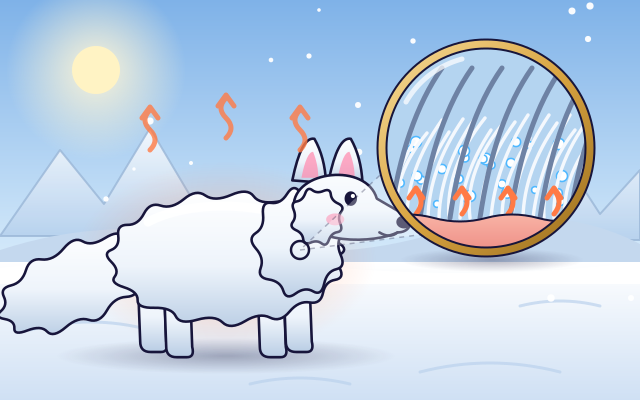
How does animal fur keep warmth in?
Compare coats and explore how trapped air affects heat loss.
#219
Animals
How does animal fur keep warmth in?
Compare coats and explore how trapped air affects heat loss.
 #220
Animals
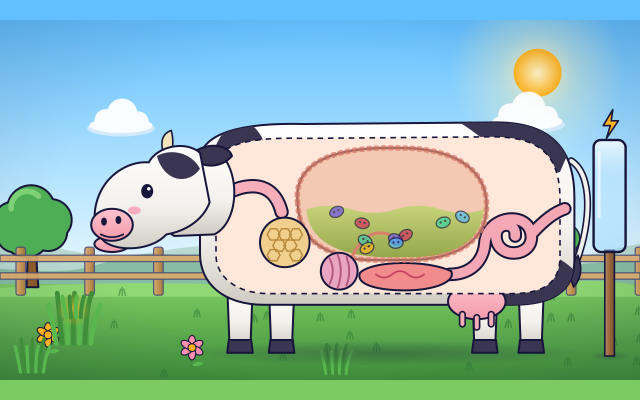
How do cows digest grass?
Follow grass through a ruminant digestive system, including cud-chewing and microbial fermentation.
#220
Animals
How do cows digest grass?
Follow grass through a ruminant digestive system, including cud-chewing and microbial fermentation.
 #221
Animals
How do cows produce milk?
Trace nutrients into milk-producing tissue and follow milk through a simplified udder.
#221
Animals
How do cows produce milk?
Trace nutrients into milk-producing tissue and follow milk through a simplified udder.
 #222
Animals
How do sheep grow wool?
Explore follicles, fiber growth, and changes in fleece before and after shearing.
#222
Animals
How do sheep grow wool?
Explore follicles, fiber growth, and changes in fleece before and after shearing.
Keep exploring
Games to play next
- Habitat Builder 3DFind the right home for frogs, camels, polar bears and more.
- Classification ExplorerSort living things by what you can see, then follow and build yes-or-no keys.
- Forest Trails PhotosCreep up on the animals of a big forest valley and take the closest, best wildlife photos you can, without startling them.
Draw it or make it
- How to draw a snailDrawing lesson
Guide for grown-ups
- How to start homeschooling: a step-by-step guide for familiesA guide for parents · 7 min read
Science games by grade
Science worksheets by grade
- Preschool Science Worksheets
- Pre-K Science Worksheets
- Kindergarten Science Worksheets
- 1st Grade Science Worksheets
- 2nd Grade Science Worksheets
- 3rd Grade Science Worksheets
- 4th Grade Science Worksheets
- 5th Grade Science Worksheets
- 6th Grade Science Worksheets
- 7th Grade Science Worksheets
- 8th Grade Science Worksheets