How does the immune system protect us?
Skin, mucus and a team of white blood cells work together to stop germs, and remember them for next time.
The big idea: Your body's first defense is its barriers, like skin and mucus. If germs get past them, white blood cells rush in to eat them, others make antibodies that stick to the germs, and memory cells remember the germ so you fight it faster next time.
It's like
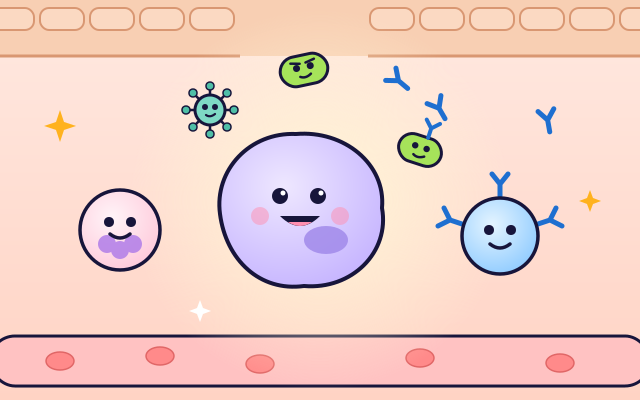
The interactive parts didn't load. The explanations below still work; try reloading the page.
How your body fights germs
- Your skin is a strong wall that keeps most germs out. Sticky mucus in your nose traps them, tears wash your eyes, and stomach acid destroys germs in your food.
- A small scrape makes a gap in the wall. A few germs slip inside, and they start to multiply, splitting into two again and again.
- White blood cells rush out of nearby blood vessels. Neutrophils and big macrophages gobble up germs. The area gets a bit warm, red and puffy while they work.
- A dendritic cell grabs a piece of the germ and carries it to a lymph node, like showing a 'wanted' poster. Helper T cells there learn what the germ looks like.
- Helper T cells switch on B cells, which make antibodies, Y-shaped proteins that stick only to this germ. Killer T cells remove body cells that germs have taken over.
- When the germs are gone, memory cells stay behind. If the same germ ever comes back, they recognize it and fight it much faster. Vaccines teach memory cells safely.
The immune team
Tap each barrier and each member of the immune team to see what they do.
- Skin. Skin is your biggest barrier. Its outer layers are tough, tightly packed cells that germs can't easily get through, and they flake off, taking germs with them.
- Mucus and tiny hairs. Sticky mucus in your nose and airways traps germs and dust. Tiny hairs called cilia sweep it away so you can cough it out or swallow it.
- Neutrophil. Neutrophils are the most common white blood cells. They are usually the first to arrive, and they swallow germs whole.
- Macrophage. Macrophage means 'big eater'. These large cells gobble up germs and old, worn-out cells, and they call other immune cells for help.
- Dendritic cell. Dendritic cells have long, branchy arms. They grab pieces of germs and carry them to a lymph node to show the T cells what to look for.
- Lymph node. Lymph nodes are small, bean-shaped meeting places for immune cells. When you're sick, the ones in your neck can get a bit puffy because they are so busy.
- Helper T cell. Helper T cells are the team captains. When they learn about a germ, they send signals that switch on B cells and killer T cells.
- B cell. B cells make antibodies: Y-shaped proteins that fit one germ like a key in a lock. Antibodies stick to germs, stop them working and make them easy to catch.
- Killer T cell. Some germs, like viruses, hide inside your own cells. Killer T cells find those taken-over cells and remove them, so the germs can't spread.
- Memory cell. After the fight, memory cells remember the germ, sometimes for many years. If it comes back, they spring into action much faster.
Infection timeline: first time or second time?
Slide through the days after a scrape. Watch the germs grow, the helpers arrive and the antibodies appear. Then switch on 'Met this germ before' and compare.
Experiment: If your body has met this germ before, how quickly will it get rid of it?
- With 'Met this germ before' off, slide all the way to two weeks. When are the germs gone?
- Switch 'Met this germ before' on.
- Slide through the days again and compare.
What we found: The first time, antibodies take about a week to arrive, so the germs grow to big numbers and you might feel ill. The second time, memory cells start making antibodies within a couple of days, so the germs are gone much sooner, often before you feel sick at all.
Turn on JavaScript to try it yourself.
Defend the scrape
Tap germs to send gobbler cells, and send the messenger to the lymph node so antibodies come to help. Clear every germ.
Your amazing immune system
Germs, like some bacteria and viruses, are tiny living things (or, for viruses, tiny packages) that can make you ill if they get inside. Most of the time they can't, because your body has barriers: your skin, the sticky mucus in your nose, your tears and the strong acid in your stomach.
If germs do get in, for example through a scrape, white blood cells come to help. Neutrophils and macrophages squeeze out of your blood vessels and gobble the germs up. The area might get a little warm, red and puffy. That's called inflammation, and it means your helpers are busy.
Some white blood cells are messengers. Dendritic cells carry pieces of germs to lymph nodes, where helper T cells learn what the germ looks like. Then B cells make antibodies, Y-shaped proteins that stick only to that germ, and killer T cells remove cells that germs have taken over.
After the germs are gone, memory cells remember them. If the same germ comes back, your body fights it much faster, often before you even feel ill. Vaccines work by letting memory cells practice safely. Washing your hands, sleeping well and eating well all help your immune system too.
Key words
- Germ
- A tiny living thing, or a virus, that can make you ill.
- White blood cell
- A cell of the immune system that helps fight infection.
- Antibody
- A Y-shaped protein that sticks to one kind of germ.
- Antigen
- A part of a germ that your immune system learns to recognize.
- Inflammation
- Warmth, redness and swelling while white blood cells fight germs.
- Vaccine
- A safe way to teach your immune system to recognize a germ.
Check your thinking
-
What is your body's first line of defense?
Show the answer
Barriers like skin and mucus. Barriers stop most germs before they get inside at all.
-
What do neutrophils and macrophages do?
Show the answer
Swallow and destroy germs. These 'eating' white blood cells swallow germs whole and break them down.
-
What do antibodies do?
Show the answer
Stick to germs so they can't work and are easy to catch. Antibodies fit one germ like a key in a lock and tag it for the gobbling cells.
-
How do vaccines protect you?
Show the answer
They safely teach memory cells to recognize a germ. Vaccines create memory cells without you having to get ill first.
-
Which cells deal with germs hiding inside your own cells?
Show the answer
Killer T cells. Killer T cells find taken-over cells and remove them so the germs can't spread.
You're a Human body expert!
You watched, looked inside, tried it, solved the challenge and went deeper. Pick another question below, or switch the age at the top to see this topic another way.
More about human body
 #92
Human body
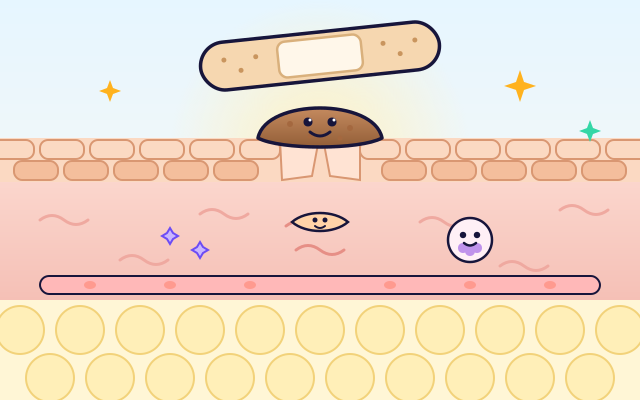
How does a small cut heal?
Use a non-graphic time slider to watch clotting, cleanup, new tissue growth, and repair. Arrange the healing stages in the correct sequence.
#92
Human body
How does a small cut heal?
Use a non-graphic time slider to watch clotting, cleanup, new tissue growth, and repair. Arrange the healing stages in the correct sequence.
 #251
Human body
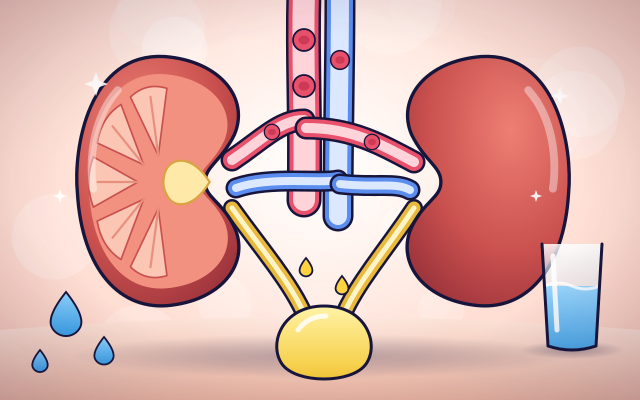
How do kidneys filter blood?
Follow a simplified kidney filter and sort substances retained or removed in urine.
#251
Human body
How do kidneys filter blood?
Follow a simplified kidney filter and sort substances retained or removed in urine.
 #252
Human body
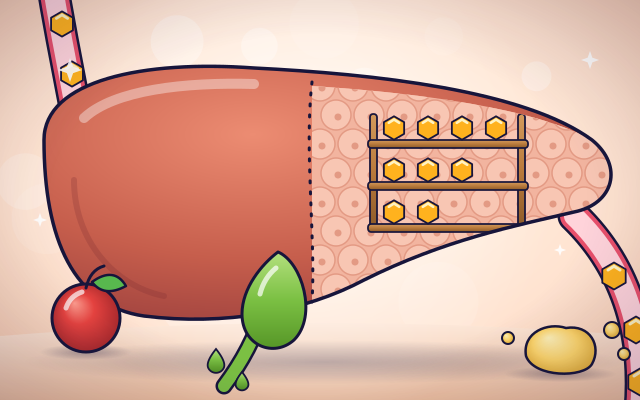
How does the liver process and store substances?
Trace nutrients through storage, chemical processing, and bile production.
#252
Human body
How does the liver process and store substances?
Trace nutrients through storage, chemical processing, and bile production.
 #253
Human body
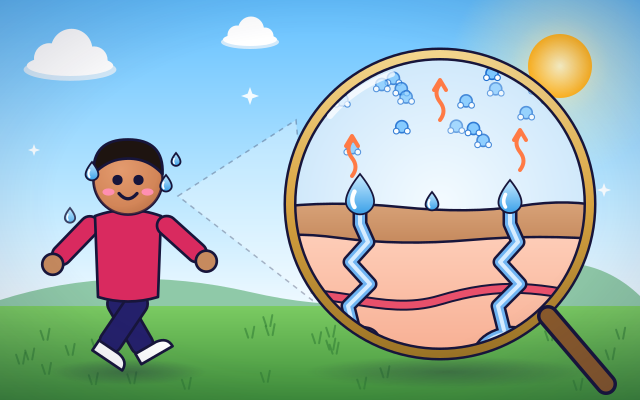
How does sweating cool us?
Change temperature and humidity and compare cooling as sweat evaporates.
#253
Human body
How does sweating cool us?
Change temperature and humidity and compare cooling as sweat evaporates.
Keep exploring
Games to play next
- Body ExplorerTap, match and label your way around the amazing human body.
- Label LabPut the right labels on beautiful science diagrams, from bean plants to heart chambers.
- Science QuizzesOlly's Science Quiz Show: plants, animals, the body, weather, space and more, for every grade.
Guide for grown-ups
- How to start homeschooling: a step-by-step guide for familiesA guide for parents · 7 min read
Science games by grade
Science worksheets by grade
- Preschool Science Worksheets
- Pre-K Science Worksheets
- Kindergarten Science Worksheets
- 1st Grade Science Worksheets
- 2nd Grade Science Worksheets
- 3rd Grade Science Worksheets
- 4th Grade Science Worksheets
- 5th Grade Science Worksheets
- 6th Grade Science Worksheets
- 7th Grade Science Worksheets
- 8th Grade Science Worksheets