How does a small cut heal?
Platelets, clean-up cells and brand-new skin cells work in steps to mend a small cut.
The big idea: When you get a small cut, platelets make a plug and a clot to close it. White blood cells clean away germs. Then new cells rebuild the skin underneath the scab until it's mended.
It's like
The interactive parts didn't load. The explanations below still work; try reloading the page.
The amazing repair crew
- A paper edge slips and makes a tiny cut. Let's zoom in under the skin to see how your body repairs it, step by step.
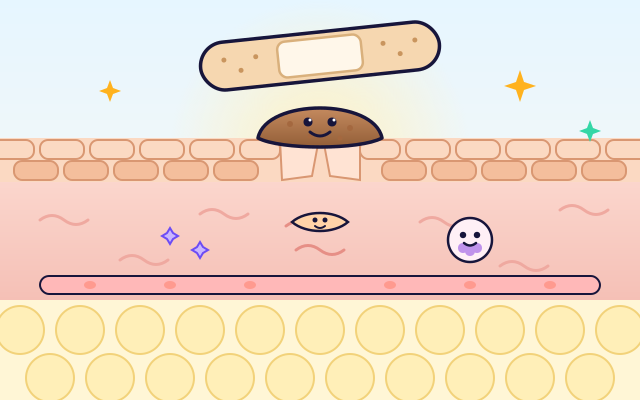
- The tiny blood vessels squeeze narrower. Platelets, little pieces of cells in your blood, get sticky, cling to the edges and to each other, and make a plug.
- Next, threads called fibrin weave a net over the plug. The net traps cells and makes a strong clot. On top, the clot dries into a hard scab, like a little roof.
- White blood cells arrive to clean up. They gobble any germs and bits of broken cells. The skin around the cut may look a little pink and puffy while they work.
- Builder cells called fibroblasts spin new threads of collagen to fill the gap, and new tiny blood vessels grow. Skin cells at the edges crawl under the scab to close the top.
- When the new skin is ready, the scab falls off by itself. Over the next weeks, the new skin gets stronger. Sometimes it leaves a faint mark.
- You can help your body heal. Tell a grown-up, wash the cut gently with clean water, cover it with a clean bandage, and let the scab fall off by itself.
Inside a healing cut
This is a cartoon slice of skin with a small healing cut. Tap each part to see what it does.
- Epidermis. The epidermis is the thin, tough top layer of your skin. Its cells keep making new cells, so it can grow back over a cut.
- Dermis. The dermis is the thick, stretchy layer under the epidermis. It's full of strong collagen threads, tiny blood vessels and nerves.
- Fat layer. Under the dermis is a layer of fat cells. It cushions your body and keeps you warm. A small cut doesn't usually reach it.
- Tiny blood vessel. Tiny blood vessels bring food and oxygen to your skin. They also carry the platelets and white blood cells that fix a cut.
- Platelets. Platelets are tiny pieces of cells in your blood. At a cut they get sticky, grab on to the edges and to each other, and plug the gap.
- Fibrin net. Fibrin is made of long, thin threads that weave a net through the plug. It traps cells and makes the clot strong.
- Clean-up cells. White blood cells, like neutrophils and macrophages, clean the cut. They swallow germs and bits of damaged cells.
- Fibroblasts. Fibroblasts are builder cells. They spin new collagen threads that fill the gap and pull the edges closer together.
- Scab. The scab is the dried top of the clot. It's like a roof that protects the cut while new skin grows underneath. It falls off by itself when it's done.
Healing time machine
Slide through time from the moment of the cut to weeks later. Then switch 'Washed and covered' off and compare how the cut heals.
Experiment: Does washing and covering a small cut change how it heals?
- With 'Washed and covered' on, slide all the way to the end. When is it all better?
- Switch 'Washed and covered' off.
- Slide through time again. Watch the clean-up cells and the scab.
What we found: A washed, covered cut heals faster. Washing removes dirt and germs, so the clean-up cells finish sooner, and a bandage keeps the cut clean and slightly moist so new skin cells can crawl across more easily.
Turn on JavaScript to try it yourself.
Healing in order
Drag the four healing stages into the right order, from the moment of the cut to all better. Then press Check.
Your body's repair crew
Your skin has layers. The thin top layer, the epidermis, keeps germs and water out. Under it is the dermis, a thicker, stretchy layer with tiny blood vessels and nerves. A small cut goes through the epidermis and a little way into the dermis.
The first job is to close the gap. The tiny blood vessels squeeze narrower, and platelets get sticky and pile up to make a plug. Then fibrin threads weave a net that makes a strong clot. The top of the clot dries into a scab, which works like a roof.
Next comes the clean-up. White blood cells gobble any germs and bits of damaged cells. Then the builders arrive: fibroblasts spin new collagen threads to fill the gap, new tiny blood vessels grow, and skin cells from the edges crawl under the scab until the top is sealed.
When the new skin is ready, the scab falls off by itself, usually after a week or two for a small cut. The new skin keeps getting stronger for months. You can help by telling a grown-up, washing the cut with clean water, covering it with a clean bandage and not picking the scab.
Key words
- Platelet
- A tiny piece of a cell in your blood that helps plug cuts.
- Clot
- A plug of platelets held together by a net of fibrin threads.
- Scab
- The dried top of a clot that protects a cut while it heals.
- Fibroblast
- A builder cell that makes collagen threads.
- Collagen
- Strong threads that hold your skin together.
- Inflammation
- Pinkness, warmth and puffiness while white blood cells clean a wound.
Check your thinking
-
What is the very first thing that happens after a small cut?
Show the answer
Platelets plug the gap and a clot forms. Closing the gap comes first: platelets, then a fibrin clot.
-
Why shouldn't you pick a scab?
Show the answer
It protects new skin growing underneath. Picking it can reopen the cut and let germs in.
-
What do white blood cells do in a healing cut?
Show the answer
Gobble germs and clean up. Neutrophils and macrophages swallow germs and bits of damaged cells.
-
Which is the best first aid for a small cut?
Show the answer
Tell a grown-up, wash it with clean water and cover it. Clean water washes away dirt and germs, and a bandage keeps it clean.
-
What do fibroblasts do?
Show the answer
Spin collagen threads to fill the gap. Fibroblasts are the builders that make new collagen.
You're a Human body expert!
You watched, looked inside, tried it, solved the challenge and went deeper. Pick another question below, or switch the age at the top to see this topic another way.
More about human body
 #251
Human body
How do kidneys filter blood?
Follow a simplified kidney filter and sort substances retained or removed in urine.
#251
Human body
How do kidneys filter blood?
Follow a simplified kidney filter and sort substances retained or removed in urine.
 #252
Human body
How does the liver process and store substances?
Trace nutrients through storage, chemical processing, and bile production.
#252
Human body
How does the liver process and store substances?
Trace nutrients through storage, chemical processing, and bile production.
 #253
Human body
How does sweating cool us?
Change temperature and humidity and compare cooling as sweat evaporates.
#253
Human body
How does sweating cool us?
Change temperature and humidity and compare cooling as sweat evaporates.
 #254
Human body
How does our sense of smell work?
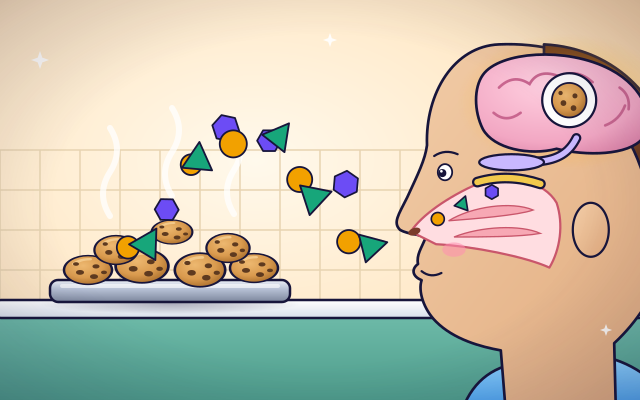
Follow odor molecules into the nose and match receptor patterns with familiar smells.
#254
Human body
How does our sense of smell work?
Follow odor molecules into the nose and match receptor patterns with familiar smells.
Keep exploring
Games to play next
- Body ExplorerTap, match and label your way around the amazing human body.
- Label LabPut the right labels on beautiful science diagrams, from bean plants to heart chambers.
- Science QuizzesOlly's Science Quiz Show: plants, animals, the body, weather, space and more, for every grade.
Guide for grown-ups
- How to start homeschooling: a step-by-step guide for familiesA guide for parents · 7 min read
Science games by grade
Science worksheets by grade
- Preschool Science Worksheets
- Pre-K Science Worksheets
- Kindergarten Science Worksheets
- 1st Grade Science Worksheets
- 2nd Grade Science Worksheets
- 3rd Grade Science Worksheets
- 4th Grade Science Worksheets
- 5th Grade Science Worksheets
- 6th Grade Science Worksheets
- 7th Grade Science Worksheets
- 8th Grade Science Worksheets