How do kidneys filter blood?
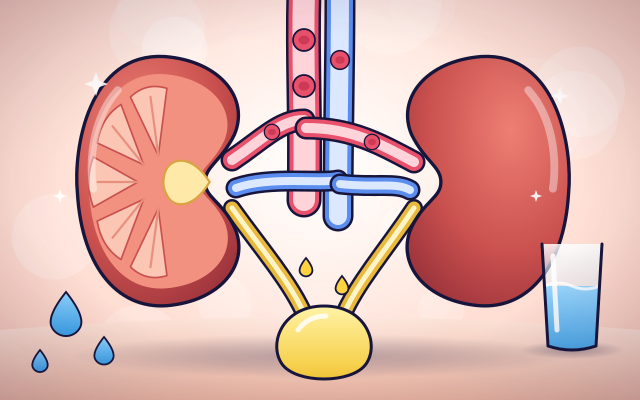
Your two kidneys are filters. They strain your blood, take back everything your body needs, and send the leftover waste and water out as urine.
The big idea: A kidney cleans blood in two steps. First a tiny sieve lets water and small things through and holds the big things back. Then a long tube takes the useful small things back. The waste that is left is urine.
It's like cleaning out your school bag by tipping out everything small, then putting back only the things you still need. The rest goes in the bin.
The interactive parts didn't load. The explanations below still work; try reloading the page.
How kidneys clean your blood
- Mia finishes a big glass of water. Later she will need the bathroom. In between, two bean-shaped organs in her back, the kidneys, have been busy cleaning her blood.
- Blood flows into each kidney through a wide tube. Inside, it is cleaned. Clean blood flows out through another tube, and a third tube carries the urine away.
- Each kidney has about a million tiny filters. In each one, blood squeezes through a ball of thin tubes. Water and small things leak out through tiny holes. Blood cells are too big, so they stay.
- But sugar and water are useful! As the liquid flows along a twisty tube, the tube's walls pull the sugar, most of the water and some salt back into the blood.
- The waste is not taken back. It stays in the tube with a little water. This leftover liquid is urine. It drips down to the bladder, which stores it until you go to the bathroom.
- Kidneys also keep your body's water just right. Drink a lot, and they let more water go, so there is more urine and it is pale. Drink a little, and they save water, so there is less urine and it is darker.
Look inside a kidney
On the left is a whole kidney. The circle shows one of its million filters, made much bigger. Tap every part.
- Blood in. This wide tube brings blood that needs cleaning into the kidney. It branches into smaller and smaller tubes.
- Clean blood out. Cleaned blood leaves here and travels back toward the heart. It still has all its blood cells, sugar and most of its water.
- Urine tube. Urine from all the tiny filters collects in the middle of the kidney and drains down this tube to the bladder.
- Filter ball. A tight ball of very thin blood tubes with leaky walls. Blood pressure squeezes water and small things out through tiny holes.
- Catching cup. A cup wrapped around the filter ball. It catches the liquid that leaks out and leads it into the tube.
- Take-back tube. A long, twisty tube. Its walls pull sugar, most of the water and some salt out of the liquid and return them to the blood running beside it.
- Collecting tube. The last stretch. Here the kidney makes its final choice about water: save more on a thirsty day, or let more go after a big drink.
Filter lab: what stays, what goes?
Tap the filter ball, or send in one thing at a time. Watch which things stay in the blood, which are taken back, and which leave in the urine.
Experiment: Sugar is small enough to slip through the filter. Does it end up in the urine?
- Send in a blood cell. Does it get through the filter?
- Send in sugar, then waste. Follow each one to the end.
- Send in water a few times. Then change how much was drunk and try again.
What we found: The filter only sorts by size: big blood cells stay, and every small thing slips through, even useful sugar. The tube then takes the useful things back. Only the waste, and the water needed to carry it, leaves as urine.
Turn on JavaScript to try it yourself.
Be the kidney: keep or let go?
Sort everything that comes down the tube. Look at the two body gauges: is the body short of water or does it have too much salt? Keep what the body needs.
Two steps to clean blood
Your cells are busy all day, and their work leaves waste behind, a bit like crumbs after a snack. The waste drifts into your blood. If it stayed there, it would build up and make you ill. So your blood is cleaned again and again by two bean-shaped organs in your back, each about as big as your fist: your kidneys.
A kidney cleans blood in two steps. Step one is a sieve. In each of about a million tiny filters, blood squeezes through a ball of very thin tubes with leaky walls. Water and small things, such as sugar, salt and waste, leak out into a cup. Blood cells are far too big, so they stay in the blood.
Step two is taking things back. The sieve cannot tell good small things from bad ones, so useful sugar and lots of water leak out too. As the liquid runs down a long, twisty tube, the tube's walls pull the sugar, most of the water and some salt back into the blood. The waste is left behind. That leftover liquid is urine, and it trickles down to your bladder.
Kidneys also keep your water level just right. On a hot day when you have not drunk much, they save water, so you make a little dark yellow urine. After lots of drinks they let the extra go, so you make plenty of pale urine. Our school bag comparison is not perfect: you sort a bag once, but your kidneys never stop, cleaning all your blood many times every day.
Key words
- Kidney
- One of two bean-shaped organs that clean the blood and make urine.
- Urine
- The liquid waste your kidneys make: water with waste and extra salt in it.
- Filter
- To sort things by size by passing them through tiny holes.
- Nephron
- One of the million tiny filter-and-tube units in a kidney.
- Reabsorption
- Taking useful things back into the blood.
- Bladder
- A stretchy bag that stores urine until you go to the bathroom.
Check your thinking
-
What is the main job of your kidneys?
Show the answer
They clean the blood and make urine. Kidneys filter waste and extra water out of the blood. The heart pumps blood, and the stomach and intestines deal with food.
-
Why do blood cells stay in the blood at the filter?
Show the answer
They are too big to fit through the tiny holes. The filter sorts only by size. It cannot tell what is useful, which is why the take-back tube is needed.
-
Sugar leaks through the filter. Why is there normally no sugar in urine?
Show the answer
The tube takes all the sugar back into the blood. Sugar is useful fuel, so the walls of the tube pull every bit of it back into the blood.
-
It is a hot day and you have had very little to drink. What will your urine be like?
Show the answer
A small amount, and darker yellow. When the body is short of water, the kidneys take more water back. The same waste is carried in less water, so the urine is darker.
-
About 180 liters are filtered a day and about 1.8 liters leave as urine. What fraction of the filtered fluid is reabsorbed?
Show the answer
About 99 percent. 180 minus 1.8 is 178.2 liters returned, and 178.2 divided by 180 is 0.99, or 99 percent.
You're a Human body expert!
You watched, looked inside, tried it, solved the challenge and went deeper. Pick another question below, or switch the age at the top to see this topic another way.
More about human body
 #252
Human body
How does the liver process and store substances?
Trace nutrients through storage, chemical processing, and bile production.
#252
Human body
How does the liver process and store substances?
Trace nutrients through storage, chemical processing, and bile production.
 #253
Human body
How does sweating cool us?
Change temperature and humidity and compare cooling as sweat evaporates.
#253
Human body
How does sweating cool us?
Change temperature and humidity and compare cooling as sweat evaporates.
 #254
Human body
How does our sense of smell work?
Follow odor molecules into the nose and match receptor patterns with familiar smells.
#254
Human body
How does our sense of smell work?
Follow odor molecules into the nose and match receptor patterns with familiar smells.
 #255
Human body
How do we taste food?
Explore taste buds and combine taste and smell signals into familiar flavors.
#255
Human body
How do we taste food?
Explore taste buds and combine taste and smell signals into familiar flavors.
Keep exploring
Games to play next
- Body ExplorerTap, match and label your way around the amazing human body.
- Label LabPut the right labels on beautiful science diagrams, from bean plants to heart chambers.
- Science QuizzesOlly's Science Quiz Show: plants, animals, the body, weather, space and more, for every grade.
Guide for grown-ups
- How to start homeschooling: a step-by-step guide for familiesA guide for parents · 7 min read
Science games by grade
Science worksheets by grade
- Preschool Science Worksheets
- Pre-K Science Worksheets
- Kindergarten Science Worksheets
- 1st Grade Science Worksheets
- 2nd Grade Science Worksheets
- 3rd Grade Science Worksheets
- 4th Grade Science Worksheets
- 5th Grade Science Worksheets
- 6th Grade Science Worksheets
- 7th Grade Science Worksheets
- 8th Grade Science Worksheets