How do earthquakes happen?
Push two pieces of Earth's crust, watch a fault slip, follow the waves and test which buildings stay standing.
The big idea: Earth's outer shell is made of giant plates that slowly move. Where they meet, rocks get stuck and bend, storing energy like a stretched rubber band. When they suddenly slip, the energy spreads out as waves that make the ground shake.
It's like
The interactive parts didn't load. The explanations below still work; try reloading the page.
What makes an earthquake?
- Earth's outer shell is broken into giant pieces called plates. They move very slowly, only a few centimeters a year, about as fast as your fingernails grow.
- Where plates meet there is a crack called a fault. The rough rocks catch on each other and get stuck, so the rock bends and stores energy, like a stretched rubber band.
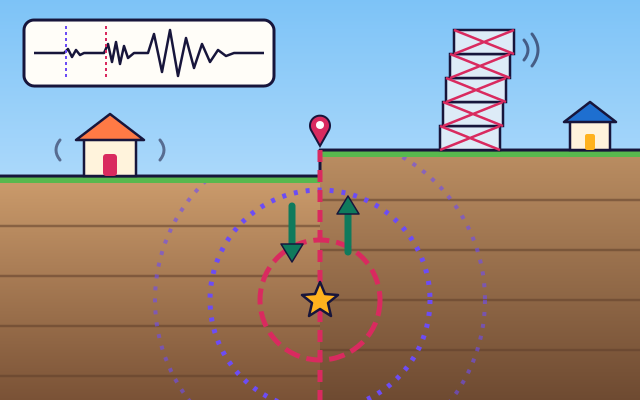
- When the push gets too strong, the rocks suddenly slip. The bent rock snaps back. The spot underground where it starts is called the focus, and the spot on the surface above it is the epicenter.
- The energy races out as waves. P waves push and pull and arrive first. S waves shake side to side and come next. Surface waves roll along the ground and shake things the most.
- A seismometer records the shaking as a wiggly line. Scientists use the time between the P and S waves to work out how far away the earthquake was.
- Engineers design buildings that can sway without breaking, with braces and special rubber bases. If you feel shaking: drop, cover and hold on until it stops.
Inside an earthquake zone
Tap each part of the earthquake. Watch the waves move when you find them!
- Plate. A huge slab of Earth's crust and upper mantle. Plates slowly slide past, toward or away from each other.
- Fault. A crack in the crust where blocks of rock move past each other. Most earthquakes happen on faults.
- Bent rock (stored energy). While the fault is stuck, the rocks next to it bend. Bent rock stores energy, like a stretched rubber band.
- Focus. The focus is the place underground where the rocks first slip. The waves start here.
- Epicenter. The epicenter is the point on the surface straight above the focus. News reports give its location.
- P wave. Primary waves are the fastest. They push and pull the rock in the direction they travel, like a slinky being pushed.
- S wave. Secondary waves arrive next. They shake the rock from side to side, like a rope being flicked.
- Surface waves. When the waves reach the surface they make rolling surface waves. They are slower but usually do the most shaking.
- Seismometer. A seismometer measures ground shaking and draws it as a wiggly line called a seismogram.
Fault lab: stick, slip and shake
Push the crust and watch the rock bend near the fault until it slips. Change how rough the fault is. Follow the waves to the houses and the seismometer.
Experiment: If the rocks along the fault are rougher, what happens?
- Pick a smooth fault and push slowly. Count the slips.
- Pick a very rough fault and push the same amount.
- Compare how often it slips and how big the shaking is.
What we found: Rough, sticky faults hold on longer, so the rock bends more and stores more energy before it slips. They slip less often, but each earthquake is bigger. Smooth faults slip often in small jumps.
Turn on JavaScript to try it yourself.
Earthquake-ready city
Three model buildings stand on a shake table. You can afford 2 upgrades. Make sure every building survives the test quake.
Faults, waves and safe buildings
Earth's surface is broken into giant plates that slowly move. Where they meet, there are cracks called faults. The rough rocks along a fault catch on each other and get stuck, even though the plates keep pushing.
Stuck rock bends, a little like a ruler you push on. Bent rock stores energy. When the push becomes stronger than the grip, the rocks slip suddenly and spring back. That sudden slip is an earthquake, and the stored energy rushes out as waves.
The fastest waves, P waves, push and pull the ground. S waves follow and shake it side to side. Surface waves roll along the ground and usually shake buildings the most. A seismometer records all three. The longer the gap between the P and S waves, the farther away the earthquake was.
Engineers make buildings safer with braces that stop them bending too much and with rubber bases that let the ground move underneath. If you feel shaking, drop to your hands and knees, cover your head and neck under a sturdy table, and hold on until the shaking stops. Practicing at home and at school helps everyone stay calm.
Key words
- Fault
- A crack in Earth's crust where rocks move past each other.
- Focus (hypocenter)
- The place underground where an earthquake starts.
- Epicenter
- The point on the surface directly above the focus.
- Seismic waves
- Waves of energy that travel through the Earth after an earthquake.
- Resonance
- When shaking matches the way something naturally sways, so it sways more and more.
- Base isolation
- Flexible bearings under a building that let the ground move without shaking the building as much.
Check your thinking
-
What should you do during an earthquake if you are indoors?
Show the answer
Drop, cover under a sturdy table and hold on. Staying low and covered protects you from falling objects.
-
What causes an earthquake?
Show the answer
Stuck rocks along a fault suddenly slip. Bent rock stores energy, then slips and releases it as waves.
-
Which waves arrive first at a seismometer?
Show the answer
P waves. P waves are the fastest, so they arrive first.
-
The S minus P time at a station is 5 seconds. About how far away is the focus?
Show the answer
About 40 km. About 8 km per second of delay: 5 × 8 ≈ 40 km.
-
Why do braces help a building in an earthquake?
Show the answer
They make it stiffer, so it bends less. Braces stiffen the frame so it sways less and holds together.
You're a Earth & weather expert!
You watched, looked inside, tried it, solved the challenge and went deeper. Pick another question below, or switch the age at the top to see this topic another way.
More about earth & weather
 #74
Earth & weather
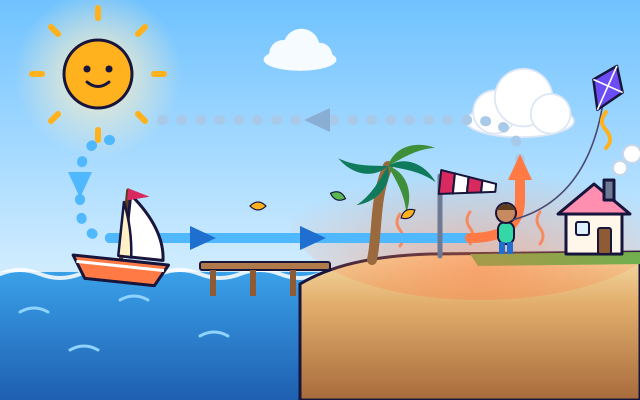
How does wind form?
Explore uneven heating, air pressure, and moving air. Change land and water temperatures in a simplified coastal model to investigate sea breezes.
#74
Earth & weather
How does wind form?
Explore uneven heating, air pressure, and moving air. Change land and water temperatures in a simplified coastal model to investigate sea breezes.
 #75
Earth & weather
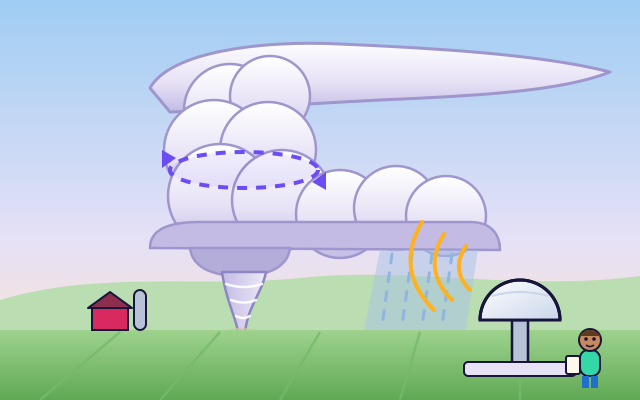
How do tornadoes form?
Explore airflow inside a simplified rotating thunderstorm. Watch a tornado develop and follow its movement across a model landscape.
#75
Earth & weather
How do tornadoes form?
Explore airflow inside a simplified rotating thunderstorm. Watch a tornado develop and follow its movement across a model landscape.
 #76
Earth & weather
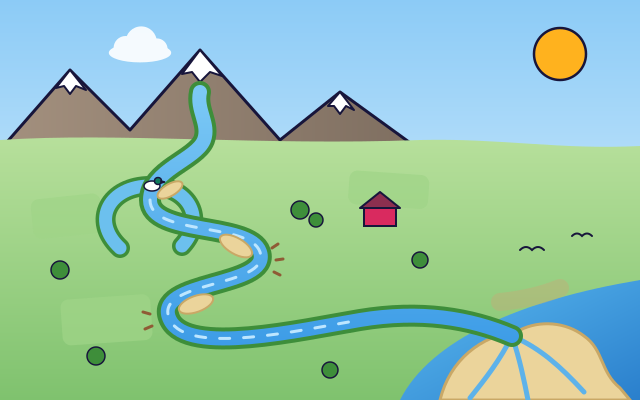
How do rivers shape the land?
Guide flowing water across a landscape and watch erosion, sediment transport, and deposition. Change slope and flow to create bends, channels, and deltas.
#76
Earth & weather
How do rivers shape the land?
Guide flowing water across a landscape and watch erosion, sediment transport, and deposition. Change slope and flow to create bends, channels, and deltas.
 #77
Earth & weather
Why do ocean tides rise and fall?
Explore the Moon's and Sun's influence on a simplified ocean model. Move them into different positions and compare patterns of tidal change.
#77
Earth & weather
Why do ocean tides rise and fall?
Explore the Moon's and Sun's influence on a simplified ocean model. Move them into different positions and compare patterns of tidal change.
Keep exploring
Games to play next
- Landform ExplorerMountains, valleys, peninsulas and deltas — learn the shapes of the land and find them on Earth.
- Weather LabPredict the weather in a box, then run a fair test to find out why.
- River MysterySomething changed the river. Sample sites with a limited budget, follow the evidence and find where the change begins.
Guide for grown-ups
- How to start homeschooling: a step-by-step guide for familiesA guide for parents · 7 min read
Science games by grade
Science worksheets by grade
- Preschool Science Worksheets
- Pre-K Science Worksheets
- Kindergarten Science Worksheets
- 1st Grade Science Worksheets
- 2nd Grade Science Worksheets
- 3rd Grade Science Worksheets
- 4th Grade Science Worksheets
- 5th Grade Science Worksheets
- 6th Grade Science Worksheets
- 7th Grade Science Worksheets
- 8th Grade Science Worksheets